What Is Health Care Research? A Simple Guide to How It Improves Medicine and Saves Lives
 Nov, 21 2025
Health care research isn’t just something that happens in labs or universities. It’s the quiet engine behind every new vaccine, every safer surgery, every easier way to manage diabetes or high blood pressure. If you’ve ever gotten a shot, taken a pill that worked, or had a doctor use a new test to find a problem early - that’s health care research in action.
What Exactly Is Health Care Research?
Health care research is the process of asking questions about health and finding answers through careful study. It’s not guesswork. It’s not opinion. It’s data, observation, testing, and analysis - all aimed at making people healthier and fixing problems in how care is delivered.
This kind of research covers two big areas: clinical research and health services research. Clinical research looks at how treatments, drugs, and medical devices affect people. Health services research looks at how care is organized, paid for, and delivered - like why some patients wait months for a specialist, or why certain communities get worse care than others.
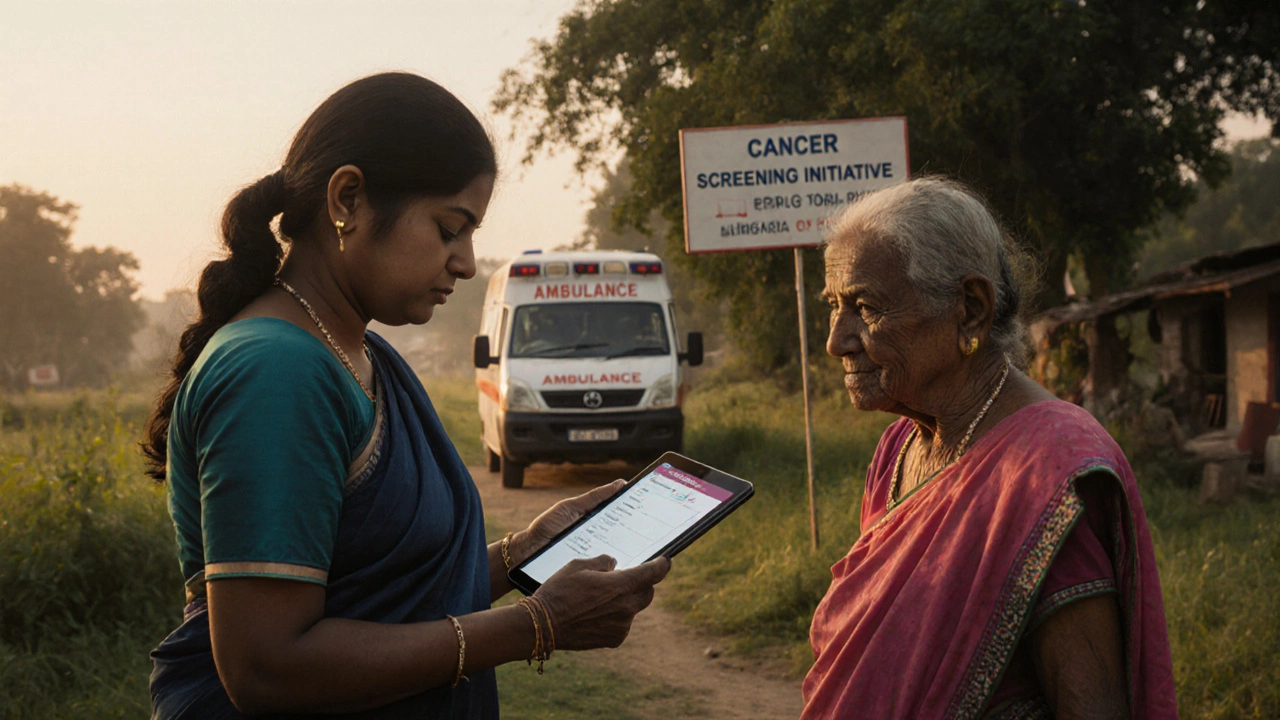
For example, a clinical study might test whether a new blood pressure drug works better than the old one. A health services study might find that patients in rural areas are 40% less likely to get timely cancer screenings because there aren’t enough mobile clinics. Both types of research lead to real changes in how medicine is practiced.
How Does Health Care Research Actually Work?
It doesn’t happen overnight. Most health care research follows a clear path:
- Identify a problem - like rising rates of Type 2 diabetes in young adults.
- Form a hypothesis - maybe skipping breakfast every day increases insulin resistance.
- Design a study - recruit 5,000 people, track their eating habits for two years, measure their blood sugar.
- Collect and analyze data - use statistics to see if there’s a real link.
- Share results - publish in peer-reviewed journals so other experts can check the work.
- Apply findings - doctors start advising patients about breakfast, insurance companies cover nutrition counseling.
This process can take years. A new drug might go through 10-15 years of testing before it reaches patients. But every step matters. A small mistake in data collection can lead to wrong conclusions - and that could hurt people.
Who Does Health Care Research?
It’s not just doctors and scientists. Health care research involves a whole team:
- Researchers - PhDs and MDs who design studies and analyze data.
- Clinicians - doctors, nurses, and pharmacists who recruit patients and collect real-world health data.
- Patients and communities - people who volunteer to take part in trials or share their experiences. Without them, nothing moves forward.
- Public health agencies - like the CDC or WHO - that fund studies and turn results into policy.
- Statisticians and data analysts - who make sure the numbers don’t lie.
In 2023, over 1.2 million people in the U.S. alone participated in clinical trials. That’s more than ever before. And it’s not just rich countries. Health care research is happening in Kenya, India, Brazil, and beyond - because diseases don’t care about borders.

What Are Clinical Trials?
Clinical trials are the gold standard for testing new treatments. They’re divided into four phases:
- Phase I - Tests safety in 20-100 healthy volunteers or patients. Focus: Is it safe? What’s the right dose?
- Phase II - Tests effectiveness in 100-300 patients. Focus: Does it work for the condition it’s meant to treat?
- Phase III - Tests in 1,000-3,000 patients across multiple locations. Focus: How does it compare to existing treatments? Are side effects rare or serious?
- Phase IV - After approval, monitors long-term effects in the general population. Focus: What happens over 5, 10, or 20 years?
Every trial follows strict rules called Good Clinical Practice (GCP). These rules protect participants. No one is forced. Everyone gives informed consent - meaning they’re told exactly what’s involved, what the risks are, and that they can quit anytime.
Why Does Health Care Research Matter to You?
You might think, “I’m not sick. Why should I care?” But here’s the truth: health care research affects you every day.
Think about your last cold. The over-the-counter medicine you bought? It was tested in trials. The flu shot you got? Developed through decades of research. The way your doctor checks your cholesterol? That test was invented because someone asked, “What if we could detect heart disease before it’s too late?”
And it’s not just about drugs. Research changed how hospitals handle infections. It led to better handwashing protocols, cleaner operating rooms, and fewer deadly hospital-acquired infections. In the U.S., those infections used to kill 99,000 people a year. Now, thanks to research-backed changes, that number is down by more than half.
Even your insurance plan is shaped by research. When studies prove that a certain treatment saves money and improves outcomes, insurers start covering it. That’s how telehealth for mental health became widely available - because research showed it worked as well as in-person visits.
What Are the Biggest Challenges Today?
Health care research is powerful, but it’s not perfect. Here are the biggest problems right now:
- Lack of diversity - Most clinical trial participants are white, middle-aged, and from urban areas. But diseases affect people differently based on race, age, gender, and where they live. A drug that works for one group might not work for another.
- Slow funding - It takes years to get money for research. Many promising ideas die because there’s no grant money.
- Too much paperwork - Researchers spend 50% of their time on reports and approvals, not actual science.
- Publication bias - Studies with positive results get published. Negative results - where a treatment didn’t work - often disappear. That skews what doctors believe works.
Some groups are fixing this. The NIH now requires that clinical trials include more women, older adults, and people from underrepresented communities. Some journals now publish negative results. It’s slow, but it’s moving.
How Can You Get Involved?
You don’t need a lab coat to help health care research.
- Join a clinical trial - Search clinicaltrials.gov to find studies near you. You’ll be screened, given clear info, and paid for your time if it’s a paid study.
- Share your health data - Apps like Apple Health or MyChart let you contribute anonymized data to research projects.
- Advocate for funding - Contact your representative. Ask why more money isn’t going to cancer research or mental health studies.
- Ask your doctor - “Is there a study I could join?” or “What’s new in treating this condition?”
One person joining a trial can change the future. In 2020, a single participant in a COVID-19 vaccine trial helped prove the mRNA technology worked - and saved millions of lives.
What’s Next for Health Care Research?
The next decade will be shaped by three big shifts:
- Personalized medicine - Treatments based on your genes, lifestyle, and environment. No more “one-size-fits-all” pills.
- AI-powered analysis - Machines that scan millions of medical records to find hidden patterns - like which patients are likely to develop heart failure before symptoms show.
- Real-world data - Using data from wearables, apps, and electronic health records instead of just lab tests. This gives a fuller picture of how people actually live with illness.
By 2030, researchers expect to predict disease risk years before it happens - and stop it before it starts. That’s the goal: not just treating illness, but preventing it.
Is health care research the same as medical research?
Yes, the terms are often used interchangeably. But technically, medical research focuses more on biological mechanisms - like how a virus attacks cells. Health care research includes that, but also looks at how care is delivered, who gets it, and whether it’s fair and affordable. So medical research is part of health care research, but not the whole picture.
Can health care research be trusted?
Most of it can. Studies go through peer review - where other experts check the methods and results. Large studies with thousands of participants are more reliable than small ones. Also, studies published in top journals like The New England Journal of Medicine or The Lancet have stricter standards. If a study sounds too good to be true - like a miracle cure - check if it’s been replicated by other teams. Science doesn’t believe in magic. It believes in proof.
Do I get paid to join a clinical trial?
Sometimes. Many trials pay for your time, travel, or lost wages - especially if you need to visit a clinic multiple times. Some don’t pay at all, but you’ll get free medical care and close monitoring from experts. Never pay to join a trial. If someone asks you for money, it’s likely a scam.
What happens if I’m in a trial and something goes wrong?
You’re protected. Every trial has a safety monitor who watches for side effects. If something dangerous happens, the trial can be paused or stopped. You also have the right to leave at any time, no questions asked. Your health comes first. Ethical research puts participants above all else.
How long does it take for research to become standard care?
On average, it takes about 17 years for a research finding to reach most patients. That’s because it has to go through testing, approval, training doctors, changing guidelines, and convincing insurers to cover it. But some breakthroughs move faster - like how rapid testing for COVID-19 went from lab to clinics in under a year. When there’s urgency, the system can adapt.
Final Thought: Research Is a Shared Responsibility
Health care research isn’t just for scientists. It’s for everyone who’s ever been sick, worried about a loved one, or wondered why medicine works the way it does. Every time someone joins a trial, every time a patient shares their story, every time a policymaker funds a study - we’re all helping build a healthier future.
It’s not glamorous. It’s not fast. But it works. And it’s saving lives - one study at a time.