Heat Stress: What It Is, How It Affects You, and What Science Says
When your body can’t cool itself down fast enough, you’re experiencing heat stress, a condition where the body absorbs more heat than it can release, leading to physical strain and potential organ damage. Also known as thermal stress, it’s not just about sweating—it’s about your body’s systems starting to fail under pressure. This isn’t just a summer inconvenience. With global temperatures climbing, heat stress is now a daily threat for farmers, construction workers, delivery drivers, and even office workers in poorly ventilated buildings.
Heat stress doesn’t show up all at once. It builds. First, you feel tired. Then your muscles cramp. Your head pounds. You might feel dizzy or nauseous. If ignored, it can turn into heat exhaustion, a serious reaction to prolonged heat exposure marked by heavy sweating, weakness, and rapid pulse. And if that’s not treated? It escalates to heat stroke, a life-threatening emergency where your core temperature hits 104°F or higher and your brain starts shutting down. The World Health Organization says over 30% of the global population now faces dangerous heat conditions for at least 20 days a year. That number is rising fast.
It’s not just the weather. It’s what we do in it. In India, where millions work outdoors under the sun—farmers harvesting rice, laborers laying bricks, delivery riders navigating traffic—heat stress is silently cutting productivity and lives. Studies from the Indian Institute of Tropical Meteorology show that by 2050, parts of northern India could see more than 100 days a year with wet-bulb temperatures above 35°C—the point where the human body can no longer cool itself, even in shade. That’s not science fiction. That’s the near future.
And here’s the thing: heat stress isn’t just a physical problem. It’s a social one. Low-income workers, older adults, and people with chronic illnesses are hit hardest. No one’s talking about how many construction sites still don’t have shade, water, or rest breaks. Or how schools in rural areas have no fans, and kids are learning in 40°C classrooms. This isn’t about comfort. It’s about survival.
What you’ll find below are real stories and science-backed insights into how heat stress is changing lives across India. From farm fields to factories, from urban heat islands to rural villages, these posts break down what’s happening, who’s affected, and what’s being done—or ignored—to stop it.
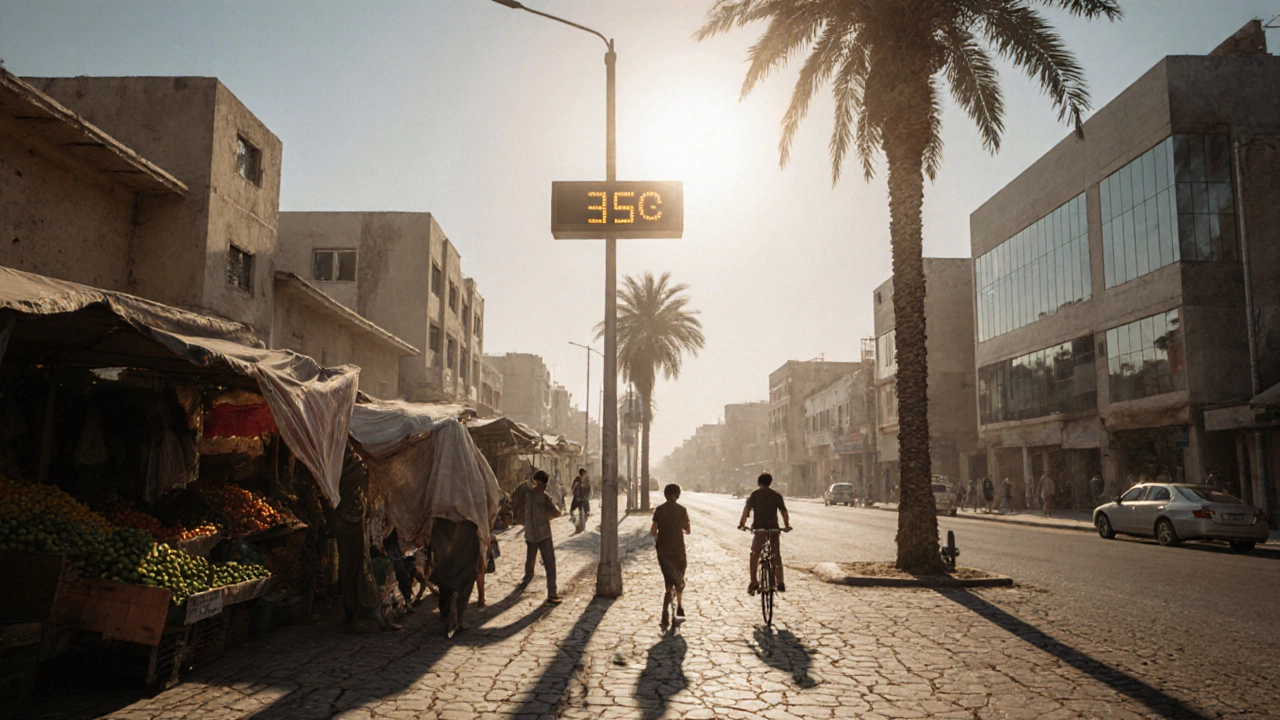
Is Earth Becoming Too Hot for Humans? Climate Change Facts & Risks
Oct, 19 2025
Explore how rising global temperatures threaten human habitability, the science behind wet‑bulb limits, and what actions can keep Earth safe for people.
Read Article→