Biotech in India: Breakthroughs, Applications, and Real-World Impact
When we talk about biotech, the use of living systems and organisms to develop or make products, especially in medicine and agriculture. Also known as biotechnology, it’s not just lab coats and pipettes—it’s real medicine, real food, and real solutions to real problems. In India, biotech isn’t some distant future idea. It’s already delivering targeted cancer drugs, cleaning up farms, and making healthcare more precise—and it’s happening right now.
Nanomedicine, the use of nanoparticles to deliver drugs directly to diseased cells, is one of the biggest wins. Drugs like Doxil and Abraxane aren’t science fiction—they’re in use across Indian hospitals, shrinking tumors with fewer side effects. These tiny carriers, smaller than a virus, avoid healthy tissue and hit only what needs fixing. That’s not magic. That’s biotech. And it’s not just for cancer. Researchers are using the same tech to build better vaccines, smarter diagnostics, and even wound-healing patches that work faster than traditional bandages.
Targeted drug delivery, a method that sends medication exactly where it’s needed in the body is changing how we think about treatment. Instead of flooding your whole system with chemicals, you’re firing a precision bullet. This reduces nausea, hair loss, and organ damage—side effects that make chemo unbearable for so many. And it’s not limited to big cities. Indian labs are building low-cost versions of these systems so rural clinics can use them too.
It’s not all about medicine. Biotech is reshaping agriculture too. Scientists are developing drought-resistant seeds, biofertilizers that replace harsh chemicals, and even microbes that clean contaminated soil. These aren’t lab curiosities—they’re helping farmers in Punjab, Maharashtra, and Odisha grow more with less water and fewer inputs. When you connect the dots, you see a pattern: Indian biotech isn’t copying the West. It’s solving local problems with local ingenuity.
You’ll find posts here that cut through the hype. Like the one asking if Coke and Pepsi contain engineered nanoparticles—turns out, they don’t. Or the deep dive into which drugs actually use nanotech, and why that matters for your health. There’s no fluff here. Just facts, real examples, and clear explanations of what’s working, what’s not, and who’s behind it.
What you’ll see below isn’t a random list. It’s a curated look at how biotech is quietly transforming healthcare, food, and environment across India. From cancer treatments you can buy at a local pharmacy to the quiet revolution in farming, this is the science that’s already changing lives. No jargon. No buzzwords. Just what’s real, what’s working, and what’s coming next.
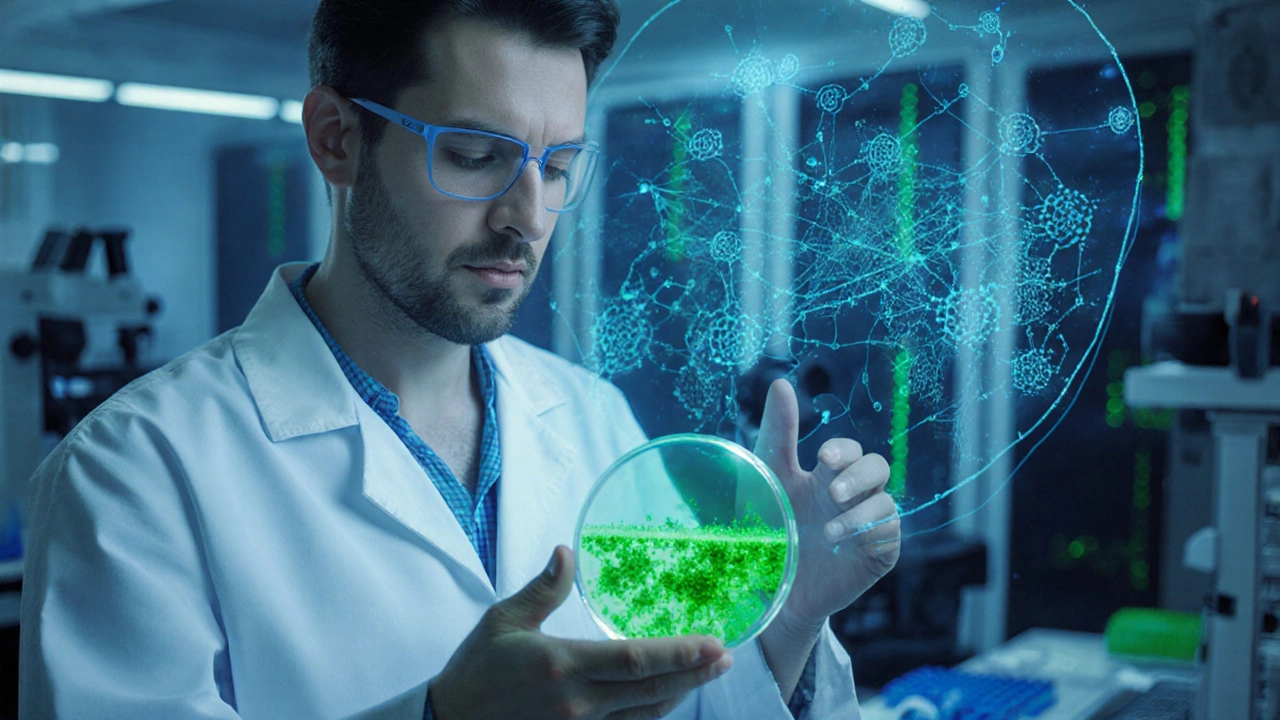
Is AI an Example of Biotechnology? Clarifying the Difference and Overlap
Nov, 17 2025
AI is not biotechnology, but it's revolutionizing how biotech research is done. Learn why AI is a tool, not a biological process, and how the two fields truly work together.
Read Article→