Biomass Emissions: What They Are, Where They Come From, and Why They Matter
When we talk about biomass emissions, gases released when organic matter like wood, crop residues, or animal waste is burned for energy. Also known as bioenergy emissions, they’re often promoted as a green alternative to coal and oil. But calling them clean is misleading—these emissions include carbon dioxide, methane, and fine particulates that affect air quality and contribute to global warming. Unlike fossil fuels, biomass comes from living or recently living sources, which means the carbon it releases was recently pulled from the atmosphere. But that doesn’t make it neutral. Burning biomass releases carbon faster than trees can regrow, and in many cases, it’s less efficient than solar or wind power.
These emissions aren’t just from power plants. In rural India, millions still burn crop stubble, dung cakes, and firewood for cooking and heating. This is a major source of indoor air pollution and contributes heavily to regional smog, especially in the northern plains during harvest season. The same biomass used for energy in homes also shows up in industrial boilers, brick kilns, and even some biofuel plants. The real issue isn’t whether biomass is renewable—it’s whether we’re managing it responsibly. Burning wet or unprocessed biomass creates more smoke and toxins than dry, pelletized fuel. And when forests are cleared just to feed biomass plants, we’re trading one environmental problem for another.
There’s a clear link between climate change, long-term shifts in global temperatures and weather patterns driven by greenhouse gas buildup and how we handle biomass. Studies show that uncontrolled biomass burning can release more CO₂ per unit of energy than coal in certain scenarios. Meanwhile, renewable energy, power sources that naturally replenish, like sunlight, wind, and flowing water—especially solar and wind—are becoming cheaper and more scalable. They don’t burn anything, so they don’t emit smoke or CO₂ at the point of use. Even carbon footprint, the total amount of greenhouse gases produced by human activities calculations often underestimate biomass because of flawed assumptions about carbon neutrality.
What you’ll find in the posts below aren’t theoretical debates—they’re real stories from India’s energy frontlines. You’ll read about farmers burning rice straw, scientists measuring smoke plumes over Delhi, and engineers designing cleaner biomass stoves. There’s no sugarcoating: biomass emissions are a messy part of the energy transition. But they’re also a solvable problem—if we stop treating them as harmless and start treating them like the pollution they are.
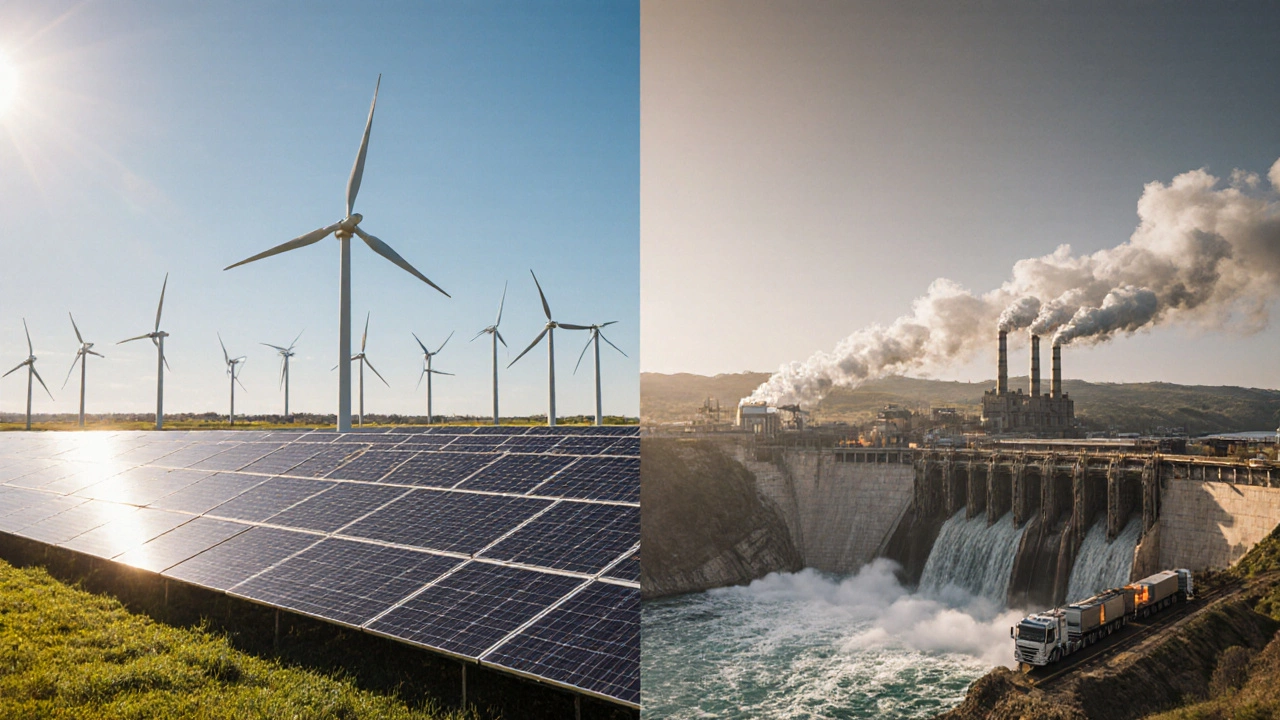
Which Renewable Energy Source Has the Highest Pollution Impact?
Oct, 20 2025
Find out which renewable energy source has the highest lifecycle emissions and why biomass and large hydropower often top the pollution list.
Read Article→