Will AI Replace Biotechnologists? What Really Happens When Machines Enter the Lab
 Dec, 12 2025
Every week, another headline screams: AI will replace biotechnologists. You see it in newsletters, LinkedIn posts, even TED Talks. The fear is real - if a machine can design a protein, predict a drug’s side effects, or sequence DNA faster than any human, what’s left for us to do?
The truth isn’t that simple.
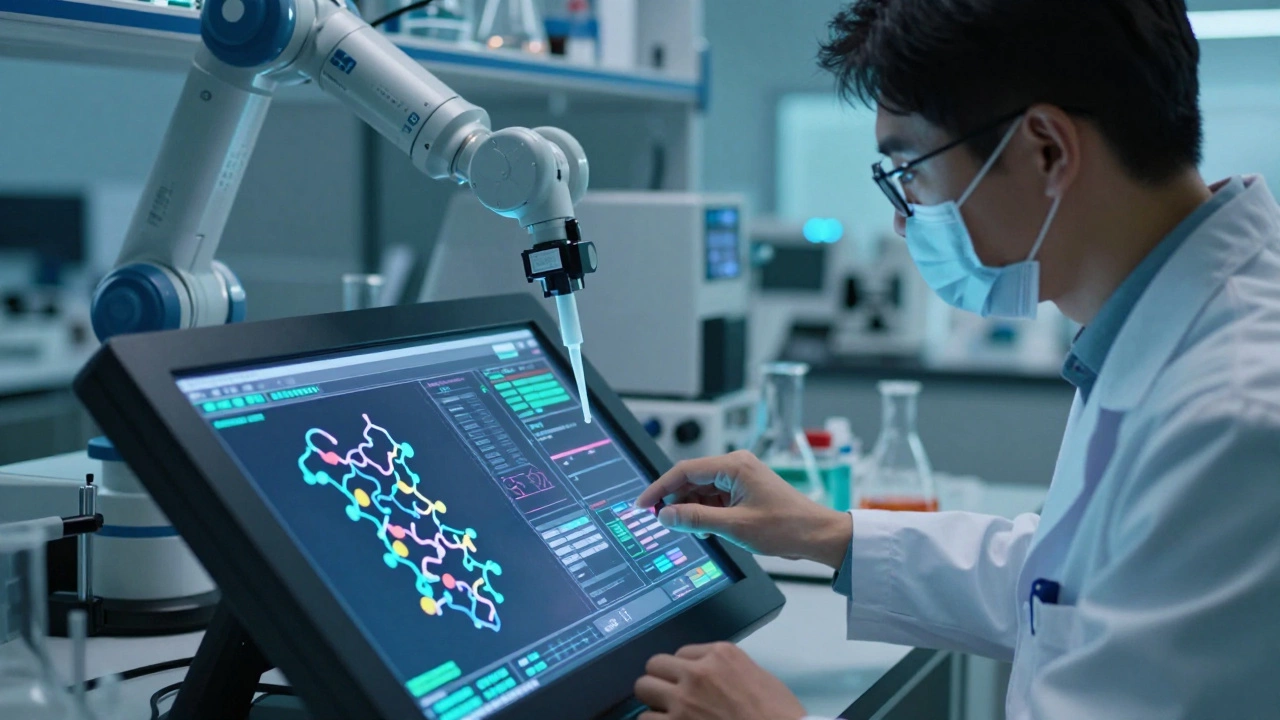
Let’s start with what AI actually does in a biotech lab today. It doesn’t pipette. It doesn’t sterilize equipment. It doesn’t argue with a PI over experimental design at 2 a.m. Instead, AI handles data. Lots of it. Think of it as a supercharged assistant that reads every paper ever published, spots patterns in millions of genetic sequences, and runs simulations that would take a human team years to complete.
At the Francis Crick Institute in London, researchers used AI to predict how mutated proteins fold - a problem that stumped scientists for decades. The AI didn’t replace them. It gave them answers in hours instead of months. The biotechnologists then designed the experiments to test those predictions. One led to a new treatment for a rare neurological disorder. The AI didn’t write the grant. It didn’t get the patent. It didn’t explain the results to worried patients. That was all human.
Here’s the first rule: AI doesn’t think. It calculates. It doesn’t ask, "Why does this matter?" It doesn’t care if a therapy helps a child with cystic fibrosis or if a crop can survive drought. It just finds the most statistically likely outcome. Biotechnologists ask the questions AI can’t even frame.
What AI Can Do Better Than Humans
AI is unbeatable at tasks that involve massive datasets and repetitive pattern recognition. In biotech, that means:
- Processing genomic data from tens of thousands of patients to find hidden disease markers
- Simulating how millions of drug molecules interact with target proteins
- Optimizing CRISPR guide RNA sequences to reduce off-target edits
- Automating image analysis of cell cultures - spotting abnormalities in microscopes faster than any technician
- Reading and summarizing thousands of scientific papers to suggest new research directions
Companies like DeepMind and Insilico Medicine have shown AI can design novel drug candidates in under 21 days - a process that used to take 4-6 years. That’s not magic. It’s math. And it’s changing the pace of discovery.
But here’s what those headlines don’t tell you: the AI didn’t choose the disease target. It didn’t decide the therapy should be delivered via inhaler instead of injection. It didn’t navigate regulatory approval with the FDA. It didn’t convince investors to fund the clinical trial. Those are human decisions - and they’re the hardest parts.
What AI Can’t Do - And Why Biotechnologists Still Matter
AI can’t understand ethics. When a gene-editing tool could cure a disease but also open the door to designer babies, who decides where to draw the line? That’s not a calculation. It’s a moral judgment shaped by culture, history, and lived experience.
AI can’t build trust. Imagine you’re a parent whose child has a rare genetic disorder. You’re sitting across from a scientist who says, "We’ve found a potential treatment. It’s based on AI predictions, and we’re 87% confident it’ll work." Would you trust that? Or would you want to hear the scientist’s own experience, their doubts, their years of failed experiments, their personal connection to the disease? That’s not data. That’s humanity.
AI also can’t adapt to messy real-world conditions. Lab conditions are clean. The real world isn’t. A drug that works perfectly in a petri dish might fail because of a patient’s diet, their gut microbiome, or a drug interaction they didn’t tell their doctor about. Biotechnologists know this. They design experiments that account for chaos - not just perfect data.
And then there’s creativity. The most groundbreaking discoveries don’t come from following patterns. They come from asking weird questions: "What if we reversed the enzyme’s direction?" "What if this cancer cell is hiding in plain sight?" AI doesn’t get bored. It doesn’t daydream. It doesn’t take a walk in the park and suddenly see a connection between two unrelated fields. Humans do.
The New Role of the Biotechnologist
The job isn’t disappearing. It’s changing.
Five years ago, a biotechnologist might have spent 60% of their time running gels, culturing cells, and analyzing results by hand. Today, that’s down to 30%. The rest? Managing AI tools, interpreting their outputs, and deciding what to test next.
Now, the best biotechnologists are hybrids. They understand biology - yes - but also data science. They know how to train models, spot bias in datasets, and question why an AI gave a certain answer. They’re not coders. But they can read Python scripts. They’re not statisticians. But they know what p-values mean - and when to ignore them.
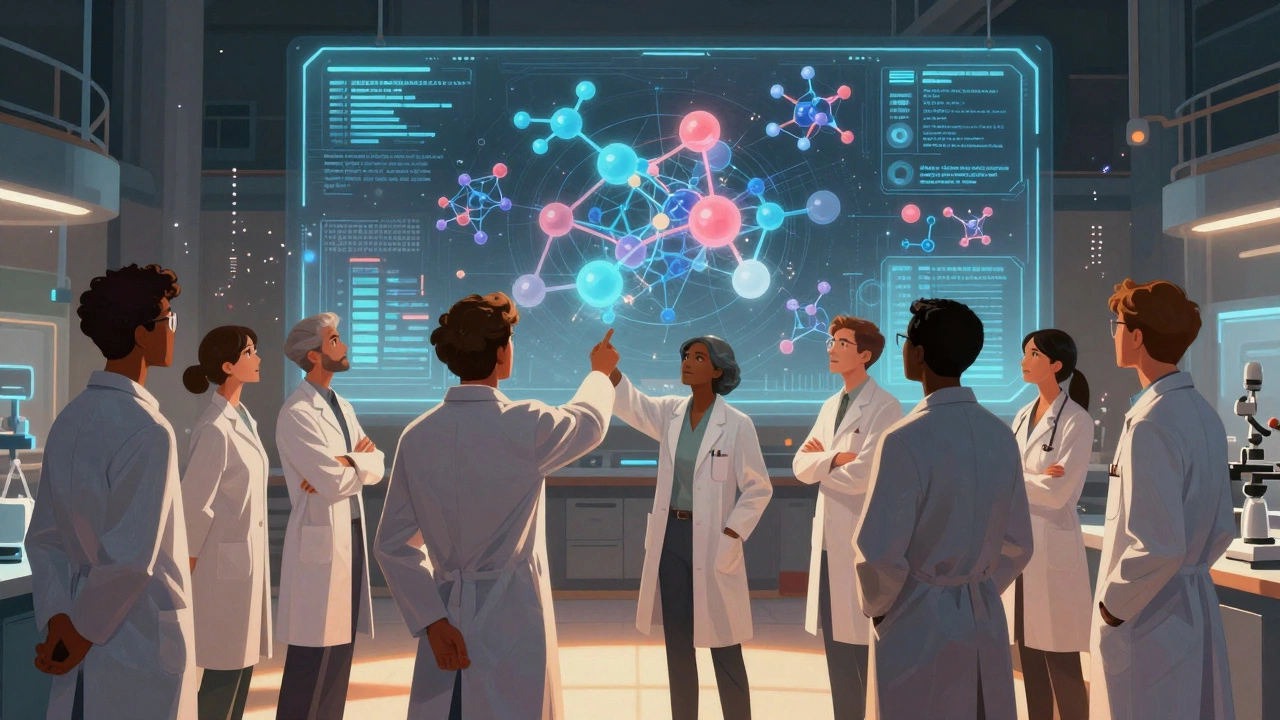
At the University of Liverpool’s Institute of Biotechnology, a team recently used AI to screen 2 million compounds for anti-cancer activity. The AI flagged 12 as high-potential. The team tested them. Only one worked. But that one became a candidate for Phase I trials. The AI didn’t find the drug. It found the needle. The biotechnologists found the meaning behind it.
This shift is already happening. Job postings now ask for "experience with machine learning tools in drug discovery." Universities are adding "AI for Life Sciences" to their curricula. The new biotechnologist doesn’t just know how to use a centrifuge. They know how to ask an AI the right question.
Who’s at Risk? And Who’s Thriving?
Not everyone will adapt. Roles focused purely on routine lab tasks - repetitive pipetting, manual data entry, basic cell counting - are already being automated. Those jobs are vanishing. But they were never the future of biotech anyway.
What’s growing? Roles that sit at the intersection of biology and technology:
- Computational biologists who train models on biological data
- Bioinformatics specialists who clean and interpret genomic datasets
- AI-lab coordinators who manage automated platforms and validate AI outputs
- Regulatory strategists who explain AI-driven discoveries to government agencies
- Translational scientists who bridge the gap between AI predictions and real-world treatments
These aren’t niche roles anymore. They’re core to the next decade of biotech. Companies like Moderna, Illumina, and CRISPR Therapeutics are hiring more computational biologists than traditional lab technicians.
And here’s the kicker: salaries for hybrid roles are rising 25-40% faster than traditional biotech positions, according to a 2025 report by the Biotechnology Innovation Organization.
What Should You Do If You’re a Biotechnologist?
If you’re worried, you’re not alone. But panic won’t help. Action will.
Start small. Learn one tool. Take a free course on Coursera or edX about machine learning for biology. Understand what a neural network is - not how to build one, but how it makes decisions. Read a paper where AI predicted a protein structure. Then try to replicate the experiment manually. See where the AI missed something.
Ask your lab manager if you can shadow the data scientist on your team. Sit in on their meetings. Ask: "Why did the model pick this compound?" "What data did it ignore?"
Don’t wait for your employer to train you. The field is moving too fast. The best biotechnologists today are self-taught in AI basics. They don’t need to be experts. They just need to be fluent.
And remember: AI tools are only as good as the people who use them. A bad biologist with AI will still make bad science. A great biologist with AI? That’s a force multiplier.
Real-World Example: The mRNA Vaccine Breakthrough
During the pandemic, AI helped design mRNA sequences for COVID vaccines in record time. But here’s what you don’t hear: the AI didn’t decide to use mRNA. That idea came from decades of basic research by scientists who were told their work was "too theoretical."
AI optimized the delivery system. But it didn’t invent the platform. It didn’t secure funding for 20 years of failed trials. It didn’t convince regulators to fast-track approval. It didn’t coordinate global manufacturing under lockdown.
The breakthrough wasn’t AI. It was persistence. It was collaboration. It was human curiosity.
AI was the engine. Humans were the drivers.
The Bottom Line
AI won’t replace biotechnologists. But biotechnologists who use AI will replace those who don’t.
The future belongs to those who can ask the right questions - and then use AI to find the answers. Not the other way around.
Biotechnology isn’t about avoiding machines. It’s about mastering them - so we can do more than just survive the next pandemic. We can prevent it.
Can AI design a new drug without any human input?
No. AI can generate candidate molecules and predict their behavior, but it can’t choose which disease to target, decide if a drug is ethically acceptable, or design a clinical trial. Human scientists set the goals, interpret results, and make the final call. AI is a tool, not a decision-maker.
Will lab technicians lose their jobs to automation?
Yes, some will. Tasks like routine sample handling, data logging, and basic imaging are being automated. But new roles are emerging - like lab AI coordinators and automated system operators. The key is adapting: learn to manage machines instead of just using pipettes.
Do I need a PhD to work with AI in biotech?
No. Many roles - like data analysts for genomic datasets or AI validation specialists - only require a bachelor’s degree and training in bioinformatics tools. What matters is hands-on experience with data, not the degree on your wall.
Is AI biased in biotech applications?
Absolutely. Most AI models are trained on data from Western populations, so they often fail to predict outcomes for people of African, Asian, or Indigenous descent. Biotechnologists must actively audit these models and push for diverse datasets - or risk creating treatments that only work for some.
How can I start learning AI if I’m not a coder?
Start with free tools like Google’s Teachable Machine or IBM’s Watson Studio for Biology. Take a 4-hour course on Coursera called "AI for Biologists." Learn to interpret outputs - not write code. Focus on understanding what the AI is telling you, not how it works under the hood.
Will AI make biotech research cheaper?
In the long run, yes. AI cuts down trial-and-error, which is the biggest cost in drug discovery. But upfront investment in tools, training, and data infrastructure is high. Smaller labs may struggle unless they partner with universities or tech firms.