Why We Don't Use Wood for Energy: The Real Reasons
 Nov, 6 2026
Wood vs. Fossil Fuels Energy Calculator
Discover why wood is rarely used for large-scale power generation by comparing its low energy density against common fossil fuels.
133 kg
of Dry Hardwood required
Why it matters: You need 1.3x more wood by weight than coal to get the same heat. This makes transportation and storage significantly harder.
You’ve probably seen those cozy movies where the hero chops wood, throws a log into the stove, and suddenly the house is warm. It looks simple, right? So why aren’t we all doing this? Why does your electricity bill still exist if trees are literally growing in the backyard? The answer isn’t that wood is useless. In fact, wood has been humanity’s primary fuel source for millennia. But using it as our main energy engine today hits a hard wall of physics, logistics, and environmental reality.
It’s not just about saving the forests (though that matters). It’s about density, moisture, and the sheer amount of land required to keep the lights on. Let’s break down why we switched away from burning logs, and where wood actually fits in the modern renewable energy mix.
The Energy Density Problem
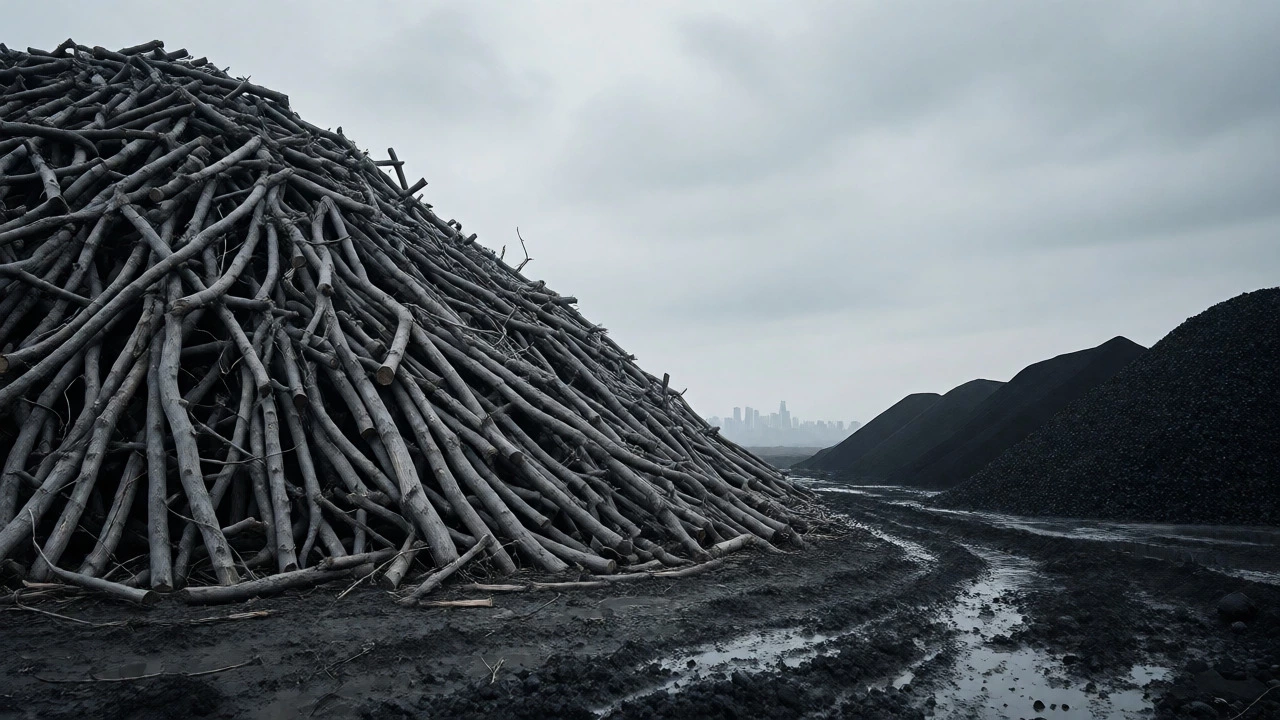
Here is the brutal truth: wood is bulky and light. Compared to coal or oil, it packs very little punch per pound. This is called energy density. If you want to power a city, you need a lot of energy. If you use wood, you need a mountain of it.
Let’s look at the numbers. Dry hardwood has an energy content of about 15-20 megajoules per kilogram (MJ/kg). Coal? Around 24 MJ/kg. Oil? A hefty 42 MJ/kg. Natural gas is even higher by volume. See the gap? To get the same heat from wood as you do from oil, you need more than double the weight. Now imagine transporting that weight across a country. You’re shipping water-heavy, low-value material instead of concentrated fuel. It’s inefficient and expensive.
| Fuel Type | Approximate Energy Content (MJ/kg) | Relative Efficiency |
|---|---|---|
| Dry Hardwood | 18 | Low |
| Coal | 24 | Medium |
| Crude Oil | 42 | High |
| Natural Gas | 50 | Very High |
This density issue kills the idea of wood powering massive industrial plants easily. Sure, some countries like Finland use large-scale biomass plants, but they rely on local forestry waste, not imported logs. Transporting wood long distances often uses up more diesel than the wood itself provides in net energy gain.
Moisture Kills Efficiency
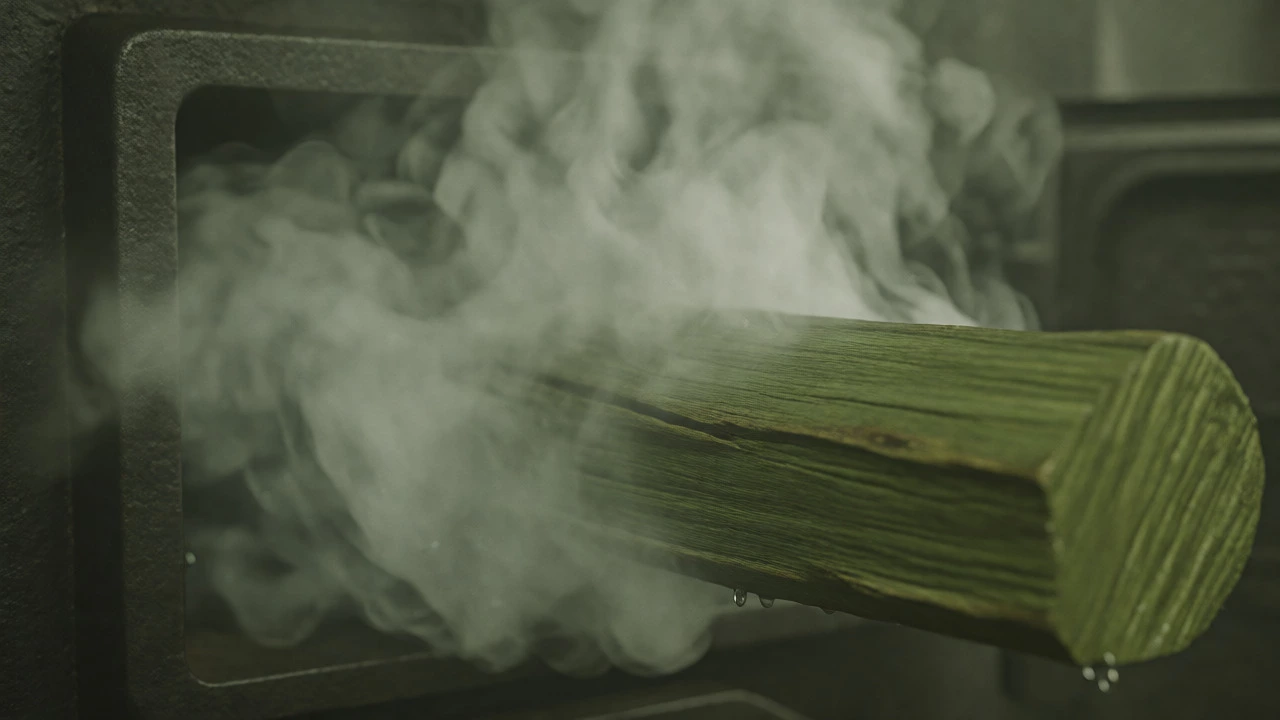
Ever tried to burn a wet log? It hisses, smokes, and barely gets hot. That’s because wood holds water. Green wood (freshly cut) can contain up to 50% water by weight. When you burn it, you spend half your energy boiling off that water before you get any useful heat.
To make wood efficient, it must be dried. This process, known as seasoning, takes months or years depending on the species and climate. In rainy places like the UK, getting wood dry enough to burn cleanly is a logistical nightmare. You need covered storage, airflow, and time. Industrial drying uses extra energy, which defeats the purpose of using a "free" fuel. If you don’t dry it properly, you get creosote buildup in chimneys-a fire hazard-and nasty particulate matter that chokes your lungs.
Land Use and Scale Limitations
Trees grow slowly. Solar panels generate power instantly when the sun shines. Wind turbines spin whenever the breeze blows. Trees take decades to mature. If we tried to replace all fossil fuels with wood, how much forest would we need?
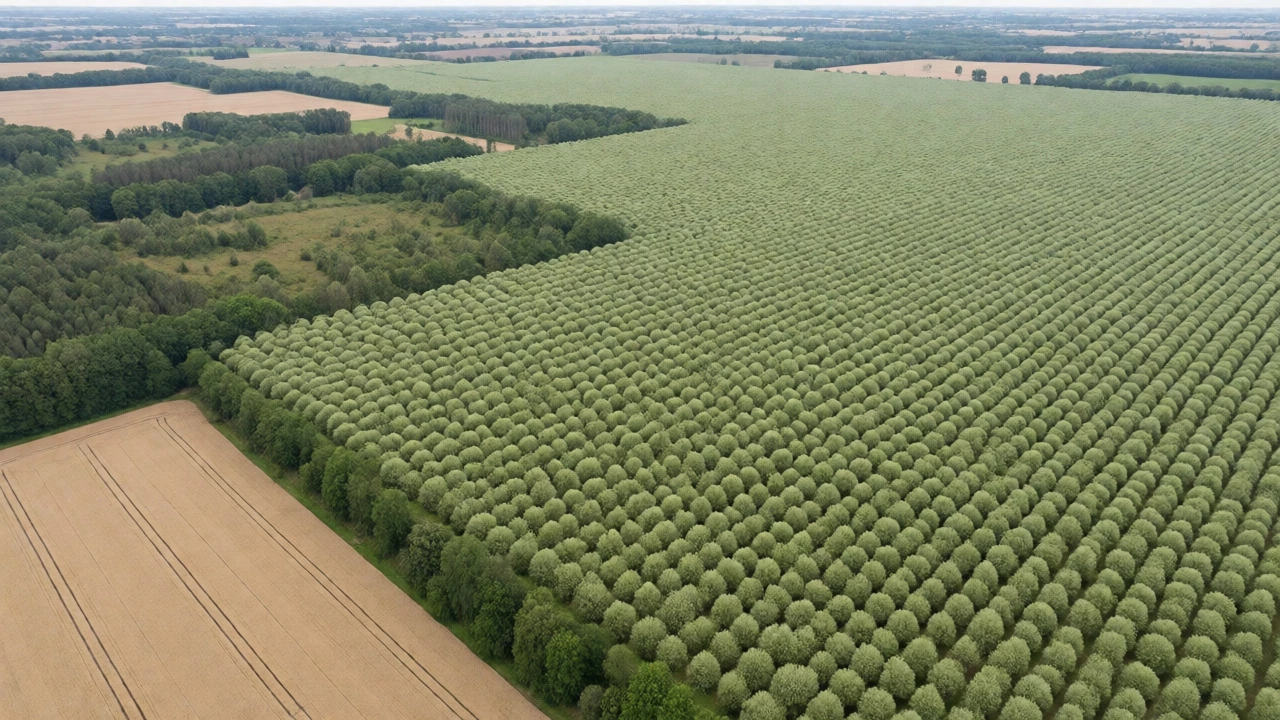
Studies suggest that meeting global energy demand solely through wood would require clearing vast areas of existing ecosystems. We’d likely face a conflict between food production and fuel production. Imagine turning prime agricultural land into fast-growing willow plantations. Who grows the wheat? This isn’t hypothetical; it happened historically. Deforestation led to soil erosion and desertification in many regions, including parts of Europe and North America, precisely because people burned too much wood without replanting fast enough.
Moreover, sustainable forestry is tricky. Cutting down a tree releases carbon immediately. It takes that new tree decades to reabsorb that CO2. During that lag time, the atmosphere holds more greenhouse gases. For immediate climate goals, this delay is problematic compared to solar or wind, which have near-zero operational emissions.
The Pollution Paradox
We think of wood as "clean" because it’s natural. But burning wood in open fires or old stoves is one of the dirtiest ways to produce heat. Residential wood burning is a major source of fine particulate matter (PM2.5) in many cities. These tiny particles penetrate deep into the lungs and bloodstream, causing heart and lung disease.
In London, for example, authorities have restricted solid fuel burning in certain zones because domestic smoke contributes significantly to poor air quality. Modern pellet boilers are cleaner, but they still emit nitrogen oxides and particulates. Fossil fuels have scrubbers and filters; most home wood stoves do not. So, while wood is renewable, it’s not necessarily clean at the point of combustion unless heavily regulated and technologically advanced.
Where Wood Actually Works
So, did we abandon wood entirely? No. We just moved it to niche roles where its strengths shine. Wood excels in decentralized, low-tech heating scenarios. Rural homes with access to local timber use it for space heating because it’s cheap and available. It’s also great for combined heat and power (CHP) systems in industries that already produce wood waste, like sawmills or paper mills. They burn the scraps to run their machines. That’s smart circular economy stuff.
Wood pellets are another success story. By compressing sawdust into dense cylinders, manufacturers solved the density problem. Pellets flow like grain, can be fed automatically into boilers, and burn efficiently. Countries like Austria and Sweden use pellet districts heating entire neighborhoods. It works, but it’s expensive and requires consistent supply chains.
The Economic Reality
Finally, let’s talk money. Is wood cheaper than gas or electricity? Sometimes, yes. But only if you do the labor yourself. Chopping, stacking, carrying, and cleaning ash is hard work. If you hire someone to do it, the cost skyrockets. Plus, wood prices fluctuate based on weather and demand. In cold winters, pellet prices can spike.
Fossil fuels benefit from centuries of infrastructure investment. Pipelines, refineries, and power grids are built around them. Building a nationwide network for wood delivery and processing is costly. Until technology improves conversion efficiency and logistics, wood remains a supplementary fuel, not a primary driver of the global grid.
Key Takeaways
- Low Energy Density: Wood contains far less energy per unit of weight than oil or coal, making transport inefficient.
- Moisture Issues: Wet wood wastes energy boiling water and creates pollution; drying takes time and resources.
- Land Constraints: Replacing all fossil fuels with wood would require unsustainable amounts of forest land.
- Pollution Risks: Home wood burning is a significant source of harmful particulate matter in urban areas.
- Niche Viability: Wood works best for local heating and industrial waste-to-energy projects, not national grids.
Is burning wood really carbon neutral?
Not exactly. While trees absorb CO2 as they grow, burning them releases it immediately. It takes decades for a new tree to reabsorb that carbon. During this lag period, the atmospheric CO2 levels remain elevated, contributing to short-term warming. True neutrality depends on sustainable management and accounting for the full lifecycle, including harvesting and transport emissions.
Why don't power plants use wood instead of coal?
Mostly due to logistics and density. Coal is easier to mine, transport, and store in large quantities. Wood is bulky, prone to rot, and varies in moisture content. Large-scale wood power plants exist, but they typically rely on local forestry residues rather than importing raw logs over long distances, which would be economically unviable.
Are wood pellets better than regular logs?
Yes, generally. Wood pellets are compressed, dried, and uniform in size. This increases energy density, reduces moisture content, and allows for automated feeding into boilers. They burn cleaner and more consistently than irregular logs, though they require energy-intensive manufacturing processes.
Can wood energy help reduce my carbon footprint?
It can, if sourced locally and burned efficiently. Using sustainably harvested wood for home heating can replace high-carbon fossil fuels. However, if you drive a car to buy distant wood, or burn wet logs in an open fireplace, the benefits diminish or vanish. Efficient modern stoves or pellet boilers offer the best environmental outcome.
What is the biggest downside of wood energy?
Air pollution. Burning wood produces fine particulate matter (PM2.5), which poses serious health risks. In densely populated areas, widespread residential wood burning can degrade air quality significantly, leading to respiratory issues and other health problems. Proper filtration and regulation are essential to mitigate this.