Why Are Nanoparticles Harmful to Human Health? Risks & Science
 Oct, 27 2026
Nanoparticle Risk Estimator
Select the characteristics of a hypothetical nanoparticle to see its estimated biological impact profile.
Estimated Biological Impact
LowYou brush your teeth with toothpaste containing nanoparticles. You wear sunscreen that uses them to block UV rays. You might even take medication delivered via tiny capsules too small to see under a standard microscope. We love these microscopic heroes because they make our products smarter and more effective. But here is the uncomfortable truth: their superpower-being incredibly small-is also their biggest danger.
Why does size matter so much when it comes to health? Because at the nanoscale (1 to 100 nanometers), materials behave differently than they do in bulk form. A chunk of gold is inert and safe for jewelry. Gold nanoparticles? They can trigger immune responses or cross barriers that usually keep toxins out. This article breaks down exactly why these tiny particles pose unique health risks, moving beyond fear-mongering into the actual biology and chemistry driving nanoparticle toxicity.
The Size Paradox: Why Small Equals Dangerous
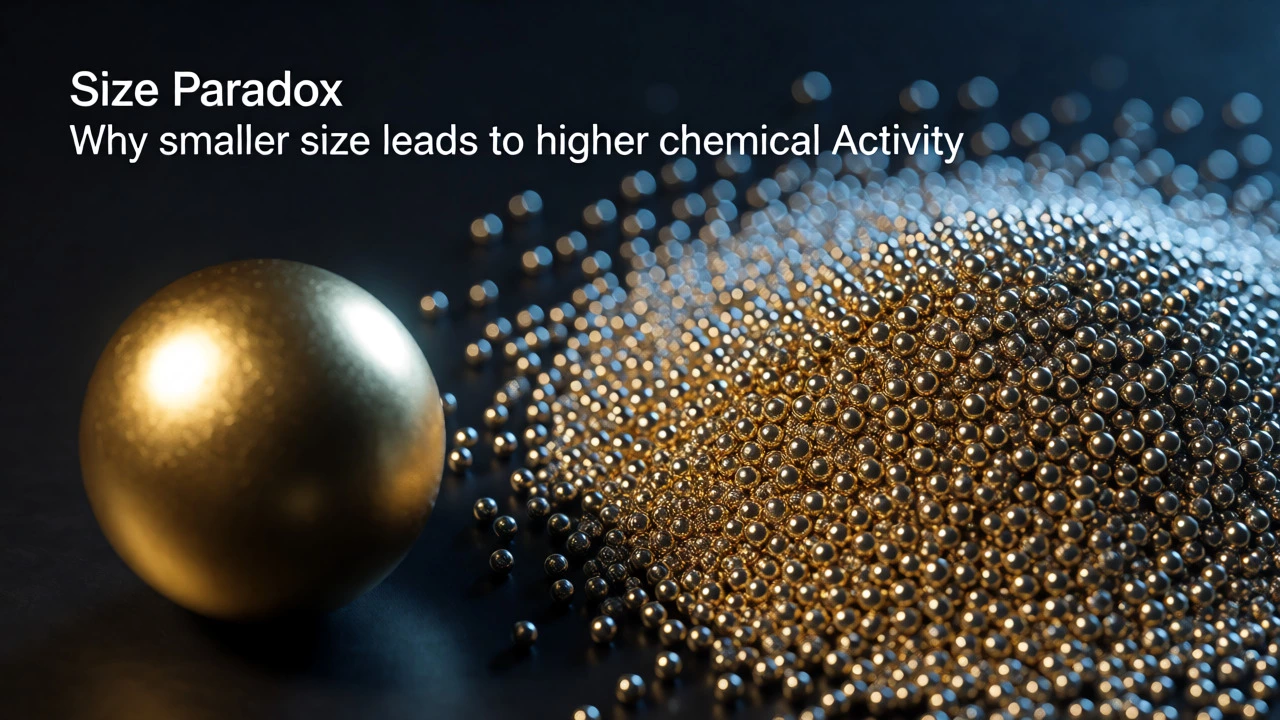
Think about a beach ball versus a pile of sand. The beach ball has one surface area. The pile of sand, made from the same amount of material, has vastly more surface area exposed to the air. This is the core principle behind surface-area-to-volume ratio issues in nanotechnology. As particles shrink, their relative surface area explodes.
Chemical reactions happen on surfaces. More surface area means more reactivity. For nanoparticles, this high reactivity can lead to unexpected biological interactions. Your body isn't evolved to handle materials that are chemically hyper-active due to sheer size. When you inhale a large particle, your mucus traps it. When you inhale a nanoparticle, it often slips past those defenses entirely. It’s not just about what the particle is made of; it’s about how its physical scale changes its interaction with your cells.
Breaching Biological Barriers
Your body has excellent security systems. The skin keeps things out. The blood-brain barrier protects your brain. The placenta shields a developing fetus. Nanoparticles are notorious for bypassing these checkpoints. Because they are comparable in size to proteins and DNA strands, they can slip through gaps that larger molecules cannot.
Once inside, they don't always stay put. Some nanoparticles accumulate in the liver and spleen, where the body tries to filter them out. Others travel to the lungs, causing inflammation similar to asbestos exposure but on a cellular level. Research published in journals like Nature Nanotechnology has shown that certain carbon-based nanoparticles can cross the blood-brain barrier, potentially affecting neurological function. This ability to go places we didn't intend for foreign substances to go is a primary driver of concern.
Oxidative Stress and Cellular Damage
If there is one mechanism to remember, it is oxidative stress. Many metallic nanoparticles, such as silver or titanium dioxide, generate reactive oxygen species (ROS) when they interact with biological fluids. ROS are unstable molecules that steal electrons from other molecules in your cells.
Normally, your body handles a little bit of ROS. But an overload causes damage to lipids, proteins, and DNA. Imagine rust forming inside your cells. This process, known as lipid peroxidation, damages cell membranes. If the membrane breaks, the cell dies. If the DNA is damaged, it could mutate, potentially leading to cancer over time. Not all nanoparticles cause this equally. It depends heavily on their coating, shape, and chemical composition. Bare metal particles are often more toxic than those coated with polymers designed to mask their reactive surfaces.
The Immune System Confusion
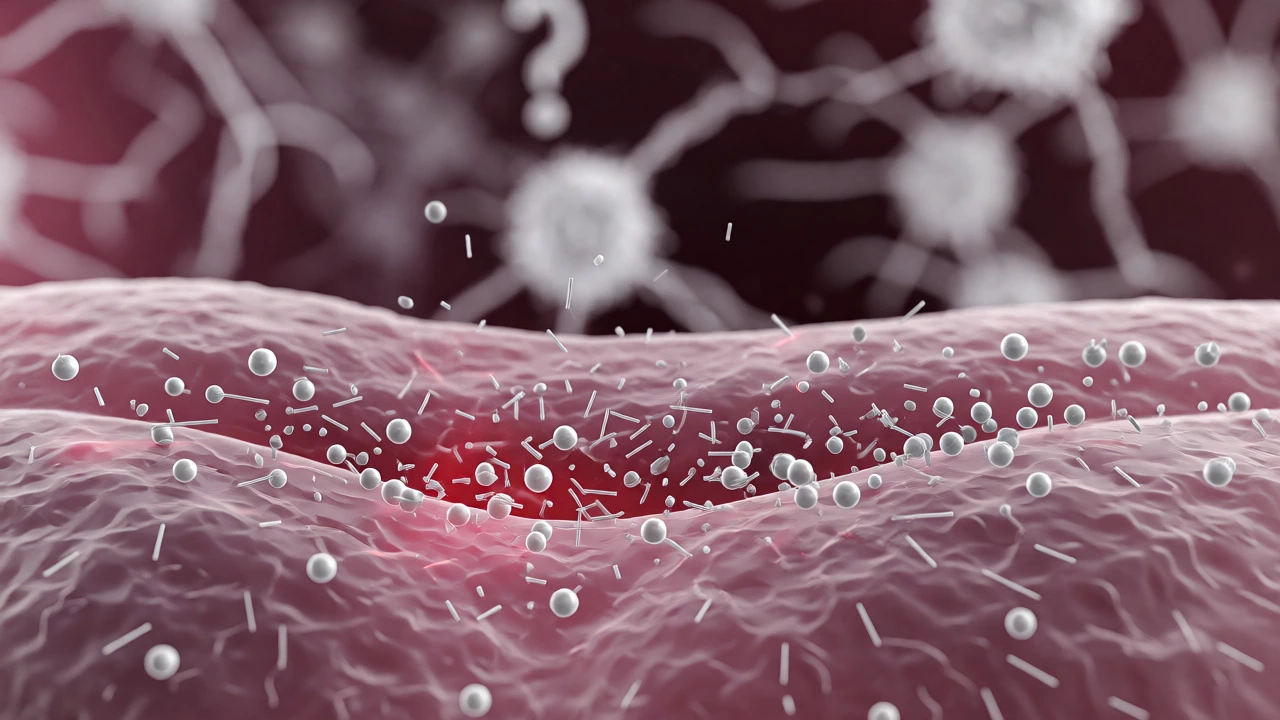
Your immune system is trained to spot bacteria, viruses, and parasites. Nanoparticles confuse it. They are too small to be flagged immediately as "foreign invaders" by some sensors, but large enough to be engulfed by macrophages (immune cells that eat debris). This process is called phagocytosis.
When macrophages try to digest nanoparticles that aren't biodegradable, they get stuck. The cell essentially chokes. This triggers chronic inflammation. Over time, persistent inflammation is a root cause of many diseases, including cardiovascular issues and autoimmune disorders. Furthermore, some nanoparticles mimic the size and shape of pathogens, triggering an exaggerated immune response without actually being infectious. This "false alarm" drains your body's resources and creates unnecessary tissue damage.
Not All Nanoparticles Are Created Equal
It is crucial to avoid the trap of thinking "all nanotech is bad." Toxicity is highly specific. A silica nanoparticle used in food additives behaves very differently from a quantum dot used in medical imaging. Factors influencing risk include:
- Composition: Metals like cadmium or lead are inherently toxic. Carbon nanotubes may act like asbestos fibers if long and straight.
- Shape: Spherical particles tend to be less harmful than needle-like or fibrous shapes, which can physically pierce cell membranes.
- Surface Charge: Positively charged particles often bind more aggressively to negatively charged cell walls, increasing uptake and potential toxicity.
- Solubility: Particles that dissolve safely release ions that the body can excrete. Insoluble particles persist and accumulate.
| Nanoparticle Type | Common Use | Primary Health Risk Mechanism | Current Safety Status |
|---|---|---|---|
| Titanium Dioxide (TiO₂) | Sunscreen, Food Coloring | Oxidative stress, lung inflammation if inhaled | Generally recognized as safe (GRAS) for ingestion; caution for inhalation |
| Silver Nanoparticles | Antibacterial coatings, textiles | Cytotoxicity, accumulation in liver/kidneys | Debated; potential impact on gut microbiome |
| Carbon Nanotubes | Electronics, composite materials | Frustrated phagocytosis, asbestos-like pathology | High concern for occupational exposure |
| Gold Nanoparticles | Medical imaging, drug delivery | Low inherent toxicity, but clearance rate varies | Considered relatively safe in controlled doses |

Environmental Exposure vs. Direct Contact
We rarely encounter pure, isolated nanoparticles. Usually, we face them in mixtures. Sunscreen washes off into rivers, affecting aquatic life. Industrial workers inhale dust during manufacturing. Consumers ingest them in packaged foods. The route of exposure matters immensely. Ingestion is generally lower risk than inhalation because the digestive tract has robust barriers and enzymes that break down many particles. Inhalation puts particles directly onto delicate lung tissue, where gas exchange occurs. This makes occupational safety in nanomanufacturing a critical area of public health focus.
Moreover, nanoparticles can act as "Trojan Horses." They adsorb pollutants from the environment onto their surfaces. So, a particle might carry heavy metals or pesticides into your body that wouldn't have entered otherwise. This synergistic effect complicates risk assessment significantly.
Regulation and the Precautionary Principle
Regulatory bodies like the FDA and EMA are still catching up. Traditional toxicology tests were designed for bulk chemicals, not nanomaterials. A substance deemed safe in bulk form isn't automatically safe at the nanoscale. This gap leads to uncertainty. Until long-term epidemiological studies provide clearer answers, scientists advocate for the precautionary principle: minimize unnecessary exposure, especially for vulnerable groups like children and pregnant women.
This doesn't mean you should stop using your phone or wearing sunscreen. It means being aware that the science is evolving. Manufacturers are increasingly required to disclose nano-content, and researchers are developing better tools to track where these particles go once they enter the body.
Are all nanoparticles dangerous?
No. Many nanoparticles, such as those found naturally in milk or used in approved medicines, are safe. Toxicity depends on the material, size, shape, and dose. Some are inert, while others are highly reactive.
How do nanoparticles enter the human body?
The three main routes are inhalation (breathing in dust/aerosols), ingestion (food/water/supplements), and dermal absorption (through skin, especially if broken or thin).
Do nanoparticles leave the body?
Some do, via urine or feces, depending on solubility and size. However, insoluble particles like certain metal oxides or carbon nanotubes can accumulate in organs like the liver, spleen, and lungs for long periods.
Is sunscreen with nanoparticles safe?
Most current evidence suggests that topical application of zinc oxide and titanium dioxide nanoparticles is safe for intact skin. They largely remain on the surface and do not penetrate deeply into living tissue. Avoid inhaling spray sunscreens.
Can nanoparticles cause cancer?
There is concern, particularly with fibrous nanoparticles like carbon nanotubes, which can cause inflammation and genetic damage similar to asbestos. However, direct causal links to human cancer from consumer products are still being studied.