What is the richest form of energy?
 Mar, 20 2026
Energy Density Calculator
Energy Density Comparison
Calculate how much of each energy source is needed to produce a specific amount of energy. Fusion energy offers the highest energy density of all sources - over 300 billion joules per gram.
Calculate Energy Requirements
Results
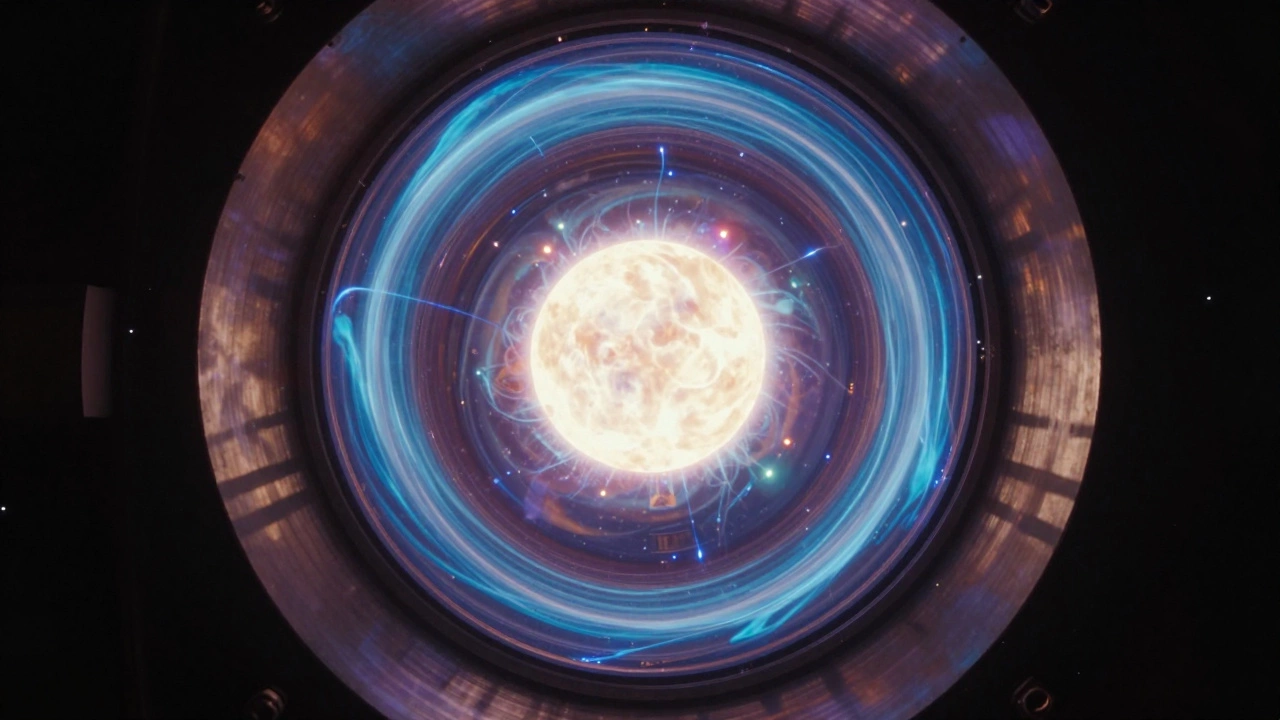
When people talk about the richest form of energy, they’re not just asking which source gives the most power. They’re asking: which one packs the most punch per gram, per drop, per unit of mass? The answer might surprise you - it’s not solar, not wind, not even hydrogen. It’s nuclear energy, specifically the kind we’re still trying to master: fusion.
Energy density: the real metric that matters
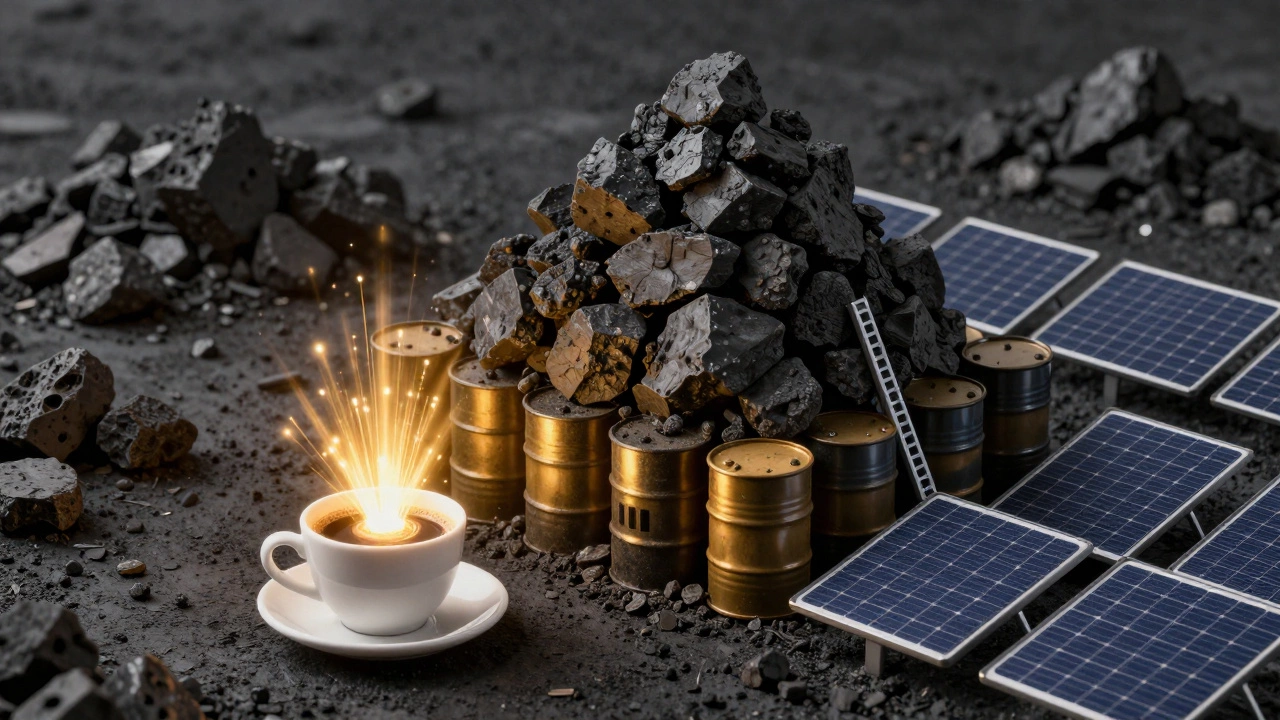
Most of us think of energy in terms of kilowatt-hours or how long a battery lasts. But when you’re comparing energy sources at the fundamental level, you need to look at energy density - how much energy you get from a given amount of fuel. This isn’t about how many solar panels you can fit on a roof. It’s about how much energy you can unlock from a coffee cup full of material.
Take coal. One ton of coal gives you about 24 million joules of energy. That’s a lot - until you compare it to uranium-235. Just one gram of uranium-235, when split in a fission reaction, releases over 80 billion joules. That’s more than 3,000 times more energy than the same weight of coal. And uranium isn’t even the top of the ladder.
Fusion - the process that powers the sun - takes this further. When hydrogen isotopes like deuterium and tritium fuse into helium, they release energy with an efficiency that makes fission look modest. One gram of fusion fuel can produce roughly 300 billion joules. That’s enough to power an average home for over a month. And you don’t need mining, drilling, or massive refineries to get it. Deuterium comes from seawater. Tritium can be bred from lithium. The fuel is practically endless.
Why we’re still not using fusion
If fusion is so powerful, why aren’t we running our cities on it yet? The problem isn’t the science - we’ve known how it works since the 1950s. It’s the engineering. To fuse atoms, you need to recreate the core of the sun here on Earth. That means heating hydrogen to over 100 million degrees Celsius and holding it in place with magnetic fields so it doesn’t melt through the reactor walls. We’ve done it - briefly. In 2022, the National Ignition Facility in California achieved a net energy gain: more energy out than the laser energy put in. But that’s not the same as a power plant that runs 24/7.
Current fusion experiments, like ITER in France, are massive, expensive, and still years away from commercial use. The goal isn’t just to make fusion work. It’s to make it cheap, reliable, and scalable. The materials alone are a nightmare. Neutrons from fusion reactions bombard the reactor walls, damaging them over time. We’re still developing materials that can survive decades of this punishment.
How nuclear compares to other energy sources
Let’s put this in perspective. Here’s how different energy sources stack up in energy density:
| Energy Source | Energy Density (Joules per gram) | Notes |
|---|---|---|
| Coal | 24,000,000 | Traditional fossil fuel, high emissions |
| Oil | 44,000,000 | Used in transport, still dominant globally |
| Gasoline | 46,000,000 | Why cars still run on it |
| Lithium-ion battery | 720,000 | Used in EVs, needs heavy packs |
| Hydrogen (fuel cell) | 142,000,000 | Lightweight but hard to store |
| Uranium-235 (fission) | 80,000,000,000 | Used in nuclear power plants |
| Deuterium-Tritium (fusion) | 300,000,000,000 | Still experimental, no commercial plants |
Notice how fusion beats everything else by a factor of 10 to 100. Even hydrogen, often called the fuel of the future, is dwarfed. And unlike solar or wind, fusion doesn’t depend on weather, time of day, or geography. A single fusion plant could replace dozens of wind farms or millions of solar panels.
The hidden cost of renewables
Solar and wind are clean and growing fast. But they’re not energy-dense. To power a city like Liverpool, you’d need to cover hundreds of square kilometers with panels or turbines. That’s land you can’t use for farming, housing, or nature. And batteries? They’re heavy, expensive, and rely on rare minerals like lithium and cobalt. Mining those materials has environmental and ethical costs.
Renewables are essential - no question. But they’re not the richest form of energy. They’re the most accessible right now. That’s different. Accessible doesn’t mean optimal. If we want to decarbonize global industry, power deep-sea shipping, or run future cities without constant grid strain, we need something that doesn’t require vast land use or constant storage.
Why fusion is the only long-term solution
Let’s say we crack fusion. What changes? For starters, fuel scarcity vanishes. A single fusion reactor could run for a year on a few kilograms of fuel. No oil rigs. No coal trains. No uranium enrichment plants. No radioactive waste that lasts thousands of years - fusion waste decays in decades.
And because fusion doesn’t produce greenhouse gases, it doesn’t contribute to climate change. Unlike nuclear fission, it can’t melt down. If the magnetic field fails, the reaction stops. No Fukushima. No Chernobyl. No meltdown risk.
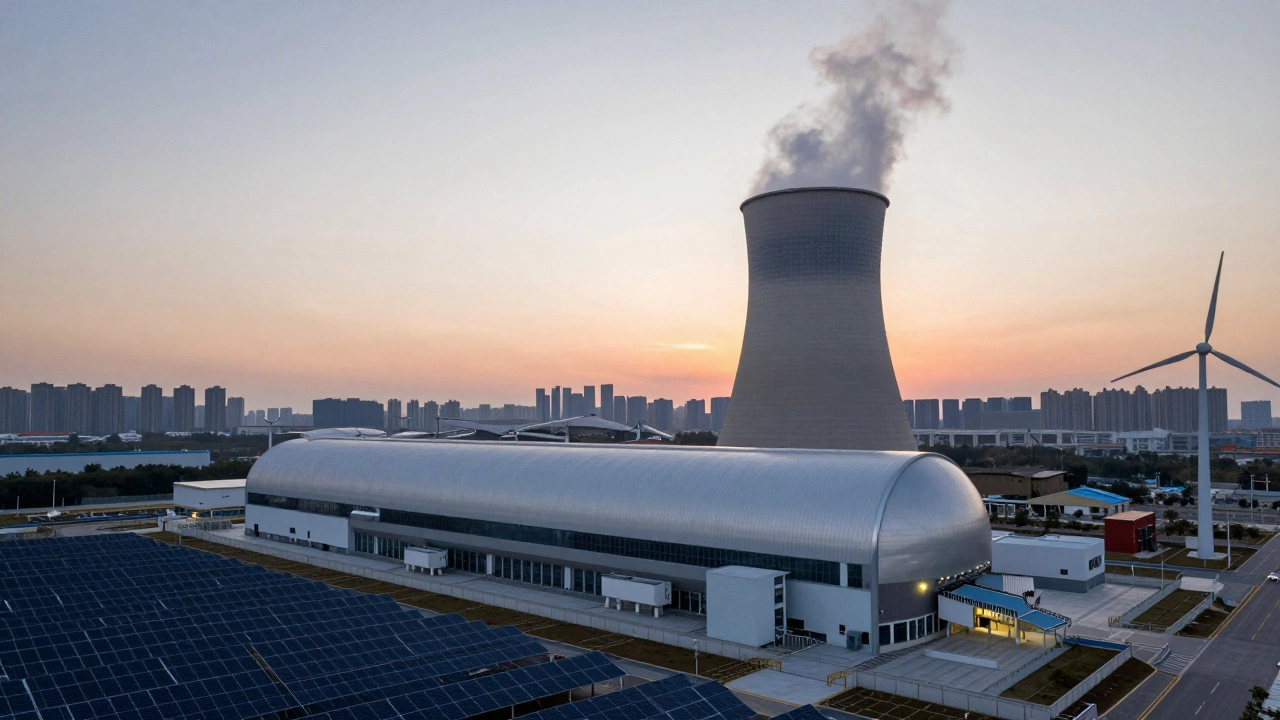
Some say we should focus on improving solar and wind. We should. But we can’t afford to wait 50 years for fusion to be ready. The truth is, we’ve been waiting 70 years. And now, private companies like Commonwealth Fusion Systems and Tokamak Energy are making real progress. They’re using high-temperature superconductors to build smaller, cheaper reactors. Some expect the first commercial fusion power plants by the early 2030s.
What’s holding us back?
It’s not lack of science. It’s lack of investment. Governments pour billions into wind and solar subsidies. Fusion? It’s been underfunded for decades. In 2025, global fusion funding was still less than 10% of what’s spent on solar. That’s like trying to build a highway with a shovel.
We need to treat fusion like we treated the Apollo program - not as a long-shot science project, but as a national priority. The payoff isn’t just energy. It’s geopolitical stability. It’s clean air. It’s energy independence. It’s a world where every country has access to limitless, safe power.
Final thought: richness isn’t about abundance - it’s about potential
The richest form of energy isn’t the one we use today. It’s the one we haven’t unlocked yet. Solar panels are everywhere. Wind turbines spin in every breeze. But none of them come close to the raw power locked inside atomic nuclei. Fusion is the ultimate energy source - not because it’s easy, but because it’s so powerful it could change everything.
Is nuclear fusion considered renewable energy?
Technically, fusion isn’t classified as renewable because it doesn’t rely on naturally replenishing flows like sunlight or wind. But it’s often grouped with renewables because it produces zero greenhouse gases, uses virtually limitless fuel (deuterium from seawater), and generates no long-lived radioactive waste. For practical purposes - clean, safe, and abundant - it behaves like the ultimate renewable.
Why isn’t nuclear fission the richest form of energy?
Fission is powerful - far more than fossil fuels. But it’s not the richest. Fusion releases about four times more energy per reaction than fission. Also, fission relies on uranium, which is finite and requires mining. Fusion uses hydrogen isotopes that can be extracted from water. Plus, fission produces long-term radioactive waste. Fusion does not.
Can fusion replace solar and wind entirely?
Not immediately, and probably not alone. Solar and wind are already deployed, cheap, and growing fast. Fusion will likely complement them - providing steady baseload power while renewables handle peak demand. Think of fusion as the backbone, not the replacement. Together, they could create a fully clean grid.
How much fuel does a fusion reactor need?
A 1-gigawatt fusion plant would need about 250 kilograms of fuel per year - roughly the weight of a small car. Compare that to a coal plant, which burns over 3 million tons of coal in the same time. Fusion fuel is so energy-dense that a single truckload could power a city for months.
Is fusion safe?
Yes, far safer than fission. Fusion requires extreme conditions to sustain. If anything goes wrong - power loss, magnetic field failure, coolant leak - the reaction stops instantly. There’s no chain reaction. No meltdown risk. The radioactive byproducts are short-lived and can be handled safely within decades, not millennia.
Right now, the richest form of energy is hidden in plain sight - in the heart of every star, waiting for us to build the right tools. We’re closer than ever. And when we finally tap into it, the world won’t just get cleaner. It will get fundamentally, irrevocably better.