What is the Path of Technology Transfer? A Step-by-Step Guide from Lab to Market
 Jul, 31 2026
The Path of Technology Transfer: A Step-by-Step Guide
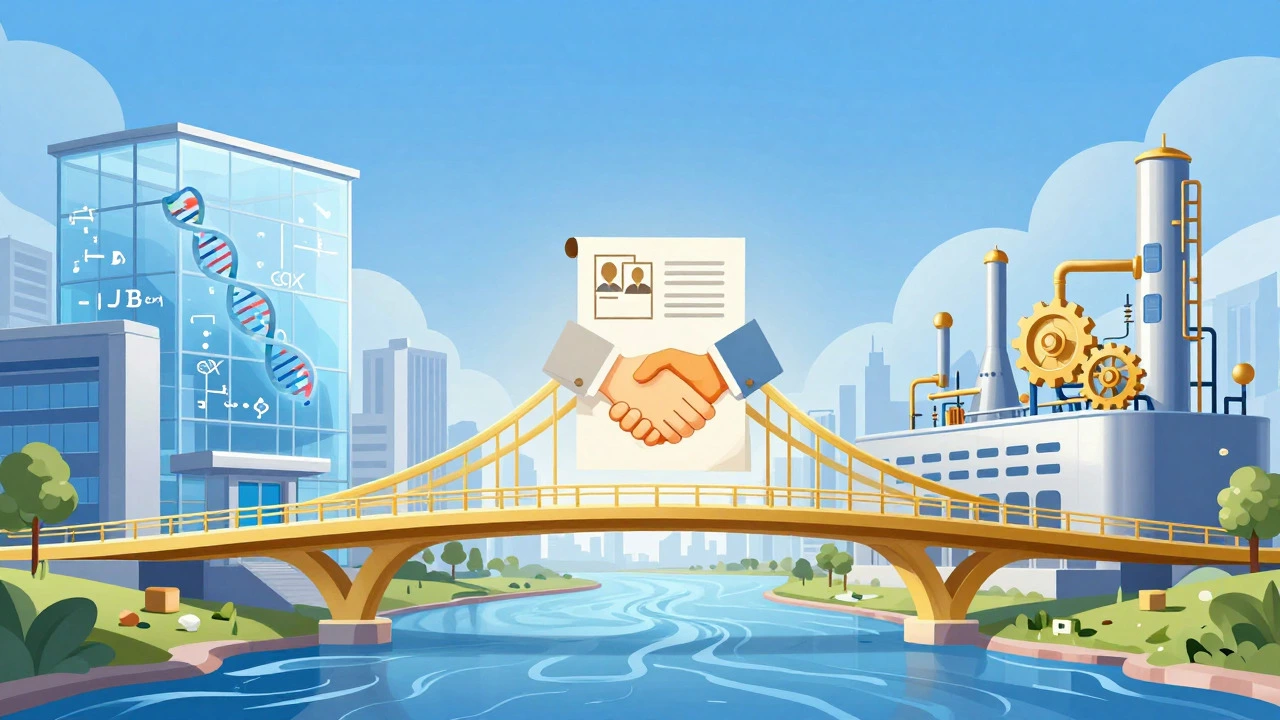
You’ve spent years in the lab. You’ve published papers, secured grants, and maybe even won an award for your breakthrough. But here’s the hard truth: if that discovery stays on a shelf or buried in a journal, it helps no one. That’s where technology transfer comes in. It’s not just a buzzword; it’s the bridge between scientific curiosity and real-world impact.
So, what exactly is the path of technology transfer? It’s the journey an invention takes from its first spark of an idea in a university lab or research institute to becoming a product you can buy, use, or benefit from in society. This process involves legal hurdles, business strategy, and a lot of negotiation. If you’re a researcher, an entrepreneur, or a policy maker, understanding this roadmap is crucial. Let’s walk through the stages together.
The Starting Point: Discovery and Invention Disclosure
Every successful technology transfer story begins with a moment of clarity. A researcher realizes their work has potential beyond academic papers. Maybe it’s a new drug compound, a more efficient solar panel material, or a novel algorithm for data analysis. The first concrete step is Invention Disclosure, which is the formal process where researchers notify their institution about a potentially patentable invention.
This isn’t just paperwork. It’s a strategic move. When you disclose an invention, you trigger a review process. Your university’s technology transfer office (TTO) evaluates whether the idea is novel, useful, and non-obvious. They also check if it aligns with the institution’s mission. For example, a medical device developed at a health sciences university will get different attention than a software tool at a liberal arts college.
Why does this matter? Because timing is everything. If you publish your results before filing for protection, you might lose the right to patent them in many countries. This is known as the "novelty bar." So, the disclosure happens early, often before any conference presentation or journal submission.
- Identify the core innovation: What makes this unique?
- Document everything: Lab notebooks, dates, and team members involved.
- Submit the form: Most universities have an online portal for this.
Protecting the Asset: Intellectual Property Strategy
Once the invention is disclosed, the next big hurdle is protection. You can’t sell what you don’t own. This is where Intellectual Property (IP) becomes the legal framework that grants exclusive rights to creators over their inventions. Patents are the most common form of IP in tech transfer, but copyrights and trade secrets also play roles.
Filing a patent is expensive and time-consuming. It can cost tens of thousands of dollars and take several years. That’s why TTOs are selective. They ask: Is there a market for this? Can we enforce the patent? Will companies pay for it? If the answer is yes, they proceed with provisional patents to secure the filing date while you refine the technology.
Think of a patent like a monopoly license. It gives you the right to exclude others from making, using, or selling your invention for a set period, usually 20 years. In exchange, you disclose how it works. This balance encourages innovation by rewarding inventors while sharing knowledge with the public.
| IP Type | Best For | Duration | Cost Level |
|---|---|---|---|
| Patent | Hardware, drugs, processes | ~20 years | High |
| Copyright | Software code, textbooks, media | Life + 70 years | Low |
| Trade Secret | Formulas, algorithms, methods | Indefinite | Medium |
Finding a Partner: Market Validation and Licensing
Now you have a protected invention. Who cares? This stage is all about finding industry partners. The TTO acts as a matchmaker. They reach out to companies that operate in the relevant sector. For instance, a new battery technology might interest electric vehicle manufacturers or energy storage startups.
Licensing is the primary mechanism here. Instead of starting a company yourself, you grant a company the right to use your IP in exchange for royalties or upfront fees. There are two main types: exclusive and non-exclusive. Exclusive licenses give one company sole rights, which can command higher prices but limit competition. Non-exclusive licenses allow multiple companies to use the tech, which can spread impact but dilute revenue.
Negotiations can be tough. Companies want low costs and broad rights. Researchers want fair compensation and rapid development. TTOs mediate these deals, ensuring terms protect the university’s interests while attracting investment. A good license agreement includes milestones—specific goals the licensee must meet to keep the rights.
From Prototype to Product: Commercialization
Signing a deal is just the beginning. The real work starts now. This phase involves scaling up production, meeting regulatory standards, and bringing the product to market. For biotech, this means clinical trials. For hardware, it means manufacturing partnerships.
Often, the original inventor isn’t involved in this stage. Industry teams take over. However, some universities support spin-offs—new companies created specifically to commercialize the technology. These startups are risky but offer high rewards. They retain ownership and control, allowing founders to shape the product’s future.
Consider the case of mRNA vaccines. Decades of basic research led to a platform that could be rapidly adapted during the pandemic. Without robust tech transfer pathways, those discoveries would have remained theoretical. The collaboration between academic labs and pharmaceutical giants accelerated development, saving countless lives.
Measuring Success: Impact and Feedback Loops
How do we know if technology transfer works? Metrics vary. Some look at revenue generated for universities. Others count jobs created or patents filed. But the true measure is societal impact. Did the technology improve health outcomes? Reduce carbon emissions? Enhance education?
Feedback loops are essential. Insights from the market inform future research. If a licensed product fails due to usability issues, researchers can adjust their approach. This iterative process strengthens the entire innovation ecosystem. Universities that actively engage with industry tend to produce more applicable research.
In regions like Liverpool, local initiatives connect academic talent with regional industries. This localized approach fosters economic growth while addressing specific community needs. It’s not just about global breakthroughs; it’s about solving problems right outside your door.
Common Pitfalls to Avoid
Technology transfer isn’t linear. Many projects stall along the way. Here are frequent roadblocks:
- Premature disclosure: Publishing too early kills patentability.
- Weak IP strategy: Poorly drafted claims leave loopholes for competitors.
- Misaligned incentives: Researchers may prioritize publications over commercial viability.
- Regulatory blind spots: Ignoring FDA or CE marking requirements delays launch.
Avoiding these requires communication. Involve your TTO early. Understand the business landscape. Be realistic about timelines. Commercialization takes years, not months.
Frequently Asked Questions
What is the first step in technology transfer?
The first step is invention disclosure. Researchers formally notify their institution’s technology transfer office about a new discovery that may have commercial potential. This triggers an evaluation of novelty, utility, and market fit.
Who owns the intellectual property in university research?
Ownership depends on funding sources and institutional policies. Generally, if federal funds were used, the Bayh-Dole Act allows universities to retain title. Private funding may lead to joint ownership. Always check your employment contract and grant agreements.
How long does the technology transfer process take?
It varies widely. Patent prosecution alone can take 3-5 years. Adding licensing negotiations and product development, expect 5-10 years from initial discovery to market entry. Biotech fields often require longer due to rigorous clinical trials.
Can individual researchers start their own companies?
Yes, this is called forming a spin-off or startup. Universities often support this by providing seed funding, mentorship, and access to facilities. However, founders must navigate equity splits, IP assignment, and conflict-of-interest policies carefully.
What role do technology transfer offices play?
TTOs manage the entire lifecycle of inventions. They evaluate disclosures, file patents, market technologies to industry, negotiate licenses, and ensure compliance with laws. They act as intermediaries between academia and commerce.
You’ve spent years in the lab. You’ve published papers, secured grants, and maybe even won an award for your breakthrough. But here’s the hard truth: if that discovery stays on a shelf or buried in a journal, it helps no one. That’s where technology transfer comes in. It’s not just a buzzword; it’s the bridge between scientific curiosity and real-world impact.
So, what exactly is the path of technology transfer? It’s the journey an invention takes from its first spark of an idea in a university lab or research institute to becoming a product you can buy, use, or benefit from in society. This process involves legal hurdles, business strategy, and a lot of negotiation. If you’re a researcher, an entrepreneur, or a policy maker, understanding this roadmap is crucial. Let’s walk through the stages together.
The Starting Point: Discovery and Invention Disclosure
Every successful technology transfer story begins with a moment of clarity. A researcher realizes their work has potential beyond academic papers. Maybe it’s a new drug compound, a more efficient solar panel material, or a novel algorithm for data analysis. The first concrete step is Invention Disclosure, which is the formal process where researchers notify their institution about a potentially patentable invention.
This isn’t just paperwork. It’s a strategic move. When you disclose an invention, you trigger a review process. Your university’s technology transfer office (TTO) evaluates whether the idea is novel, useful, and non-obvious. They also check if it aligns with the institution’s mission. For example, a medical device developed at a health sciences university will get different attention than a software tool at a liberal arts college.
Why does this matter? Because timing is everything. If you publish your results before filing for protection, you might lose the right to patent them in many countries. This is known as the "novelty bar." So, the disclosure happens early, often before any conference presentation or journal submission.
- Identify the core innovation: What makes this unique?
- Document everything: Lab notebooks, dates, and team members involved.
- Submit the form: Most universities have an online portal for this.
Protecting the Asset: Intellectual Property Strategy
Once the invention is disclosed, the next big hurdle is protection. You can’t sell what you don’t own. This is where Intellectual Property (IP) becomes the legal framework that grants exclusive rights to creators over their inventions. Patents are the most common form of IP in tech transfer, but copyrights and trade secrets also play roles.
Filing a patent is expensive and time-consuming. It can cost tens of thousands of dollars and take several years. That’s why TTOs are selective. They ask: Is there a market for this? Can we enforce the patent? Will companies pay for it? If the answer is yes, they proceed with provisional patents to secure the filing date while you refine the technology.
Think of a patent like a monopoly license. It gives you the right to exclude others from making, using, or selling your invention for a set period, usually 20 years. In exchange, you disclose how it works. This balance encourages innovation by rewarding inventors while sharing knowledge with the public.
| IP Type | Best For | Duration | Cost Level |
|---|---|---|---|
| Patent | Hardware, drugs, processes | ~20 years | High |
| Copyright | Software code, textbooks, media | Life + 70 years | Low |
| Trade Secret | Formulas, algorithms, methods | Indefinite | Medium |
Finding a Partner: Market Validation and Licensing
Now you have a protected invention. Who cares? This stage is all about finding industry partners. The TTO acts as a matchmaker. They reach out to companies that operate in the relevant sector. For instance, a new battery technology might interest electric vehicle manufacturers or energy storage startups.
Licensing is the primary mechanism here. Instead of starting a company yourself, you grant a company the right to use your IP in exchange for royalties or upfront fees. There are two main types: exclusive and non-exclusive. Exclusive licenses give one company sole rights, which can command higher prices but limit competition. Non-exclusive licenses allow multiple companies to use the tech, which can spread impact but dilute revenue.
Negotiations can be tough. Companies want low costs and broad rights. Researchers want fair compensation and rapid development. TTOs mediate these deals, ensuring terms protect the university’s interests while attracting investment. A good license agreement includes milestones-specific goals the licensee must meet to keep the rights.
From Prototype to Product: Commercialization
Signing a deal is just the beginning. The real work starts now. This phase involves scaling up production, meeting regulatory standards, and bringing the product to market. For biotech, this means clinical trials. For hardware, it means manufacturing partnerships.
Often, the original inventor isn’t involved in this stage. Industry teams take over. However, some universities support spin-offs-new companies created specifically to commercialize the technology. These startups are risky but offer high rewards. They retain ownership and control, allowing founders to shape the product’s future.
Consider the case of mRNA vaccines. Decades of basic research led to a platform that could be rapidly adapted during the pandemic. Without robust tech transfer pathways, those discoveries would have remained theoretical. The collaboration between academic labs and pharmaceutical giants accelerated development, saving countless lives.

Measuring Success: Impact and Feedback Loops
How do we know if technology transfer works? Metrics vary. Some look at revenue generated for universities. Others count jobs created or patents filed. But the true measure is societal impact. Did the technology improve health outcomes? Reduce carbon emissions? Enhance education?
Feedback loops are essential. Insights from the market inform future research. If a licensed product fails due to usability issues, researchers can adjust their approach. This iterative process strengthens the entire innovation ecosystem. Universities that actively engage with industry tend to produce more applicable research.
In regions like Liverpool, local initiatives connect academic talent with regional industries. This localized approach fosters economic growth while addressing specific community needs. It’s not just about global breakthroughs; it’s about solving problems right outside your door.
Common Pitfalls to Avoid
Technology transfer isn’t linear. Many projects stall along the way. Here are frequent roadblocks:
- Premature disclosure: Publishing too early kills patentability.
- Weak IP strategy: Poorly drafted claims leave loopholes for competitors.
- Misaligned incentives: Researchers may prioritize publications over commercial viability.
- Regulatory blind spots: Ignoring FDA or CE marking requirements delays launch.
Avoiding these requires communication. Involve your TTO early. Understand the business landscape. Be realistic about timelines. Commercialization takes years, not months.
What is the first step in technology transfer?
The first step is invention disclosure. Researchers formally notify their institution’s technology transfer office about a new discovery that may have commercial potential. This triggers an evaluation of novelty, utility, and market fit.
Who owns the intellectual property in university research?
Ownership depends on funding sources and institutional policies. Generally, if federal funds were used, the Bayh-Dole Act allows universities to retain title. Private funding may lead to joint ownership. Always check your employment contract and grant agreements.
How long does the technology transfer process take?
It varies widely. Patent prosecution alone can take 3-5 years. Adding licensing negotiations and product development, expect 5-10 years from initial discovery to market entry. Biotech fields often require longer due to rigorous clinical trials.
Can individual researchers start their own companies?
Yes, this is called forming a spin-off or startup. Universities often support this by providing seed funding, mentorship, and access to facilities. However, founders must navigate equity splits, IP assignment, and conflict-of-interest policies carefully.
What role do technology transfer offices play?
TTOs manage the entire lifecycle of inventions. They evaluate disclosures, file patents, market technologies to industry, negotiate licenses, and ensure compliance with laws. They act as intermediaries between academia and commerce.