What is the fastest growing renewable energy source?
 Jan, 30 2026
Renewable Energy Growth Calculator
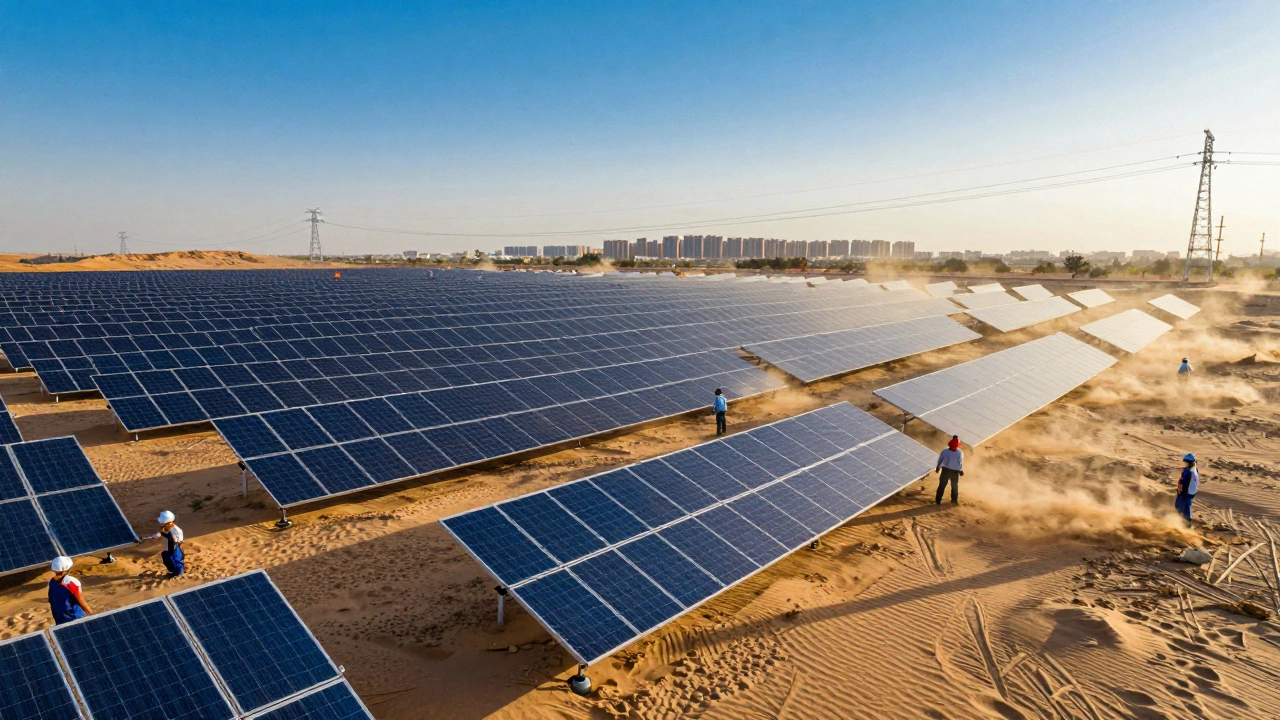
By 2025, solar power became the fastest growing renewable energy source on the planet - not just a little faster, but solar power grew more than any other clean energy technology in history. In 2024 alone, the world added more solar capacity than all other renewables combined. That’s right - wind, hydro, geothermal, and biomass together didn’t match what solar alone added. This isn’t a slow trend. It’s a rush. And it’s changing everything about how we make electricity.
Why solar is pulling ahead
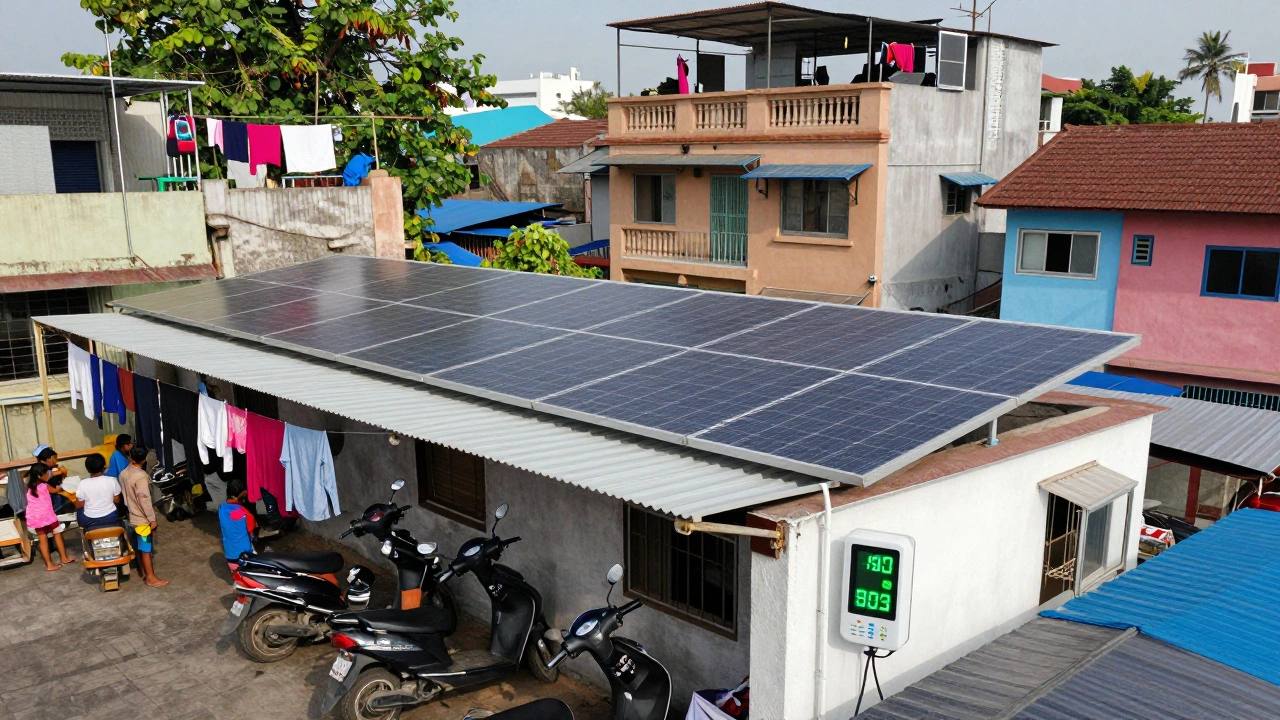
Solar panels used to be expensive, fragile, and only make sense in sunny places. That changed. Between 2010 and 2025, the cost of solar panels dropped by 85%. In 2023, the average price for a residential solar system in the U.S. was under $2.50 per watt. In India and Brazil, it was even lower. That’s cheaper than running a gas-powered generator for most households.
But price isn’t the only reason. Solar works anywhere. You can put panels on a rooftop, a parking lot canopy, a desert, or even a floating platform on a reservoir. Unlike wind farms that need wide open spaces and consistent wind, solar can be built right where the electricity is used. That cuts down on transmission losses and grid upgrades.
Large-scale solar farms now produce electricity at under 3 cents per kilowatt-hour in the best locations. That’s cheaper than coal, natural gas, and nuclear. In places like Chile, Saudi Arabia, and Australia, solar bids have won power auctions at 1.8 cents per kWh. No other energy source has come close to that.
The numbers don’t lie
In 2024, the world added 440 gigawatts of new solar capacity. That’s more than the entire electricity capacity of Germany, Japan, and South Korea combined. For comparison, wind added 115 gigawatts. Hydropower added 12. Nuclear? Zero new plants came online in the U.S. or Europe. Even China, which built the most wind turbines in the world, added more solar than wind.
The International Energy Agency (IEA) reported that solar made up 62% of all new renewable capacity installed globally in 2024. In the U.S., solar accounted for 75% of new electricity generation capacity. In India, over 80% of new power plants built last year were solar. Even in Europe, where wind has been dominant, solar now leads in annual additions.
One reason? Solar projects take less than a year to build. A 100-megawatt solar farm can go from ground-breaking to online in 8 months. A wind farm? Two to three years. A nuclear plant? Ten to fifteen. Speed matters when countries are racing to cut emissions and avoid blackouts.
What’s driving the boom?
It’s not just cheaper panels. It’s policy, finance, and tech working together.
Government incentives like the U.S. Inflation Reduction Act (IRA) gave manufacturers and installers tax credits that cut costs by 30-40%. In the EU, the REPowerEU plan fast-tracked permitting for solar projects. Brazil simplified its net metering rules. India launched a $26 billion production-linked incentive scheme to build domestic solar manufacturing.
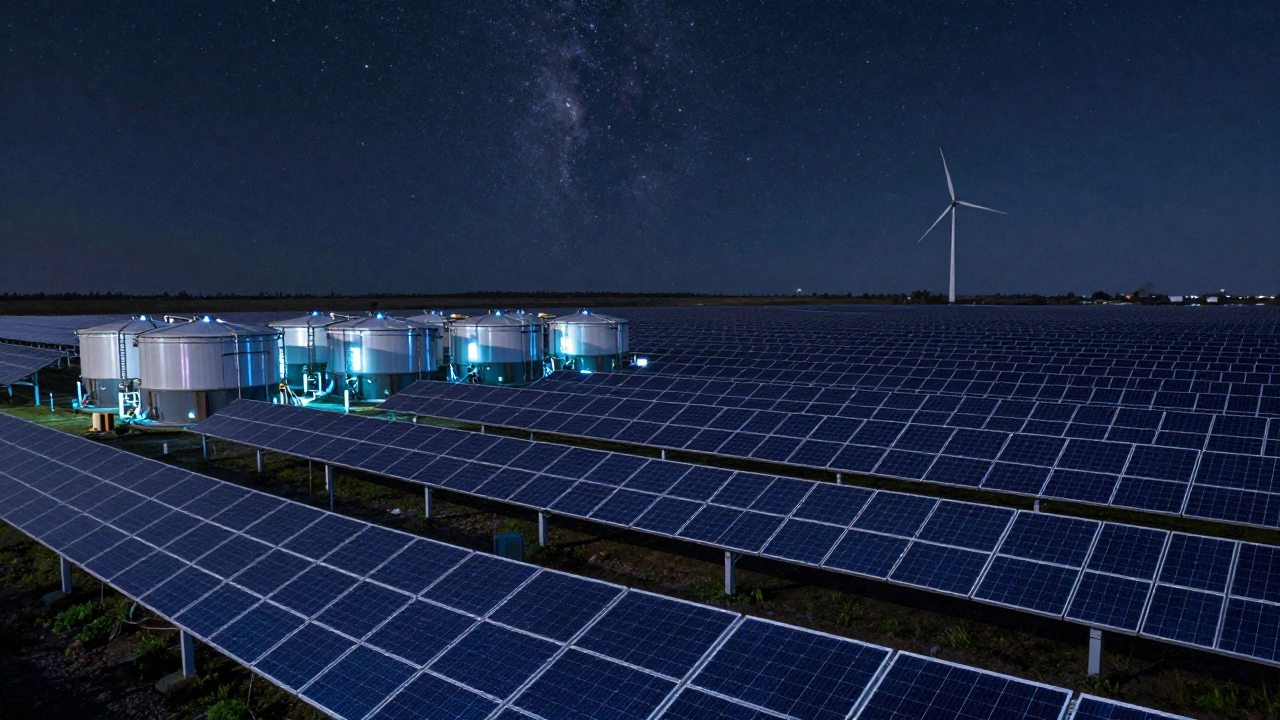
At the same time, battery storage prices fell below $140 per kilowatt-hour in 2025. That means solar + storage is now a reliable 24/7 power source in many places. In California, over 40% of homes with solar also have batteries. In Australia, it’s 60%. That turns solar from a daytime-only option into a true replacement for fossil fuels.
And then there’s the tech. New solar cells using perovskite-silicon tandem designs hit 33% efficiency in labs - up from 20% just five years ago. Companies like LONGi and JinkoSolar now mass-produce panels with over 24% efficiency. That means more power from the same roof space. Even cloudy regions are getting better returns.
Wind isn’t slowing down - but it’s not growing as fast
Wind energy still matters. Offshore wind is expanding quickly, especially in the U.K., China, and the U.S. East Coast. But wind faces bigger hurdles. Turbines need space, strong wind, and long supply chains. A single offshore turbine weighs over 1,000 tons. Transporting it requires special ships and ports. Permitting can take years.
Solar doesn’t need that. You can ship panels in standard containers. Install them with basic tools. A small team can set up a 5-megawatt solar farm in a week. That’s why solar is growing fastest in places with weak infrastructure - sub-Saharan Africa, Southeast Asia, Latin America. In Nigeria, solar mini-grids now power over 2 million people. In Kenya, rooftop solar cut diesel use in clinics by 90%.
What’s next?
Solar isn’t done growing. By 2030, experts expect it to supply over 25% of global electricity - up from 6% today. That’s faster than any energy source has ever reached that level. Even if wind and hydrogen get big, solar will still be the anchor.
Utilities are now designing grids around solar. In Texas, the grid operator ERCOT uses AI to predict solar output minute-by-minute. In Germany, homes with solar are being turned into virtual power plants that sell extra power back to the grid. In India, solar-powered irrigation pumps are replacing diesel in 8 million farms.
The biggest challenge now isn’t cost or tech. It’s materials. Solar panels need silver, copper, aluminum, and polysilicon. Mining these at scale could strain supply chains. Recycling old panels is still in its early stages - only 10% are recycled today. But companies like First Solar and Veolia are building recycling plants in Europe and the U.S. that can recover 95% of the materials.
What this means for you
If you’re a homeowner, solar + battery is now the smartest energy investment you can make. Payback times are under 5 years in most countries. In places with high electricity prices, like California or Germany, it’s under 3.
If you’re a business, installing solar cuts operating costs and makes you more resilient to blackouts. Walmart, Amazon, and IKEA now get over half their electricity from solar.
If you’re a policymaker, the message is clear: solar is the fastest, cheapest, and most scalable tool we have to decarbonize power. The question isn’t whether to support it - it’s how fast you can remove the red tape holding it back.
Why other renewables aren’t growing as fast
Hydroelectric power is limited by geography and environmental rules. Most good dam sites are already built. New dams face fierce opposition over flooding ecosystems and displacing communities.
Geothermal is powerful but only works in a few places - Iceland, Kenya, the U.S. West. It’s reliable, but you can’t build it anywhere.
Biomass and biofuels are tricky. They need land, water, and feedstock. Burning wood or crops for power can actually increase emissions if not managed perfectly. It’s not scalable at the level solar is.
Wind is strong, but it’s hitting physical and political limits. Offshore wind is promising, but it’s expensive and slow. Onshore wind faces NIMBY opposition - people don’t want turbines near their homes. Solar doesn’t have that problem. Most people don’t mind panels on their roof.
Final takeaway
Solar power isn’t just the fastest growing renewable energy source. It’s the only one growing fast enough to make a real dent in fossil fuel use. It’s cheap, fast to install, works almost everywhere, and keeps getting better. The energy transition isn’t about choosing between wind and solar. It’s about solar leading the way - and everything else playing a supporting role.
Is solar power really the fastest growing renewable energy source?
Yes. In 2024, solar power added 440 gigawatts of new capacity globally - more than wind, hydro, geothermal, and biomass combined. It accounted for 62% of all new renewable energy installations that year, according to the International Energy Agency. No other energy source has grown this fast in history.
Why is solar growing faster than wind?
Solar projects are faster and cheaper to build. A solar farm can go online in under a year; a wind farm takes two to three. Solar panels can be installed on rooftops, parking lots, and small plots - no need for vast open land or offshore infrastructure. Wind needs consistent high winds and complex logistics for turbine transport. Solar works in more places, with less friction.
Is solar power cheaper than coal or natural gas?
Yes, in most places. The levelized cost of solar electricity is now under 3 cents per kilowatt-hour in sunny regions. In places like Chile and Saudi Arabia, bids have dropped as low as 1.8 cents. That’s cheaper than new coal or gas plants. Even with storage added, solar + batteries are now competitive with fossil fuels in many markets.
Can solar power work in cloudy or cold countries?
Absolutely. Germany, which gets less sun than Alaska, is one of the world’s top solar producers. Modern panels work efficiently even in low light. Cold temperatures actually improve panel efficiency. Snow can even reflect light and boost output. The key is proper tilt and placement - not climate.
What’s holding solar back?
The main barriers are supply chain limits for materials like silver and polysilicon, and slow recycling systems. Only about 10% of old solar panels are recycled today. Permitting delays and grid upgrades also slow deployment in some countries. But these are solvable problems - not fundamental limits.
Should I install solar panels on my home?
If you’re in a region with high electricity rates or good incentives, yes. Payback times are under 5 years in most developed countries. With battery storage, you can cut your power bill by 80-100% and stay powered during outages. Solar also increases home value and reduces your carbon footprint.