What Is the Cleanest Form of Renewable Energy? A Deep Dive into Life Cycle Emissions
 Jul, 14 2026
Renewable Energy Life Cycle Emissions Calculator
Input Parameters
Enter your estimated annual electricity usage to see how much CO2 is emitted by different energy sources.
Emissions Comparison per Year
You’ve probably heard that renewable energy is "clean." It’s a simple slogan, plastered on everything from government websites to electric car ads. But if you stop and think about it, nothing in this world is truly zero-impact. Manufacturing a wind turbine requires steel, concrete, and rare earth magnets. Building a solar panel involves mining silicon and transporting heavy glass across oceans. Even running a hydroelectric dam alters river ecosystems and displaces communities.
So, when experts ask, "What is the cleanest form of renewable energy?" they aren’t asking which one produces no pollution at all. They are asking which source has the lowest life cycle assessment (LCA)-a method that calculates every gram of carbon dioxide emitted from raw material extraction, through manufacturing and construction, to operation, and finally, decommissioning.
The answer might surprise you. While nuclear power often tops the list for low-carbon electricity, among strictly renewable sources, the title usually goes to onshore wind. But the gap between the top contenders is shrinking, and the "cleanest" option depends heavily on where you live and how you build your infrastructure.
Understanding the Carbon Cost of Green Energy
To compare apples to oranges-or rather, wind turbines to solar panels-we need a common metric: grams of carbon dioxide equivalent per kilowatt-hour (gCO2eq/kWh). This number tells us how much greenhouse gas was released to generate one unit of electricity over the entire lifespan of the plant.
Fossil fuels are notoriously dirty. Coal emits roughly 820 gCO2eq/kWh, while natural gas sits around 490 gCO2eq/kWh. Now, look at renewables. The numbers drop dramatically, but they don’t hit zero. Why? Because building the machines takes energy, and right now, most of that construction energy still comes from fossil fuels.
Onshore wind typically scores between 7 and 11 gCO2eq/kWh. Nuclear power, though not always classified as renewable due to fuel constraints, averages around 12 gCO2eq/kWh. Offshore wind follows closely with 11-12 gCO2eq/kWh. Solar photovoltaic (PV) systems range from 25 to 41 gCO2eq/kWh, depending on whether the panels were made in regions powered by coal or renewables.
This data, widely cited from comprehensive reviews like those by Mark Z. Jacobson and the IPCC, shows that all major renewables are orders of magnitude cleaner than fossil fuels. However, the distinction between "clean" and "cleanest" matters when we are making trillions of dollars in infrastructure decisions.
Why Onshore Wind Takes the Crown
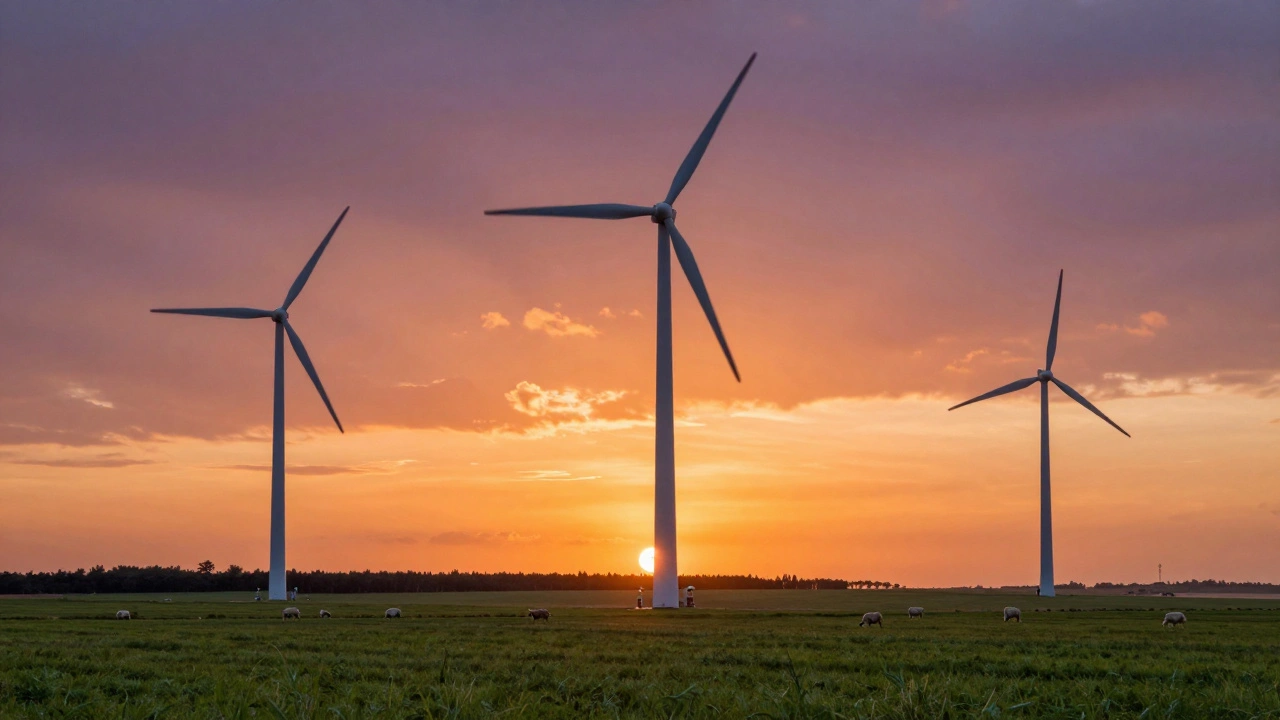
If we define "renewable" strictly as energy from naturally replenishing sources without nuclear fission, onshore wind is currently the winner. Its low carbon footprint stems from its efficiency and simplicity. A modern onshore turbine generates enough electricity to pay back its embodied carbon-the carbon used to build it-in just three to six months of operation.
Consider the materials. Turbines use steel and concrete, which have high carbon costs during production. However, the amount of energy a single turbine produces over its 20-25 year lifespan is massive compared to the materials used. The ratio of output to input is incredibly favorable.
Moreover, the supply chain for wind components is becoming greener. Steel mills are experimenting with hydrogen-based reduction processes, and cement manufacturers are incorporating alternative binders. As the grid powers these factories with more renewable energy, the life cycle emissions of new wind turbines will continue to drop.
There is also the issue of land use. Critics argue that wind farms take up too much space. In reality, the physical footprint of the turbine base is small. Farmers can still graze sheep or grow crops between the towers. This dual-use capability reduces the indirect environmental cost associated with land conversion.
The Rising Contender: Offshore Wind
Offshore wind is catching up fast. Historically, it had a higher carbon footprint because building foundations in the sea requires enormous amounts of concrete and steel. Maintenance boats also burn diesel fuel. However, recent innovations have changed the game.
Newer offshore turbines are larger and more efficient. A single 15-megawatt turbine can power tens of thousands of homes. Because they capture stronger, more consistent winds, they operate at higher capacity factors-meaning they produce more electricity per ton of material used. This efficiency dilutes the initial carbon debt quickly.
In 2023 and 2024, several studies showed that advanced offshore projects in Europe and Asia are achieving life cycle emissions comparable to onshore wind. Additionally, offshore wind doesn’t compete with agriculture or housing. It utilizes underused ocean spaces, reducing social and ecological conflicts on land.
The challenge remains cost and complexity. Installing cables on the seabed and dealing with saltwater corrosion adds to the environmental burden. But as installation vessels become more electric and standardized, these impacts are expected to shrink.
Solar Power: The Efficiency Gap
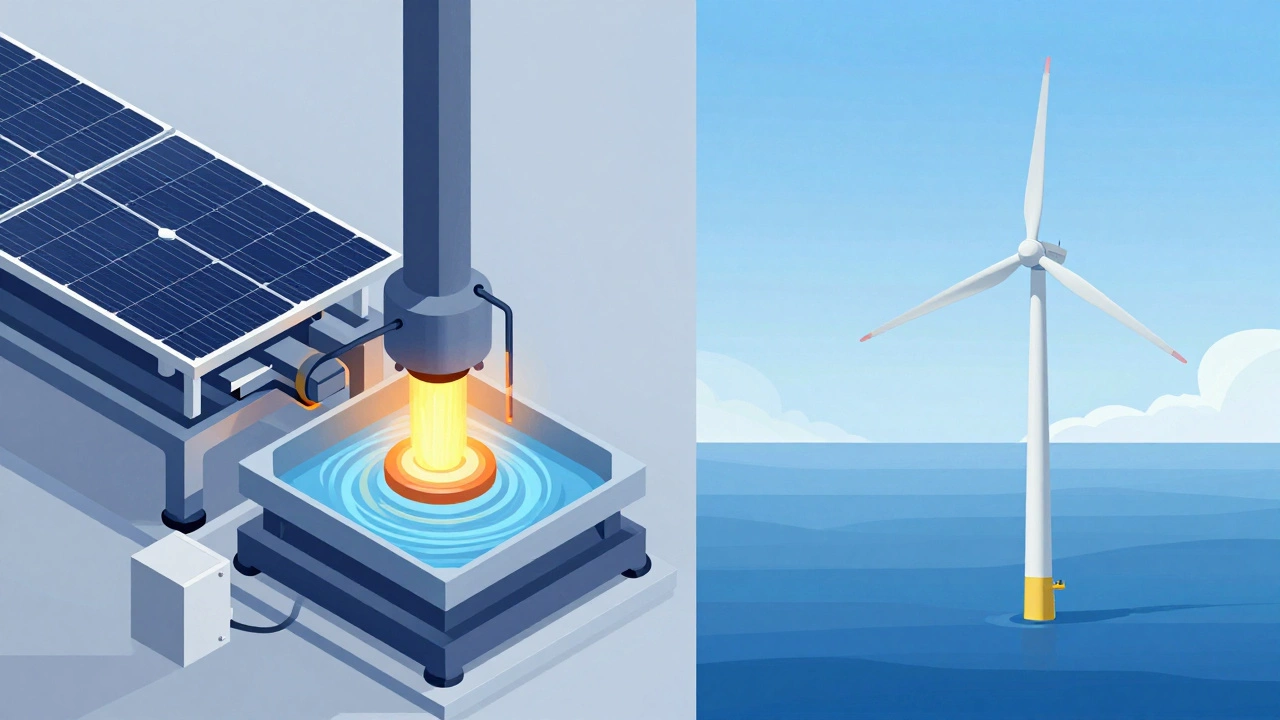
Solar photovoltaics are ubiquitous, but they sit lower on the "cleanest" ladder. Why? Silicon purification is an energy-intensive process. High-purity silicon requires temperatures exceeding 1,000°C, traditionally powered by coal in major manufacturing hubs like China.
However, the story is nuanced. If you manufacture solar panels in a region powered by hydro or wind, their life cycle emissions can drop to near-wind levels. Furthermore, solar technology is evolving. Thin-film technologies and perovskite cells promise higher efficiency with less material use.
Solar also benefits from modularity. You can install a few panels on a roof without any large-scale construction. This distributed generation avoids the transmission losses associated with long-distance power lines, effectively improving the net energy balance.
Recycling is another critical factor. At the end of their 25-30 year life, solar panels contain valuable silver, copper, and silicon. New recycling facilities in the EU and US are recovering over 90% of these materials, further lowering the long-term environmental impact.
Hydropower and Geothermal: The Old Guard
Hydropower is often overlooked in these comparisons because its impacts vary wildly. Small run-of-river schemes can be very clean, similar to wind. But large dams emit significant methane-a potent greenhouse gas-from decomposing organic matter in flooded reservoirs. Tropical dams, in particular, can have life cycle emissions rivaling natural gas plants.
Geothermal energy is consistently clean, averaging 15-38 gCO2eq/kWh. It taps into the Earth’s internal heat, providing baseload power that doesn’t fluctuate with weather. However, drilling deep wells is energy-intensive, and some geothermal sites release hydrogen sulfide and other gases. Enhanced geothermal systems (EGS), which involve fracturing rock, carry additional risks of induced seismicity.
Both hydropower and geothermal are excellent renewable sources, but their site-specific nature makes them harder to generalize. They are cleanest when located optimally and managed sustainably.
| Energy Source | Avg. gCO2eq/kWh | Key Environmental Factors |
|---|---|---|
| Onshore Wind | 7-11 | Steel/concrete production; bird/bat collisions |
| Offshore Wind | 11-12 | Marine foundation construction; maintenance fuel |
| Nuclear* | 12 | Uranium mining; waste storage; concrete containment |
| Geothermal | 15-38 | Drilling energy; gas emissions from reservoirs |
| Solar PV | 25-41 | Silicon purification; panel manufacturing location |
| Biomass | 23-330+ | Cultivation practices; combustion efficiency; transport |
| Natural Gas | ~490 | Methane leaks; extraction impacts |
| Coal | ~820 | Mining damage; high CO2 emission rate |
*Nuclear is included for context but is not considered renewable in most definitions.
Beyond Carbon: The Hidden Costs of "Clean" Energy
Focusing solely on carbon dioxide misses half the picture. The true "cleanliness" of an energy source must account for water usage, land degradation, toxicity, and biodiversity loss.
Wind power uses almost no water during operation, unlike thermal plants that require millions of gallons for cooling. This makes wind highly resilient in drought-prone areas. However, noise pollution and visual impact remain social concerns. Modern turbine designs are quieter, and careful siting can minimize wildlife interactions.
Solar farms can disrupt local habitats if built on pristine land. Agrivoltaics-combining solar panels with crop cultivation-offers a solution, turning dead space into productive ecosystems. Water usage for cleaning panels is minimal compared to traditional power plants.
Hydropower faces severe criticism for blocking fish migration and altering sediment flows. These ecological damages are hard to quantify in carbon terms but are devastating for local biodiversity. Run-of-river systems mitigate some issues but offer less reliable power.
Rare earth minerals used in wind turbines and batteries also pose ethical and environmental challenges. Mining neodymium and dysprosium can cause soil contamination. Recycling and developing direct-drive turbines that eliminate rare earth magnets are active areas of research.
The Verdict: Context Is King
So, what is the cleanest form of renewable energy? Strictly speaking, onshore wind has the lowest life cycle carbon emissions today. It is efficient, scalable, and increasingly affordable. Offshore wind is a close second, offering greater consistency and less land conflict.
But here’s the catch: the best energy source is the one you can actually build and integrate into your grid. In sunny deserts, solar might be the most practical and economically viable option, even if its carbon footprint is slightly higher. In windy coastal regions, offshore wind dominates. In volcanic areas, geothermal provides unmatched stability.
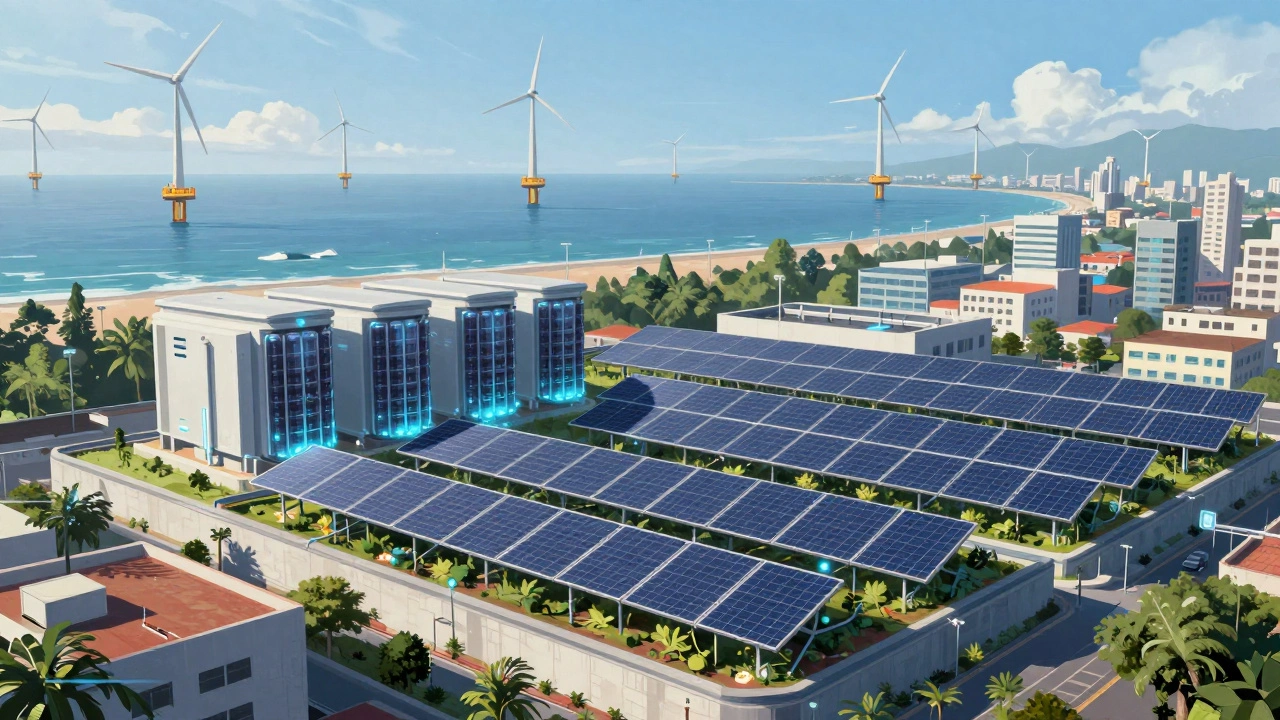
We don’t need to choose just one. The future grid is hybrid. By combining wind, solar, hydro, and emerging technologies like green hydrogen, we can offset each source’s weaknesses. The goal isn’t perfection; it’s progress. Every megawatt of renewable energy replaces a dirtier alternative, moving us closer to a sustainable future.
Future Trends: Making Renewables Even Cleaner
Technology is advancing rapidly. Next-generation wind blades made from recyclable thermoplastics will solve the waste problem. Solar panels with tandem cells will double efficiency, halving the material needed per watt. Floating offshore wind platforms will unlock deeper waters with stronger winds.
Grid modernization is equally important. Smart grids allow better integration of intermittent sources, reducing the need for backup fossil fuel plants. Battery storage, powered by renewables themselves, ensures that clean energy is available 24/7.
Policies play a crucial role too. Governments are implementing stricter lifecycle standards and supporting circular economy initiatives. As supply chains decarbonize, the "cleanest" label will shift, but renewables will remain firmly at the top.
Is nuclear energy considered renewable?
No, nuclear energy is generally not classified as renewable because uranium, its primary fuel, is a finite resource. However, it is extremely low-carbon and often grouped with renewables in climate discussions due to its minimal greenhouse gas emissions during operation.
Which renewable energy source uses the least water?
Wind energy, both onshore and offshore, uses virtually no water during operation. Solar PV also uses very little water, mainly for occasional panel cleaning. In contrast, biomass and concentrated solar power (CSP) require significant amounts of water for steam generation.
Do wind turbines kill too many birds to be considered clean?
While wind turbines do pose a risk to birds and bats, the impact is significantly lower than that of other human activities. Domestic cats, buildings, and cars cause far more avian deaths annually. Proper siting away from migration corridors and using radar detection systems can further reduce collisions.
How long does it take for a solar panel to pay back its carbon debt?
Typically, a solar panel pays back its embodied carbon within one to two years of operation. Given a lifespan of 25-30 years, it then produces clean energy for decades, resulting in a net negative carbon footprint over its lifetime.