What Is the Alternative Energy in 2024? The Real Options Beyond Solar and Wind
 Feb, 24 2026
Renewable Energy Cost Comparison Tool
Your Energy Inputs
Energy Technology Options
Energy Cost Comparison
Based on 2024 data from International Energy Agency and U.S. Department of Energy
When people talk about alternative energy, they usually mean solar panels and wind turbines. But in 2024, those aren’t the whole story anymore. The clean energy landscape has expanded-fast. New technologies are stepping up, old ones are getting smarter, and the cheapest, most reliable options aren’t always the ones you see on billboards.
It’s Not Just Solar and Wind Anymore
Solar and wind still dominate global renewable installations. In 2023, they made up 87% of all new power capacity added worldwide, according to the International Energy Agency. But that leaves 13% for everything else-and that 13% is where the real innovation is happening.
Take geothermal energy. For decades, it was seen as a niche solution, only useful in places like Iceland or parts of California. Today, enhanced geothermal systems (EGS) are changing that. These systems drill deep into hot rock, inject water, and use the steam to spin turbines. In 2024, the U.S. Department of Energy launched its first commercial EGS pilot in Nevada. It’s not just experimental anymore-it’s producing electricity at $0.04 per kilowatt-hour, cheaper than natural gas in many regions.
Then there’s offshore wind. It’s not new, but it’s growing fast. The U.S. just opened its first large-scale offshore wind farm off the coast of Massachusetts. It’s called Vineyard Wind, and it powers 400,000 homes. Meanwhile, floating wind turbines are now being tested in deep waters off Scotland and Japan. These can go where fixed-bottom turbines can’t, unlocking wind resources over 80% of the world’s oceans.
Hydrogen Is Getting Real
Hydrogen has been called the holy grail of clean energy for 20 years. Now, it’s starting to deliver. Green hydrogen-made by splitting water with renewable electricity-isn’t just a lab experiment anymore. In 2024, Australia’s $10 billion Hydrogen Headstart program began shipping hydrogen fuel to Japan. Europe’s HyDeal Ambition project aims to cut hydrogen production costs to $1.50 per kilogram by 2030. That’s cheaper than fossil hydrogen today.
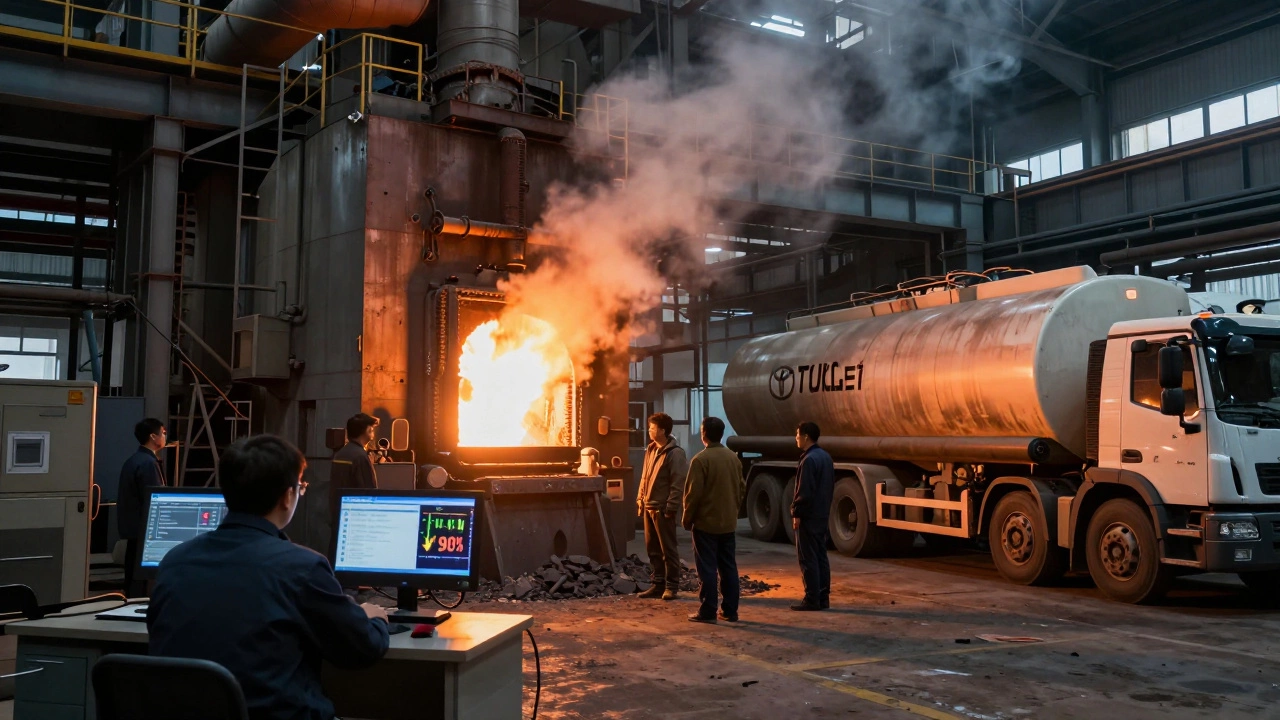
And it’s not just for power plants. Heavy industry is switching. ArcelorMittal, one of the world’s biggest steelmakers, started using hydrogen in its pilot furnace in Germany. The result? 90% fewer emissions. Toyota and Hyundai are now building hydrogen-powered trucks for long-haul shipping. The fuel cell range? Over 800 miles on one tank.
Battery Storage Is the Missing Link
Solar and wind don’t work when the sun’s down or the wind’s still. That’s why storage matters more than ever. Lithium-ion batteries still lead the market-but they’re not the only game in town.
In 2024, flow batteries are gaining serious traction. These use liquid electrolytes stored in tanks, making them safer and longer-lasting than lithium. A company called CellCube just completed a 100-megawatt flow battery project in California. It can power 20,000 homes for 10 hours. And it lasts 20+ years, with no degradation.
Then there’s thermal storage. In Spain, a company called EnergyNest built a plant that stores solar heat in ceramic bricks. When needed, the heat turns water to steam, which drives turbines. It’s cheaper than lithium batteries for long-duration storage. And it works in places where lithium mining isn’t feasible.
Small Modular Reactors Are Back
Nuclear energy got a bad rap after Fukushima. But in 2024, small modular reactors (SMRs) are changing the conversation. These are factory-built, compact, and safer than old nuclear plants. They don’t need massive cooling towers or huge containment domes.
Canada approved its first SMR design in 2023. By 2024, NuScale Power started construction on its first plant in Idaho. It will produce 77 megawatts-enough for a small city. The fuel lasts five years before needing replacement. And unlike coal or gas plants, SMRs can be turned on and off quickly to balance solar and wind fluctuations.
Even China is building SMRs. The Linglong One reactor in Hainan is expected to go live in late 2024. It’s not just about replacing fossil fuels-it’s about replacing diesel generators in remote mining towns and military bases.
Why This Matters for Everyday People
You might think this is all about big utilities and government projects. But it’s not. These technologies are already affecting your wallet.
Electricity prices in Texas dropped 22% in 2023 thanks to wind, solar, and storage working together. In California, homeowners with rooftop solar and home batteries are getting paid to send power back to the grid during peak hours. Some are earning $500 a year just by using their own system smartly.
And it’s not just the U.S. In Kenya, over 90% of electricity now comes from geothermal and wind. In Denmark, wind power alone supplied 61% of the country’s electricity in 2023. In Brazil, hydropower and solar are so cheap that new coal plants aren’t even being planned anymore.
The Hidden Cost of Sticking to Old Ideas
Some people still believe solar and wind are too unreliable. But that’s based on data from five years ago. Today’s grids use AI to predict wind patterns 72 hours in advance. Battery farms respond to demand spikes in under 200 milliseconds. Grid operators don’t just hope for sun and wind-they plan for them.
And fossil fuels? They’re getting more expensive. The global cost of natural gas spiked 40% in 2022 after Russia’s invasion of Ukraine. In 2024, the U.S. Energy Information Administration says gas prices are still 30% higher than pre-pandemic levels. Meanwhile, the cost of solar panels has dropped 80% since 2010. Wind turbines? Down 50%.
Alternative energy isn’t just cleaner. It’s cheaper. And it’s becoming more predictable.
What’s Still Holding Back Progress?
It’s not technology. It’s bureaucracy.
Permitting for transmission lines in the U.S. still takes 7-10 years. In Germany, it takes 3-5 years just to get approval for a single wind turbine. That’s why so many clean energy projects sit idle. The U.S. has over 1,200 gigawatts of renewable projects waiting for grid connection. That’s more than the entire U.S. coal fleet.
Supply chains are another issue. Most lithium-ion batteries still rely on minerals mined in the Democratic Republic of Congo. China controls 80% of the world’s rare earth processing. That’s why countries are rushing to build domestic recycling systems. In 2024, the EU passed a law requiring all new EV batteries to include 15% recycled materials. The U.S. followed with similar rules.
What’s Next? The Real Game Changers
By 2025, we’ll see:
- First commercial fusion energy pilot-Helion Energy’s plant in Washington state will start testing net energy gain.
- AI-powered microgrids in rural India that balance solar, battery, and diesel generators automatically.
- Green hydrogen pipelines connecting wind farms in the North Sea to industrial zones in Germany.
- Over 50 countries will have laws requiring new buildings to include rooftop solar or geothermal heat pumps.
The future of energy isn’t one magic bullet. It’s a mix. Solar and wind will keep growing. But now, geothermal, hydrogen, storage, and small nuclear are all playing their part. The goal isn’t to replace fossil fuels overnight. It’s to make them unnecessary.
Is alternative energy really cheaper than fossil fuels in 2024?
Yes, in most cases. According to the International Renewable Energy Agency, new solar and wind projects cost less than operating existing coal or gas plants in 90% of the world. Even with storage added, renewable systems are now cheaper than building new fossil fuel plants. In places like Australia and Chile, solar-plus-storage is 40% cheaper than diesel generators.
Why isn’t everyone using alternative energy if it’s cheaper?
It’s not about cost-it’s about access and rules. Many regions still have laws that favor fossil fuel companies. Grids weren’t built for distributed power sources. Permitting delays, outdated regulations, and political resistance slow things down. Even when solar is cheaper, you can’t install it if your city won’t approve the connection. That’s changing, but slowly.
Can alternative energy power heavy industries like steel and shipping?
Yes, and it already is. Hydrogen is replacing coal in steelmaking in Sweden and Germany. In shipping, ammonia-powered vessels are being tested by Maersk and Mitsubishi. In mining, electric haul trucks from Caterpillar and Rio Tinto are cutting diesel use by 95%. These aren’t prototypes-they’re running right now.
What’s the biggest misconception about alternative energy?
That it’s only about solar panels and wind turbines. The real transformation is in storage, grid management, and new fuels like hydrogen. Solar and wind are the engines, but without batteries, smart grids, and clean hydrogen, they can’t fully replace fossil fuels. The energy system is becoming a network, not a collection of isolated parts.
Are there any downsides to alternative energy?
Yes. Mining for lithium, cobalt, and rare earths can harm local ecosystems. Manufacturing solar panels uses energy and chemicals. Wind turbines can affect birds and bats. But these impacts are far smaller than those from coal mining, oil spills, or air pollution. And recycling systems are improving fast-by 2030, over 90% of a solar panel’s materials could be reused.