What Foods Turn Into Sugar? Simple Guide to Hidden Sugars in Your Diet
 Jan, 27 2026
Carb-to-Glucose Calculator
This tool calculates glucose from food carbs. All digestible carbs convert to glucose (1g carbs = 1g glucose). Subtract fiber for net carbs.
Enter your food details to see glucose conversion
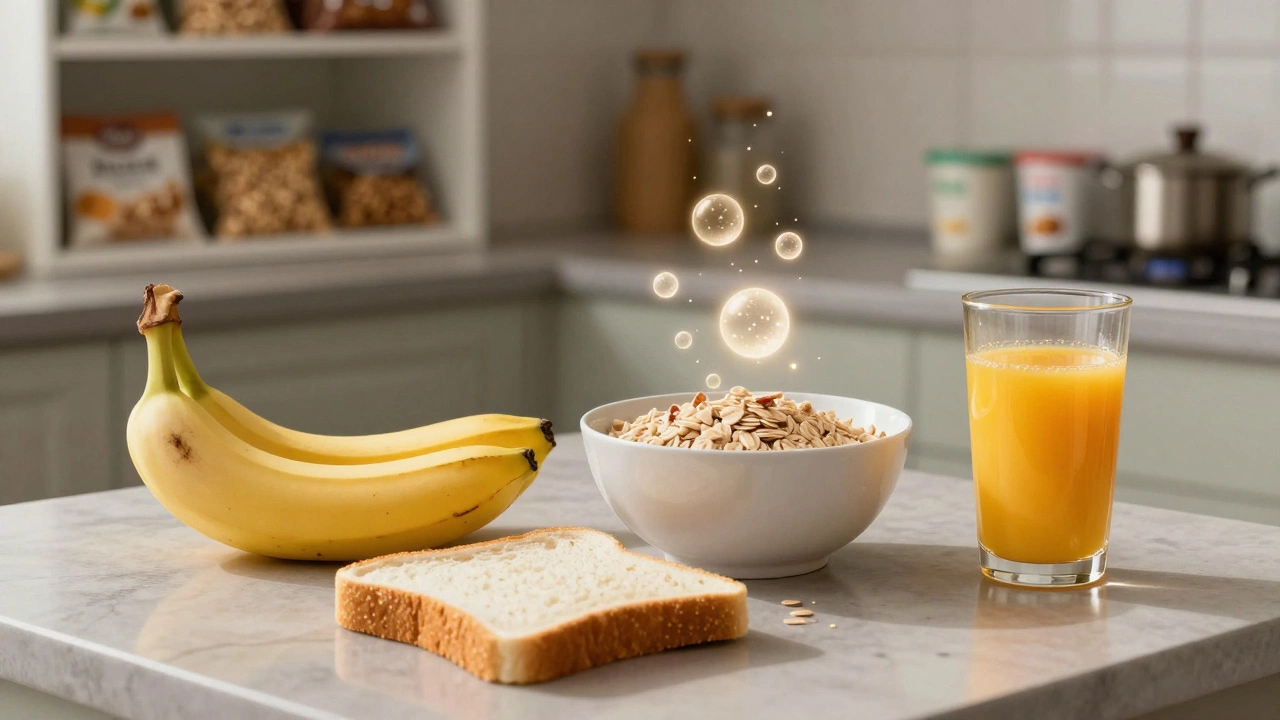
When you eat a banana, a slice of bread, or even a bowl of oatmeal, your body doesn’t just digest it as-is. It breaks it down into glucose - the same simple sugar your blood carries to fuel your brain, muscles, and organs. This isn’t about candy or soda. It’s about everyday foods that, whether you like it or not, act like sugar inside your body.
Not all sugar comes from the sugar bowl
You don’t need to drink a soda to get a sugar spike. Many foods you think are healthy - whole grains, fruits, yogurt, even certain vegetables - break down into glucose during digestion. Your body doesn’t care if the sugar came from an apple or a candy bar. Once digested, it’s all glucose. And too much of it, too fast, leads to energy crashes, cravings, and long-term health risks like insulin resistance.
Carbohydrates are the main source of this conversion. Every gram of digestible carb turns into about one gram of glucose. That means a medium banana with 27 grams of carbs? Your body turns it into 27 grams of glucose. A cup of cooked white rice? Around 45 grams of glucose. It’s not magic. It’s biology.
Which foods turn into sugar the fastest?
Some foods release glucose quickly. Others do it slowly. The difference matters for your energy, mood, and long-term health.
- White bread - breaks down in under 30 minutes. Blood sugar spikes within 15 minutes.
- Instant oatmeal - processed to cook fast, digests just like white bread. Even if it’s labeled “whole grain.”
- Fruit juices - remove the fiber, and you’re left with concentrated sugar. A glass of orange juice has the sugar of 4-5 oranges, without the fiber to slow it down.
- Flavored yogurt - many brands add 15-20 grams of sugar per serving. That’s almost half the daily limit for women.
- Potatoes - especially mashed or baked, they spike blood sugar faster than table sugar in some tests.
- Pasta - even whole wheat pasta turns into glucose quickly when cooked soft. Al dente helps, but it’s still a carb bomb.
These aren’t “bad” foods. But they’re high-glycemic. That means they flood your bloodstream with glucose. Your pancreas responds by pumping out insulin to clear it. Over time, your cells get tired of responding. That’s how insulin resistance starts.
What about fruit? Isn’t it healthy?
Yes - but context matters.
An apple has 19 grams of sugar. So does a can of soda. But the apple has fiber, water, and phytonutrients. The fiber slows digestion. The water fills you up. The nutrients help your body process the sugar better. The soda? No fiber. No protein. Just sugar and water. You drink it, and your blood sugar rockets up.
Whole fruits? Fine in moderation. Fruit smoothies? Risky. Blending breaks down fiber. You lose the natural pacing. One smoothie can pack the sugar of five apples. That’s not a snack. That’s a sugar shot.
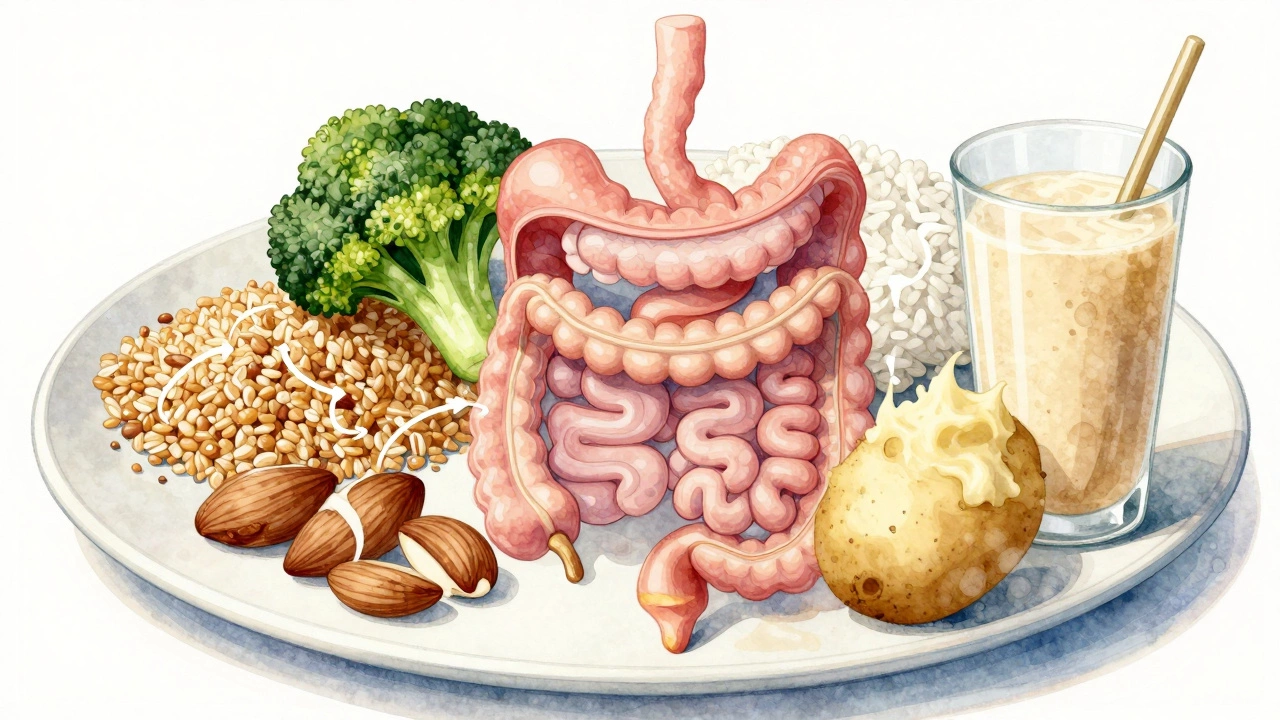
Hidden sugars in “healthy” foods
Look at the ingredient list on your “healthy” granola bar. You’ll find:
- Organic cane syrup
- Agave nectar
- Maple syrup
- Honey
- Dried fruit (dates, raisins, cranberries)
These aren’t “natural” in the way you think. They’re still sugars. Your body treats them the same as white sugar. Agave is 85% fructose - harder on your liver than table sugar. Honey? Still 80% sugar. Even “no added sugar” products often rely on fruit concentrates, which are just sugar in disguise.
Check labels. If sugar (or any syrup) is in the top three ingredients, it’s not a health food. It’s a sugar delivery system.
Protein and fat don’t turn into sugar - but they help control it
When you eat protein or fat, your body doesn’t convert them into glucose the way it does with carbs. That’s why a handful of nuts, a boiled egg, or a spoon of peanut butter won’t spike your blood sugar.
That’s also why pairing carbs with protein or fat helps. Eat your rice with chicken and broccoli. Have your toast with avocado and eggs. The fat and protein slow down the digestion of carbs. Your blood sugar rises slower, steadier, and lower.
This is why a bowl of cereal with milk crashes you by 11 a.m., but scrambled eggs with spinach and a slice of whole grain toast keeps you full until lunch.

What about artificial sweeteners?
They don’t turn into sugar. But they’re not harmless either.
Studies show artificial sweeteners like aspartame, sucralose, and saccharin can still trigger insulin release in some people - even without glucose. They may also change your gut bacteria, making you more likely to crave sweets.
Stevia and monk fruit are better options. They don’t trigger insulin and have no known negative effects in normal doses. But they’re not magic. They don’t fix a sugar-heavy diet. They just replace sugar without calories.
How to eat smarter - without giving up everything
You don’t need to cut out carbs entirely. You just need to choose better ones and control portions.
- Swap white bread for sourdough - the fermentation process breaks down some carbs, slowing digestion.
- Choose steel-cut oats over instant. They take longer to cook, and your body takes longer to digest them.
- Eat vegetables first. Fiber fills you up and slows sugar absorption.
- Watch portion sizes. A cup of rice is a lot. Half a cup is plenty.
- Drink water instead of juice. Seriously. Just water.
And if you crave something sweet? Eat a square of dark chocolate (85% cocoa or higher). It has less sugar, more fiber, and fat to slow absorption. Or grab a few berries. They’re low-glycemic and full of antioxidants.
Why this matters beyond weight
Turning food into sugar isn’t just about gaining weight. It’s about inflammation, brain fog, mood swings, and long-term disease risk.
High blood sugar over time damages blood vessels. That raises your risk of heart disease. It stresses your liver. It can lead to fatty liver disease - even in people who aren’t overweight. It affects your hormones, your sleep, and your energy levels.
People with prediabetes or type 2 diabetes aren’t just “eating too much sugar.” They’re eating too many foods that turn into sugar - fast.
Understanding this isn’t about fear. It’s about control. You can still enjoy bread, pasta, and fruit. But knowing how they affect your body lets you make choices that keep you steady, focused, and healthy.
Do all carbs turn into sugar?
Yes - all digestible carbohydrates turn into glucose during digestion. Fiber doesn’t count because your body can’t break it down. So if a food has 30 grams of total carbs but 8 grams of fiber, only 22 grams become sugar. Always check the net carbs (total carbs minus fiber).
Does fruit sugar count the same as table sugar?
Chemically, yes - fructose and glucose from fruit are the same molecules as in table sugar. But whole fruit comes with fiber, water, and nutrients that slow absorption. Fruit juice, dried fruit, and smoothies act more like added sugar because the fiber is broken down or removed.
Can you turn sugar back into food?
No. Once your body breaks down carbs into glucose, it can’t reassemble them into complex foods. Excess glucose is stored as fat or used for immediate energy. There’s no reverse process. That’s why managing intake matters more than trying to undo it.
Are low-carb diets the only solution?
No. You don’t need to go zero-carb. The goal is to reduce refined carbs and focus on whole, fiber-rich sources. A plate with half vegetables, a quarter lean protein, and a quarter whole grains works for most people. It’s about balance, not elimination.
How long does it take for food to turn into sugar?
It starts within minutes. Simple carbs like white bread or sugary cereal can raise blood sugar in 10-15 minutes. Complex carbs like beans or sweet potatoes take 30-60 minutes. Fiber and fat slow the process. That’s why a meal with protein and veggies keeps blood sugar stable longer.