What Are the Three Core Functions of Public Health?
 Nov, 25 2025
Public Health Functions Simulator
Public health works like a cycle. When one function is missing, the whole system fails. Explore how the three core functions interact in this simulator.
Assessment: Knowing What's Going On
You can't fix a problem if you don't know it exists. Assessment means collecting data from hospitals, schools, workplaces, and even sewage systems.
In Liverpool, health teams track emergency call patterns to spot sudden spikes in asthma attacks during high-pollution days.
Without assessment: "1.5 million people with undiagnosed high blood pressure would stay invisible."
Public health isn’t just about hospitals or doctors treating sick people. It’s about keeping entire communities healthy before anyone even gets sick. Think of it like a shield - not just patching holes when something breaks, but building the wall strong enough to stop problems before they start. In the UK, public health efforts have cut smoking rates, improved childhood vaccinations, and lowered deaths from heart disease. But how? The answer lies in three core functions that have guided public health systems for over a century.
Assessment: Knowing What’s Going On
You can’t fix a problem if you don’t know it exists. That’s why assessment is the first job of public health. This means collecting data - not just from hospitals, but from schools, workplaces, homes, and even sewage systems. In Liverpool, for example, local health teams track emergency call patterns to spot sudden spikes in asthma attacks during high-pollution days. That data doesn’t sit in a file. It gets turned into maps, reports, and alerts that help officials act.
Public health agencies don’t guess. They measure. They count cases of diabetes in different neighborhoods. They test drinking water for lead. They survey people about their eating habits. In 2023, the UK Health Security Agency found that 1 in 4 adults in England had undiagnosed high blood pressure. That’s not a number on a screen - it’s 1.5 million people at risk of stroke or heart attack. Without assessment, those people would stay invisible.
This function isn’t glamorous. No one throws parades for data collection. But without it, every other public health effort is just shooting in the dark.
Policy Development: Turning Data Into Action
Knowing there’s a problem isn’t enough. You need rules, funding, and systems to fix it. That’s where policy development comes in. Public health experts don’t write laws themselves - but they give the evidence that makes laws possible.
Take smoking. In the 1980s, doctors knew smoking caused cancer. But it took decades of data, public campaigns, and pressure from health agencies to get smoking banned in pubs, workplaces, and cars carrying children. In 2007, England’s smoke-free law saved an estimated 100,000 lives over the next 20 years. That law didn’t come from a politician’s whim. It came from decades of assessment showing death rates, hospital costs, and secondhand smoke exposure.
Policy development also means creating programs that reach people where they are. In Manchester, local councils started offering free healthy meals in primary schools after data showed child obesity rates were rising fastest in low-income areas. In Scotland, needle exchange programs were expanded after tracking showed a spike in hepatitis C among people who inject drugs. These aren’t just nice ideas. They’re science-backed interventions that save money and lives.
Good public health policy doesn’t just react - it predicts. When the pandemic hit, the UK’s contact tracing system was built on years of prior work tracking flu outbreaks. That’s policy development in action: preparing for the next crisis while managing the current one.
Assurance: Making Sure It Actually Works
Even the best plan fails if no one follows through. That’s assurance - the job of making sure services are available, effective, and fair. It’s about accountability. If a policy says all children should get vaccinated by age two, who makes sure they do? If a city says it will clean up polluted air, who checks if it actually happened?
In public health, assurance means training staff, inspecting food safety in restaurants, running vaccination clinics in rural areas, and ensuring mental health services are accessible to refugees. It’s the reason you can walk into a GP clinic and know your child’s immunization record is up to date. It’s why your local council inspects takeaway shops for hygiene ratings.
Assurance also means fixing gaps. In 2022, a review found that Black and South Asian communities in London had lower rates of cancer screening. Public health teams didn’t just report it - they partnered with community leaders to run mobile screening vans, translated materials into Urdu and Bengali, and hired local health workers to build trust. Within a year, screening rates rose by 27%.
This function is the quiet engine of public health. You don’t see it. But when it’s missing - when clinics close, when staff aren’t trained, when data isn’t followed up - people die unnecessarily. Assurance is what turns good intentions into real results.

How These Three Work Together
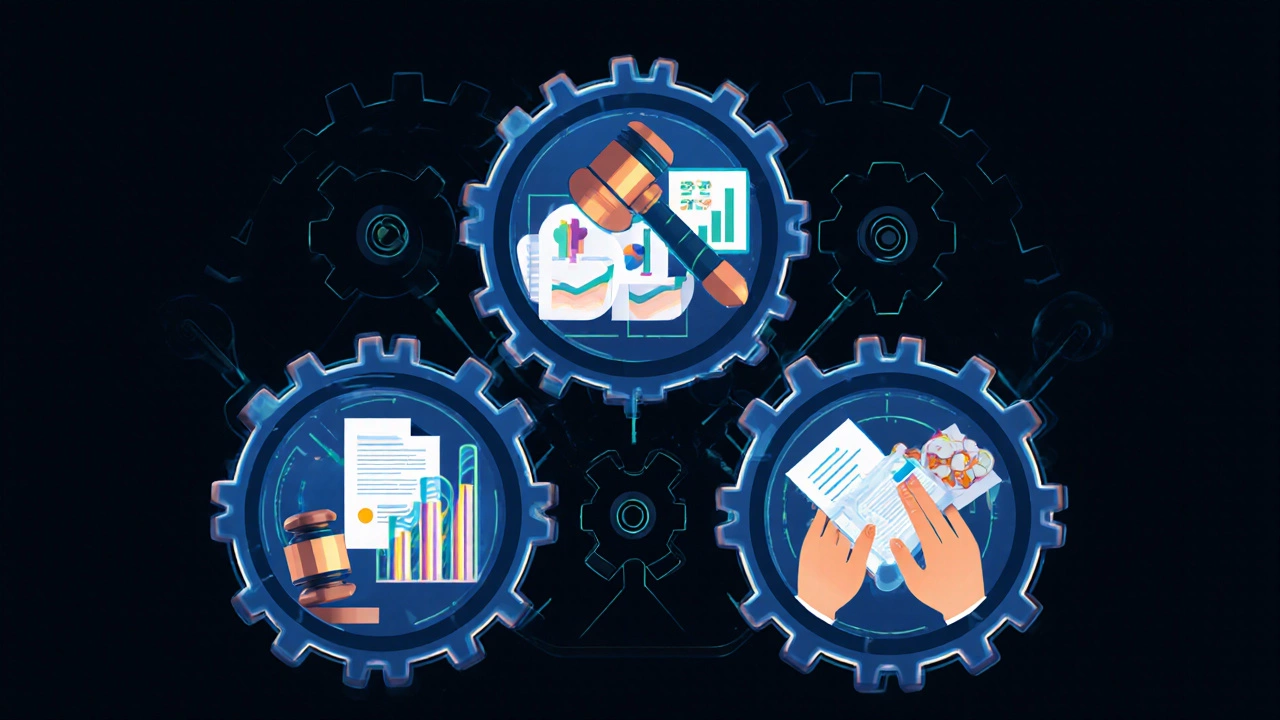
These functions aren’t separate steps. They’re a cycle. Assessment finds the problem. Policy development creates the solution. Assurance makes sure the solution reaches everyone.
Let’s say obesity rates rise in a town. First, health teams assess: they map where fast food outlets cluster, track school lunch menus, and survey families. Next, they develop policy: maybe they push for sugar taxes on drinks, or require healthier options in vending machines. Then they assure: they train cafeteria staff, monitor compliance, and track whether kids’ BMI improves over time.
If one part breaks, the whole system falters. You can have great data but no policy - and nothing changes. You can have a brilliant law but no assurance - and only the privileged benefit. Public health only works when all three are strong.
Why This Matters Today
Climate change is making heatwaves deadlier. Mental health crises are growing. Antibiotic resistance is rising. These aren’t isolated issues - they’re public health challenges. And they demand the same three functions, applied at scale.
Assessment: Monitoring heat-related deaths by postcode. Tracking anxiety levels in teens through school surveys. Testing bacteria in hospitals for drug resistance.
Policy: Designing green spaces to cool cities. Funding free school counseling. Restricting antibiotic use in farming.
Assurance: Training paramedics to recognize heatstroke. Making sure every school has a mental health worker. Enforcing rules on hospital hygiene.
Public health isn’t about saving one person. It’s about protecting millions - often without anyone ever knowing it happened. The best public health success is the one you never hear about: the child who didn’t get polio, the worker who didn’t have a heart attack, the community that didn’t outbreak.
What are the three core functions of public health?
The three core functions are assessment, policy development, and assurance. Assessment means gathering data on health trends and risks. Policy development means using that data to create laws and programs that improve health. Assurance means making sure those programs are delivered fairly and effectively to everyone who needs them.
How is public health different from healthcare?
Healthcare treats individuals who are already sick - like a doctor giving you antibiotics for an infection. Public health works to prevent illness before it happens - like making sure clean water is available to everyone, or running vaccination campaigns. Healthcare saves lives one person at a time. Public health saves lives by changing the environment so fewer people get sick in the first place.
Who is responsible for public health in the UK?
In the UK, public health is led by the UK Health Security Agency (UKHSA) and the Office for Health Improvement and Disparities (OHID). But local councils play a huge role - they run smoking cessation programs, school nutrition initiatives, and environmental health inspections. It’s a shared system: national agencies set standards, and local teams deliver services on the ground.
Can public health reduce health inequalities?
Yes - that’s one of its biggest goals. Health inequalities happen when people in poorer areas die younger or get sicker than those in wealthier areas. Public health tackles this by focusing on root causes: poor housing, lack of healthy food, unsafe neighborhoods, and low wages. Programs like free school meals, housing insulation grants, and community walking groups are designed to reach the people who need help most - not just those who can afford it.
What’s an example of public health success in the UK?
One major success is the drop in smoking rates. In 1974, 45% of adults in the UK smoked. By 2024, that number fell to under 12%. This wasn’t accidental. It was decades of assessment showing harm, policy changes like smoking bans and higher taxes, and assurance through stop-smoking services and public education. The result: over 1 million fewer smoking-related deaths since 1980.
What Happens When Public Health Is Underfunded?
When budgets shrink, the first things cut are prevention programs - health visits for new moms, school dental screenings, mental health outreach. These aren’t luxuries. They’re the foundation.
In 2020, the UK saw a 20% drop in childhood immunizations during the pandemic. Why? Because public health teams were stretched thin. Vaccines weren’t forgotten - they just weren’t prioritized. The result? Measles outbreaks returned in cities like Manchester and Birmingham.
Underfunding public health doesn’t save money - it just moves costs elsewhere. A child who doesn’t get a dental check-up ends up in A&E with a painful infection. An adult with untreated high blood pressure has a stroke. The NHS pays more later. Public health is the cheapest, most effective way to keep the system from collapsing.
Final Thought: Public Health Is Everyone’s Job
You don’t need to be a doctor to help public health. You can support it by voting for policies that fund clean air and healthy schools. You can volunteer with a community food project. You can speak up when your local council plans to close a youth center.
Public health isn’t a distant government program. It’s the air you breathe, the water you drink, the playground your kids use, the vaccine your grandparent got. It’s the invisible system that lets you live without constantly fearing disease. And it only works if we all care enough to protect it.