What Are the Four Major Types of Innovation Explained
 Mar, 24 2026
Innovation Type Selector
This tool helps you identify which innovation type to prioritize based on your business context. Select your current situation to get tailored recommendations.
Your Innovation Priorities
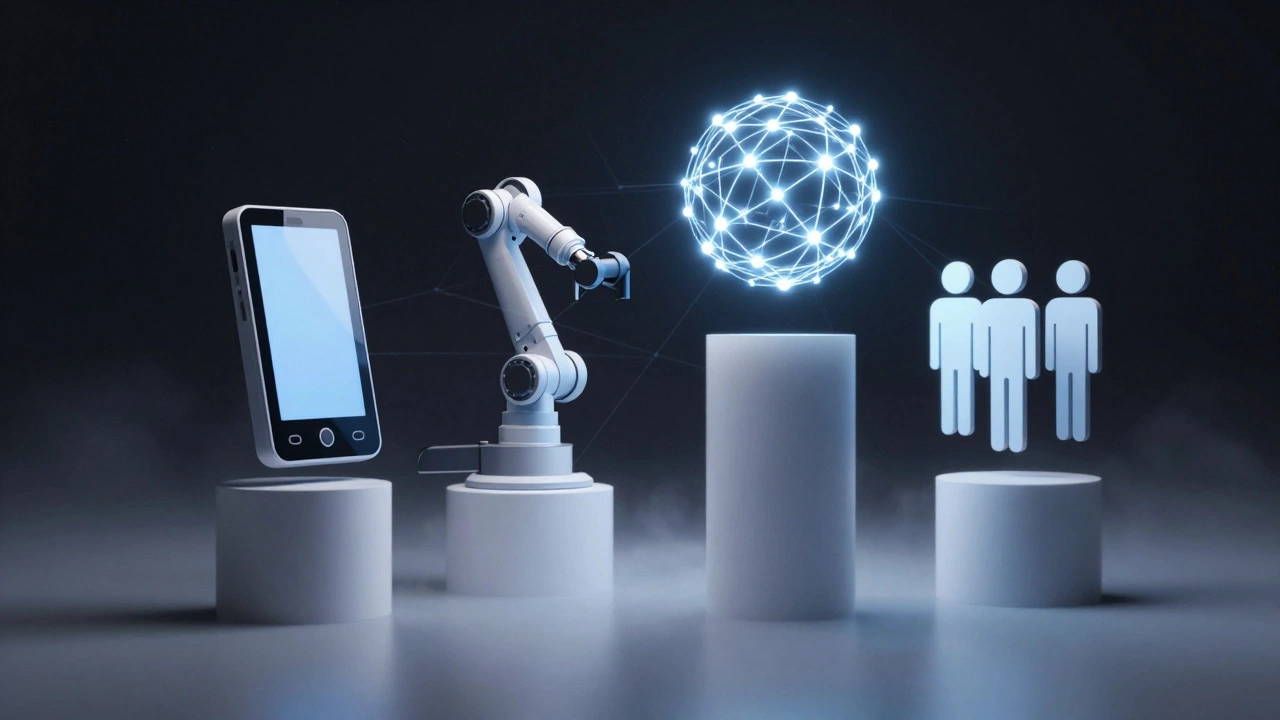
When you hear the word innovation, you probably picture a sleek new smartphone or a revolutionary electric car. But real innovation is far more complex than just launching a shiny new gadget. It is the engine that drives economic growth, improves public services, and reshapes how we live and work. Understanding the specific mechanics behind it is crucial, especially if you are looking at how governments and organizations measure success. This is where the concept of innovation types comes into play. It breaks down the vague idea of "being innovative" into concrete, actionable categories that policymakers and business leaders can track and support.
There is a standard framework used globally to define these categories. It is not just a business theory; it is a statistical standard adopted by major international bodies. By understanding these four pillars, you can see why some companies thrive while others stagnate, even if they have the same amount of research and development budget. Let's walk through each one to see how they function in the real world.
Product Innovation: Changing What You Offer
Product innovation is the most visible form of change. It involves introducing a good or service that is new or significantly improved. This isn't just about a minor color change or a packaging update. It needs to be a distinct shift in the characteristics of the product itself. Think about the shift from DVD players to streaming devices. That was a massive product innovation because it changed the fundamental way content was delivered and consumed.
Product Innovation is the introduction of a new or significantly improved good or service regarding its characteristics or intended uses. It includes significant improvements in technical specifications, components, materials, user friendliness, or embedded software. For example, the introduction of the first iPhone was a product innovation that combined a phone, an iPod, and an internet communicator into one device.
This type of innovation directly impacts revenue. When you launch a new product, you are creating a new market or capturing share from existing competitors. However, it is high risk. Developing a new product requires significant investment in research, design, and testing. If the market rejects it, the financial loss can be severe. That is why many organizations balance product innovation with other types to spread their risk.
In the context of policy, governments often subsidize product innovation because it leads to exports and job creation in high-value sectors. For instance, a country might offer tax credits for companies developing new medical devices. This encourages firms to push the boundaries of what is possible, knowing that the state is helping to absorb some of the initial risk.
Process Innovation: Changing How You Make It
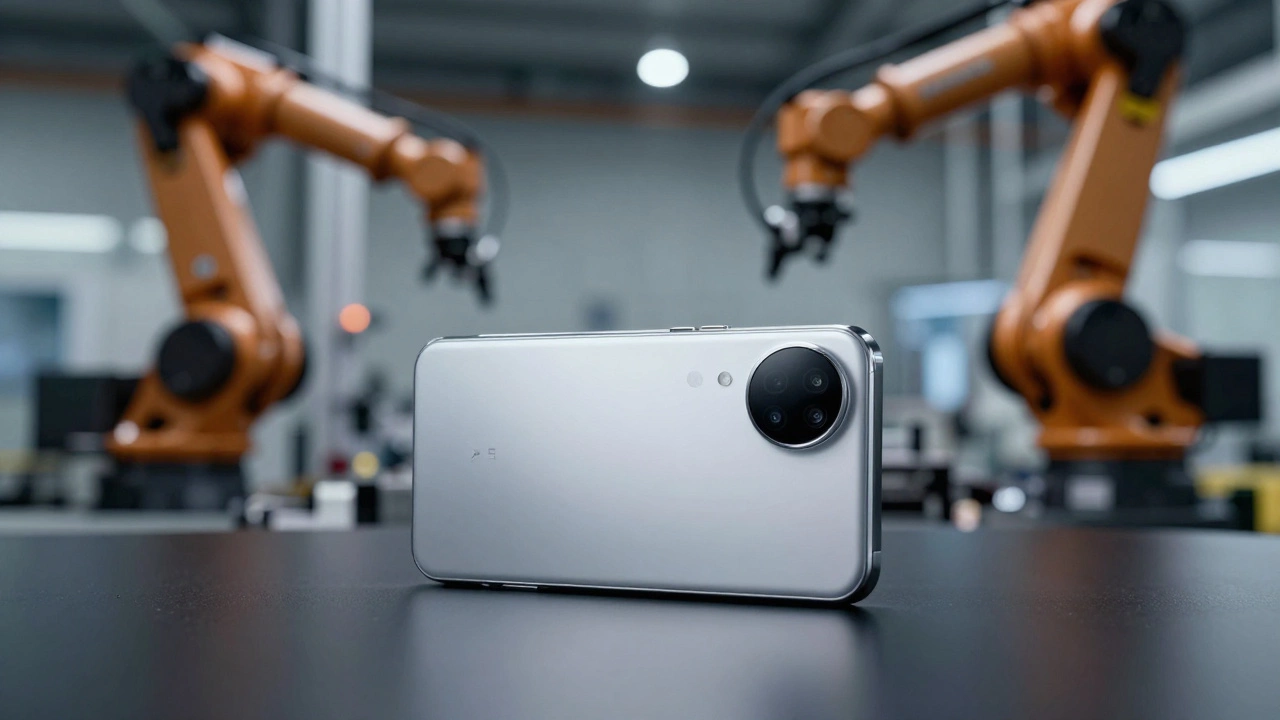
While product innovation changes what you sell, process innovation changes how you make or deliver it. This is often invisible to the customer, but it is critical for the business's survival. It involves implementing a new or significantly improved production or delivery method. The goal here is usually efficiency, cost reduction, or quality improvement.
Process Innovation is the implementation of a new or significantly improved production or delivery method. This includes changes in techniques, equipment, or software. A classic example is the Toyota Production System, which revolutionized manufacturing by introducing just-in-time inventory management to reduce waste.
Consider the rise of automation in warehouses. Companies like Amazon have heavily invested in robotics and AI-driven logistics. The product-the book or the widget-is the same. But the process of getting it to your door has changed drastically. This allows them to offer faster shipping at lower costs, which becomes a competitive advantage even without changing the product itself.
Process innovation is often the backbone of sustainable growth. You can only lower prices or increase margins for so long if your production methods remain static. By optimizing the process, companies can scale up without a linear increase in costs. Policymakers care about this because efficient processes often lead to lower energy consumption and reduced waste, aligning with environmental goals.
Marketing Innovation: Changing How You Sell It
Marketing innovation is about changing the way you present your product to the world. It involves significant changes in product design, packaging, placement, or promotion. This is not just running a new ad campaign; it is about a fundamental shift in strategy that creates value.
Marketing Innovation is the implementation of a new marketing method involving significant changes in product design, packaging, placement, or promotion. An example would be the shift from traditional retail to direct-to-consumer subscription models, such as Dollar Shave Club, which changed how razors were sold and marketed.
Think about how Netflix disrupted the video rental industry. They didn't just make better movies initially; they changed the marketing and delivery model from physical rentals to on-demand streaming. This required a new way of thinking about customer relationships and data usage. They marketed the convenience of access rather than the ownership of discs.
This type of innovation is vital for customer retention. In crowded markets, products can look identical. Marketing innovation creates a unique brand experience that differentiates you from competitors. It helps you reach new audiences or re-engage old ones. From a policy perspective, marketing innovation can help small businesses penetrate international markets by leveraging digital platforms, thus boosting the economy without heavy infrastructure investment.
Organizational Innovation: Changing How You Work
Organizational innovation is the most internal type. It involves new business practices, workplace organization, or external relations. It is about the structure and culture of the company itself. This might sound soft, but it is often the hardest to implement because it requires changing human behavior and established hierarchies.
Organizational Innovation is the implementation of a new organizational method in business practices, workplace organization, or external relations. Examples include implementing agile methodologies, remote work policies, or new partnership models with suppliers. Google's famous "20% time" policy, allowing engineers to work on side projects, is a form of organizational innovation designed to foster creativity.
Consider the shift to remote work that accelerated during the pandemic. Companies that successfully adopted flexible work structures retained talent and reduced overhead costs. Those that clung to rigid office mandates often struggled with recruitment. This change in workplace organization is a clear organizational innovation.
This type of innovation drives the capacity for the other three. You cannot have rapid product innovation if your organizational structure is too slow and bureaucratic. By flattening hierarchies or encouraging cross-functional teams, companies create an environment where new ideas can flow faster. Policymakers are increasingly looking at this because a flexible workforce is more adaptable to economic shocks.
Why the Oslo Manual Matters for Policy
You might wonder why we need a standard definition. Why not just let companies decide what counts as innovation? The answer lies in measurement. To make effective policies, governments need comparable data. The Oslo Manual is the internationally accepted guide for collecting and interpreting data on innovation, published by the OECD and Eurostat provides this standard.
Without the Oslo Manual, one country might count a new marketing campaign as innovation while another does not. This makes it impossible to compare economic performance across borders. By agreeing on these four types, governments can track where their industries are succeeding and where they are falling behind. It allows for targeted funding. If a region is strong in process innovation but weak in product innovation, the government can design grants to encourage R&D in new products.
This framework also helps in understanding the innovation ecosystem. It shows that innovation is not a single event but a continuous process involving multiple dimensions. A company might be excellent at process innovation but fail because it lacks marketing innovation to sell the efficiency gains to customers. Recognizing these distinct types helps leaders diagnose problems more accurately.
Comparison of Innovation Types
| Type | Focus Area | Primary Goal | Visibility to Customer |
|---|---|---|---|
| Product | Goods or Services | Revenue Growth | High |
| Process | Production or Delivery | Efficiency & Cost | Low |
| Marketing | Sales & Promotion | Market Share | High |
| Organizational | Internal Structure | Adaptability | Low |
This table highlights how each type serves a different function. Product and Marketing innovations are outward-facing and directly touch the customer experience. Process and Organizational innovations are inward-facing and optimize the engine that drives the business. A balanced strategy usually requires investment in all four areas.

Interconnectedness of Innovation Types
It is rare for these types to happen in isolation. They are deeply interconnected. A new product often requires a new process to manufacture it. For example, when electric vehicles were introduced, manufacturers had to innovate their assembly lines to handle battery packs differently than engines. This is a simultaneous product and process innovation.
Similarly, organizational innovation often enables the others. If a company adopts a culture that rewards risk-taking (organizational), employees are more likely to propose new product ideas (product) or suggest better workflows (process). The synergy between these types is where the real competitive advantage lies. Companies that only focus on one type often hit a ceiling. They might have the best product, but if their organization is slow to respond to market feedback, they will lose to a competitor who is more agile.
Understanding these connections helps in resource allocation. If you are investing heavily in product R&D, you must also ensure your organizational structure can support rapid iteration. Otherwise, the new products will take too long to reach the market, rendering them obsolete before launch.
Challenges in Measuring Innovation
Even with the Oslo Manual, measuring innovation is tricky. Product innovation is relatively easy to spot-a new model number or a patent filing. Organizational innovation is much harder to quantify. How do you measure a change in workplace culture? How do you assign a value to a new meeting structure that improves decision-making?
This measurement gap creates a blind spot for policymakers. Because organizational innovation is hard to measure, it is often underfunded compared to product R&D. However, it might be the most critical driver of long-term resilience. Governments are starting to realize this and are developing new metrics to capture the value of organizational changes, such as employee productivity rates or retention levels.
Another challenge is the definition of "significantly improved." A minor tweak might not qualify as innovation under the Oslo Manual, but it could still provide a competitive edge. This threshold can discourage companies from reporting small but meaningful improvements, leading to an underestimation of the overall innovation rate in an economy.
Strategic Implementation for Businesses
For business leaders, the takeaway is clear: do not rely on a single type of innovation. Build a portfolio. If your market is saturated, focus on process innovation to lower costs. If you are entering a new market, focus on product and marketing innovation to gain traction. If your company is bloated and slow, prioritize organizational innovation to unlock potential.
Regular audits of your innovation activities can help. Ask yourself: Are we launching new products? Are we improving our delivery speed? Are we reaching customers in new ways? Are we working more efficiently as a team? If the answer is no to any of these, you have a gap in your strategy. Addressing these gaps systematically ensures that you are not just innovating, but innovating effectively across the board.
What is the most common type of innovation?
Product innovation is often the most visible and commonly discussed type, but process innovation is actually the most frequently implemented by businesses. Many companies make small improvements to their production methods daily without publicizing them.
How does the Oslo Manual define innovation?
The Oslo Manual defines innovation as the implementation of a new or significantly improved product, process, marketing method, or organizational method in business practices, workplace organization, or external relations.
Can marketing be considered innovation?
Yes, if the marketing method involves significant changes in product design, packaging, placement, or promotion that create value. Simple advertising campaigns do not count, but a new business model like subscription services does.
Why is organizational innovation difficult to measure?
Organizational innovation involves changes in culture, structure, and human behavior, which are qualitative and internal. Unlike patents or sales figures, there are no standard metrics to easily quantify the impact of a new management style.
Do all four types need to happen at once?
No, they do not need to happen simultaneously. However, successful long-term strategies often involve a mix. Focusing on just one type can lead to bottlenecks, such as having a great product but no efficient way to manufacture it.
Ultimately, innovation is not a magic trick. It is a structured discipline. By breaking it down into these four types, we remove the mystery and replace it with a clear roadmap. Whether you are a policy maker designing national strategy or a CEO steering a startup, knowing the difference between a new product and a new process is the first step toward sustainable growth.