The Biggest Scientific Discovery Ever: Gravity, Genes, or Antibiotics?
 Jun, 30 2026
The Ultimate Discovery Vote
DNA & Genetics
1953Decoding the blueprint of life, enabling personalized medicine and genetic engineering.
Gravitational Waves
2015A new sense for humanity to 'hear' the universe through spacetime vibrations.
Penicillin
1928The miracle drug that turned deadly infections into minor inconveniences, saving millions.
Transistors
1947The foundation of the digital age, powering computers, smartphones, and AI.
Live Community Results
Ask ten scientists what the single most important discovery in history is, and you’ll likely get ten different answers. Some will point to the microscope, others to the internet, and a few might even argue it’s fire. But if we look at how these breakthroughs changed human survival, health, and our understanding of the universe, a few names rise to the top. The debate isn’t just about who was first; it’s about which discovery fundamentally rewrote the rules of life.
The question of the biggest scientific discovery ever is tricky because science rarely happens in a vacuum. It is a relay race where one generation passes the baton to the next. To find the winner, we have to look at impact. Did it save lives? Did it unlock the secrets of matter? Or did it connect us all?
The Blueprint of Life: DNA and the Double Helix
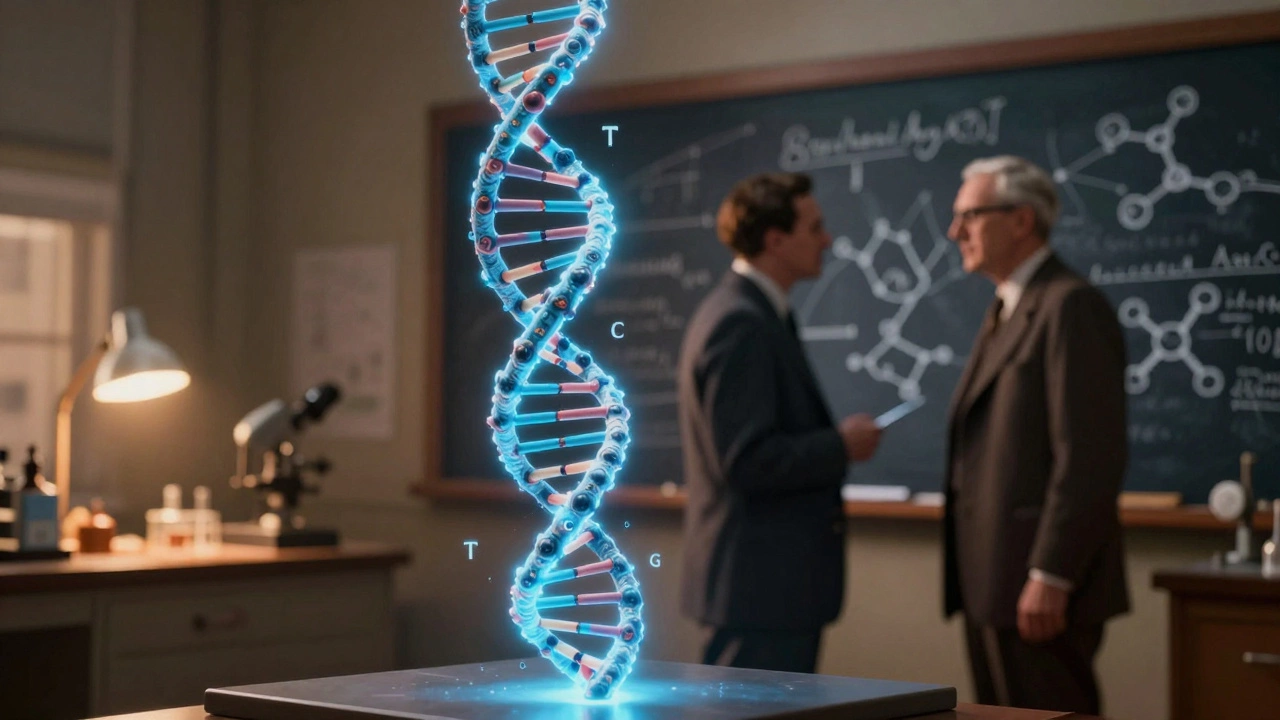
If you had to pick one thing that defines modern biology, it’s the structure of deoxyribonucleic acid (DNA). Before 1953, we knew genes existed, but we didn’t know what they looked like or how they copied themselves. Then came James Watson and Francis Crick. Their model of the double helix wasn’t just a pretty picture; it was an instruction manual for life.
This discovery explains how traits are passed down, how cells divide, and why mutations happen. Without this knowledge, there is no genetic engineering, no personalized medicine, and no CRISPR gene editing. The ripple effects are massive. Today, doctors can sequence your genome in days, not years, allowing them to predict risks for diseases like cancer or heart disease before symptoms appear.
Who actually discovered DNA?
While Watson and Crick built the famous model, the credit is shared. Rosalind Franklin’s X-ray diffraction images (specifically Photo 51) were critical evidence. Maurice Wilkins also played a key role. It’s a classic example of how scientific progress relies on multiple contributors working with overlapping data.
The beauty of the DNA discovery is its universality. From bacteria to blue whales, every living thing uses the same four-letter code (A, T, C, G). This unified our understanding of biology. It turned biology from a descriptive science into a predictive one. We don’t just observe nature anymore; we can read its source code.
The Invisible Force: Gravitational Waves
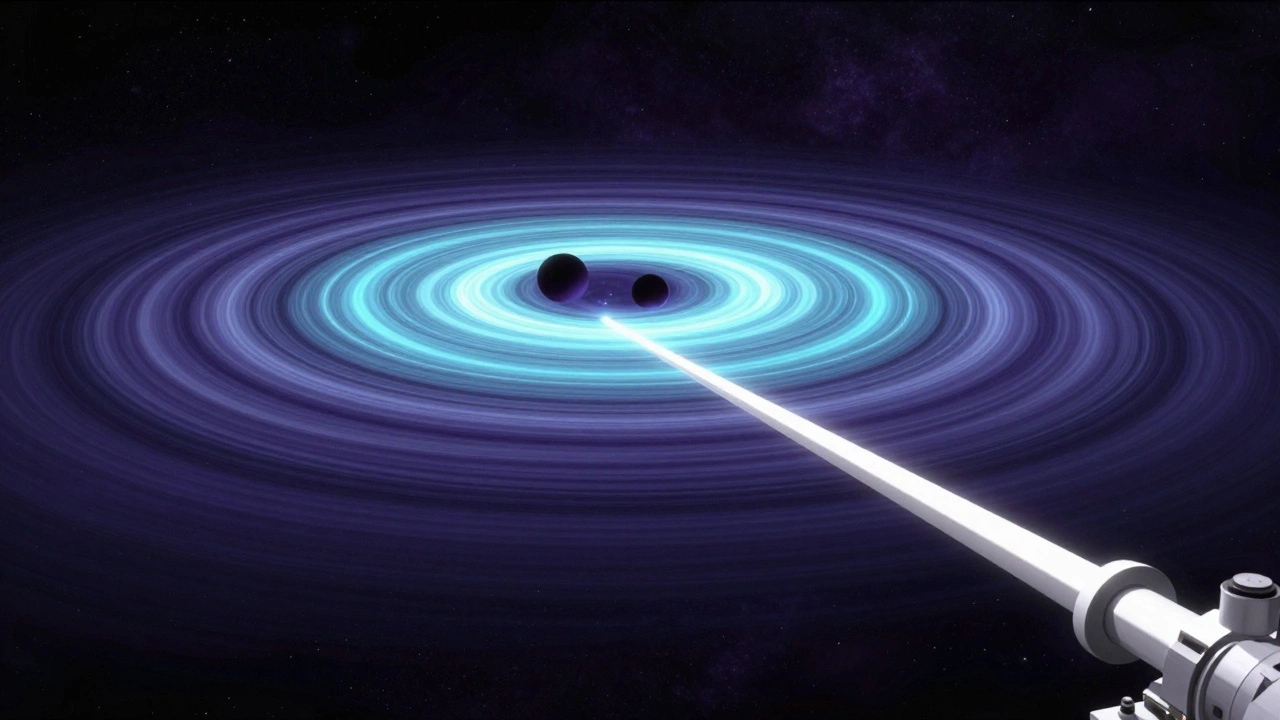
Move away from biology and look up. For over a century, Albert Einstein predicted that massive events in space, like colliding black holes, would create ripples in the fabric of spacetime. These are called gravitational waves. But they are incredibly faint. Detecting them was like trying to measure the width of a hair from across the galaxy.
In 2015, the Laser Interferometer Gravitational-Wave Observatory (LIGO) finally heard them. This wasn’t just a confirmation of Einstein’s math; it was a new sense for humanity. Before this, we only saw the universe through light-radio waves, X-rays, visible light. Now, we can "hear" the universe through vibrations. It opened a completely new window onto the cosmos.
This discovery required unprecedented global collaboration. Thousands of scientists from dozens of countries worked together to build detectors sensitive enough to catch a disturbance smaller than a proton. It proves that when we pool resources and expertise, we can achieve the impossible. The detection of gravitational waves has since led to observations of neutron star mergers, helping us understand where heavy elements like gold come from.
The Miracle Drug: Penicillin and the Age of Antibiotics
Let’s talk about something more immediate: staying alive. In the early 20th century, a simple scratch or childbirth could be a death sentence due to infection. Then, Alexander Fleming noticed that a mold called Penicillium killed bacteria in his petri dish. He discovered penicillin in 1928, but it took another decade for Howard Florey and Ernst Chain to figure out how to mass-produce it.
Antibiotics are arguably the most impactful medical discovery in history. They turned deadly infections into minor inconveniences. Surgeries became safer. Cancer treatments became possible because we could fight off the infections that weakened patients. Millions of lives have been saved directly by this chain of discoveries.
However, this story also highlights a modern crisis. Overuse of antibiotics has led to drug-resistant bacteria, often called "superbugs." This reminds us that scientific discoveries aren’t permanent fixes; they require ongoing management and new research. The battle against resistant pathogens is one of the biggest challenges in public health today.
The Digital Nervous System: Transistors and Semiconductors
You might not think of a tiny silicon chip as a "scientific discovery," but it is the foundation of the modern world. The invention of the transistor in 1947 at Bell Labs replaced bulky vacuum tubes with solid-state switches. This allowed computers to shrink from room-sized machines to pocket-sized devices.
Without transistors, there is no internet, no smartphones, no AI, and no global communication network. This discovery enabled the digital revolution. It changed how we work, learn, and connect. The ability to process information instantly has accelerated every other field of science. Climate models, genomic sequencing, and space exploration all rely on the computing power made possible by semiconductors.
| Discovery | Year | Primary Impact | Collaboration Level |
|---|---|---|---|
| DNA Structure | 1953 | Medicine, Genetics | High (Multiple labs) |
| Gravitational Waves | 2015 | Astrophysics, Cosmology | Very High (Global teams) |
| Penicillin | 1928 | Public Health, Surgery | Medium (Academic + Industry) |
| Transistor | 1947 | Technology, Communication | High (Industrial R&D) |
Why Collaboration Makes the Discovery
Notice a pattern? None of these giants stood alone. Watson and Crick relied on Franklin’s data. LIGO required international funding and expertise. Penicillin needed industrial chemists to scale production. The transistor was a team effort at Bell Labs.
The biggest scientific discovery isn’t just the idea itself; it’s the ecosystem that turns an idea into reality. Modern science is too complex for lone geniuses. It requires biologists, physicists, engineers, data scientists, and ethicists working together. This shift from individual heroism to collective intelligence is perhaps the most significant change in how we discover things.
As we face global challenges like climate change and pandemics, this collaborative model is essential. No single country or lab can solve these problems alone. The future of discovery depends on our ability to share data, open-source tools, and work across borders.
Looking Ahead: What’s Next?
So, what comes next? Many scientists believe the next big leap will be in quantum computing or fusion energy. Quantum computers could solve problems that are currently impossible, like simulating molecular interactions for new drugs. Fusion energy promises clean, limitless power by mimicking the sun.
But regardless of the specific field, the method remains the same. We ask questions, test hypotheses, and share results. The biggest discovery ever might not be a single moment, but the continuous process of curiosity and cooperation that drives us forward. It’s not just about knowing the answer; it’s about keeping the conversation going.
Is the internet a scientific discovery?
The internet is more of a technological innovation built on scientific principles. It relies on discoveries in physics (fiber optics), mathematics (encryption algorithms), and computer science (packet switching). While transformative, it’s an application of science rather than a fundamental discovery of natural laws.
How do we measure the "size" of a discovery?
We usually measure impact by longevity, breadth of application, and improvement in quality of life. A discovery that saves millions of lives (like antibiotics) or changes our fundamental worldview (like relativity) scores high. Citations in academic papers and economic value are also common metrics.
Why is peer review important for big discoveries?
Peer review acts as a quality control filter. It ensures that claims are backed by evidence and methodology is sound. For major discoveries, independent replication is crucial. If other labs can’t reproduce the results, the discovery isn’t accepted. This prevents errors and fraud from becoming established facts.
Can AI make the next big scientific discovery?
AI is already accelerating discoveries. It can analyze vast datasets faster than humans, identifying patterns in protein folding (like AlphaFold) or potential drug candidates. However, AI still needs human direction for hypothesis generation and ethical oversight. It’s a powerful tool, not a replacement for scientific intuition.
What role does funding play in scientific breakthroughs?
Funding is the fuel. Without grants from governments or private investors, expensive equipment like particle accelerators or telescopes wouldn’t exist. Stable funding allows researchers to take long-term risks without worrying about immediate commercial returns, fostering pure curiosity-driven research.