The $75 Billion Biotech Patent War: Who Actually Won?
 Apr, 10 2026
Biotech Patent Revenue Estimator
Estimate how a single foundational patent can lead to billions in revenue. Adjust the parameters to see how royalty rates and market reach impact the final valuation.
$0
Imagine holding a piece of paper that effectively grants you a toll booth on the highway to curing genetic diseases. That is exactly what a high-stakes patent in the biotech world looks like. When we talk about a "$75 billion patent," we aren't talking about a check written to a scientist, but rather the projected market dominance and licensing revenue that flows when a company controls a foundational technology. The tension usually boils down to one question: who actually invented the tool that lets us rewrite the code of life?
Key Takeaways
- Foundational patents in biotech can create monopolies worth tens of billions in projected revenue.
- Legal battles often center on "priority of invention"-who proved it worked first.
- Winning a patent doesn't always mean immediate profit; it often leads to years of licensing disputes.
- The shift toward "open science" is challenging the traditional model of multi-billion dollar intellectual property.
The Battle for Genetic Ownership
At the heart of these massive valuations is CRISPR-Cas9 is a unique technology that enables geneticists and medical researchers to edit parts of the genome by removing, adding or altering sections of the DNA sequence. Also known as Clustered Regularly Interspaced Short Palindromic Repeats, this system was adapted from a natural defense mechanism in bacteria. Because it is so efficient, whoever owns the patent effectively controls the roadmap for everything from drought-resistant crops to curing sickle cell anemia.
The "win" in a $75 billion patent case isn't usually a clean victory. Instead, it's a grueling process of interference proceedings. For years, two major camps-one led by the Broad Institute and the other by UC Berkeley-fought over who first applied the technology to eukaryotic cells (cells with a nucleus, like humans). If you control the patent for human application, every pharmaceutical company in the world has to pay you a fee to develop a drug. That is where the $75 billion figure comes from: it is the sum of potential royalties over two decades of market exclusivity.
How the Money Actually Works
You might wonder how a legal document translates into such a staggering amount of money. In the biotech industry, the value isn't in the lab equipment, but in the Intellectual Property (IP) is the legal rights resulting from intellectual activity in the industrial fields, encompassing patents, copyrights, and trademarks.
When a company like Vertex Pharmaceuticals or CRISPR Therapeutics develops a new therapy, they don't just build a factory. They need a license to use the underlying genetic "scissors." If a patent holder can prove they have the sole right to that technology, they can charge a percentage of every single dose sold. If a treatment for a common condition costs $100,000 per patient and affects millions, the math quickly climbs into the billions. This creates a "winner-take-all" dynamic where the second-place finisher might have equally good science but zero legal right to sell it.
| Strategy | Primary Goal | Financial Impact | Risk Level |
|---|---|---|---|
| Exclusive Licensing | Total market control | High royalties per unit | Very High (Lawsuits) |
| Non-Exclusive Licensing | Widespread adoption | Volume-based smaller fees | Medium (Lower Margins) |
| Open Source/Academic | Rapid innovation | Zero direct royalties | Low (Public Good) |
The Ripple Effect on Drug Prices
When a single entity "wins" a massive patent, the cost isn't just felt by the losing lab; it's felt by the patient. When a company pays hundreds of millions in licensing fees just to start a project, those costs are baked into the final price of the medicine. We see this in the current pricing of gene therapies, where some treatments cost upwards of $2 million per dose. A significant chunk of that is paying off the Patent Portfolio is a collection of patents owned by a single entity, used to protect a suite of related technologies and create a competitive moat.
Is it fair? That's the million-dollar question. Supporters argue that without the promise of a $75 billion payday, venture capitalists would never risk the hundreds of millions required to move a drug through clinical trials. Detractors argue that the basic science was funded by taxpayers through government grants, and therefore, the profit should be shared with the public.
Why "Winning" Can Be a Pyrrhic Victory
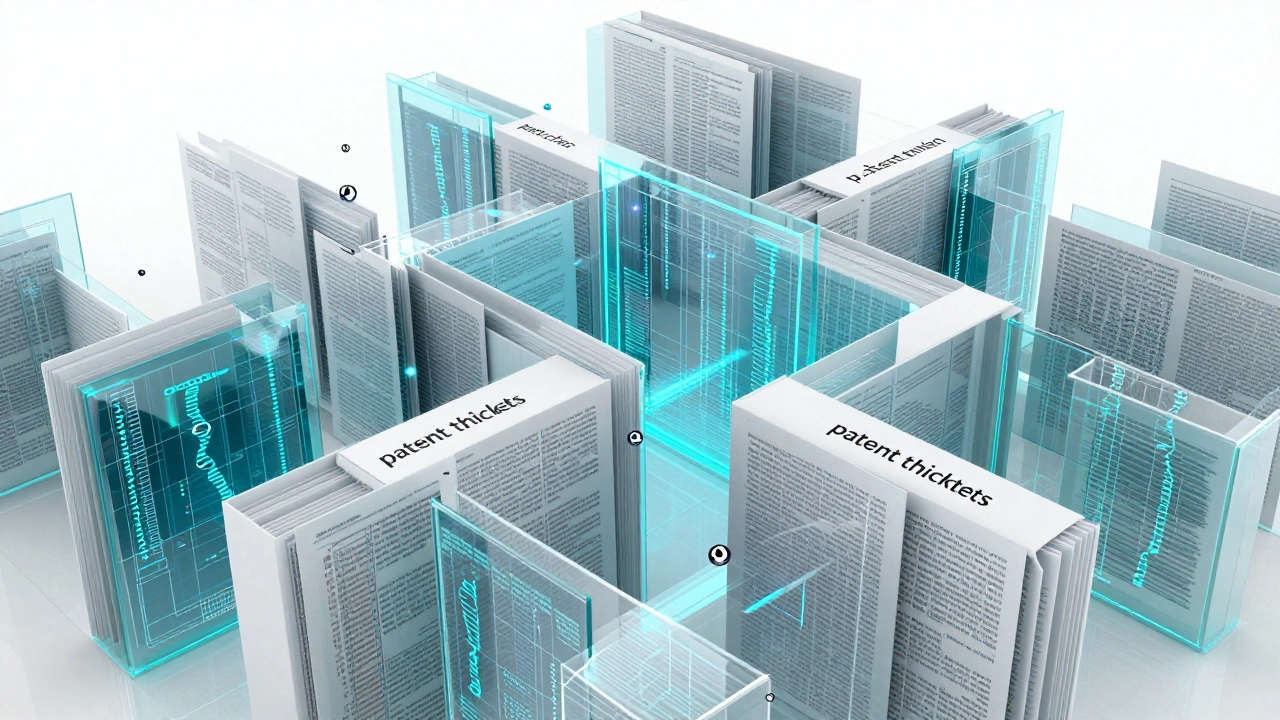
Winning a patent case on paper doesn't always lead to a gold mine. Many biotech firms find themselves in a state of "patent thickets." This happens when so many overlapping patents exist that no one can move forward without infringing on someone else's claim. Even if you win the "Big Patent," you might still be blocked by a smaller patent on the specific delivery method, like using a Lipid Nanoparticle is a tiny fat-based bubble used to encapsulate and deliver genetic material into cells without it being destroyed by the body.
If you own the scissors (the CRISPR enzyme) but someone else owns the envelope (the nanoparticle), you still can't get the medicine into the patient. This leads to cross-licensing agreements, where companies essentially trade rights to keep the industry moving. In these cases, the $75 billion "win" is diluted as the victor is forced to share the spoils just to stay operational.
The Shift Toward New Legal Frameworks
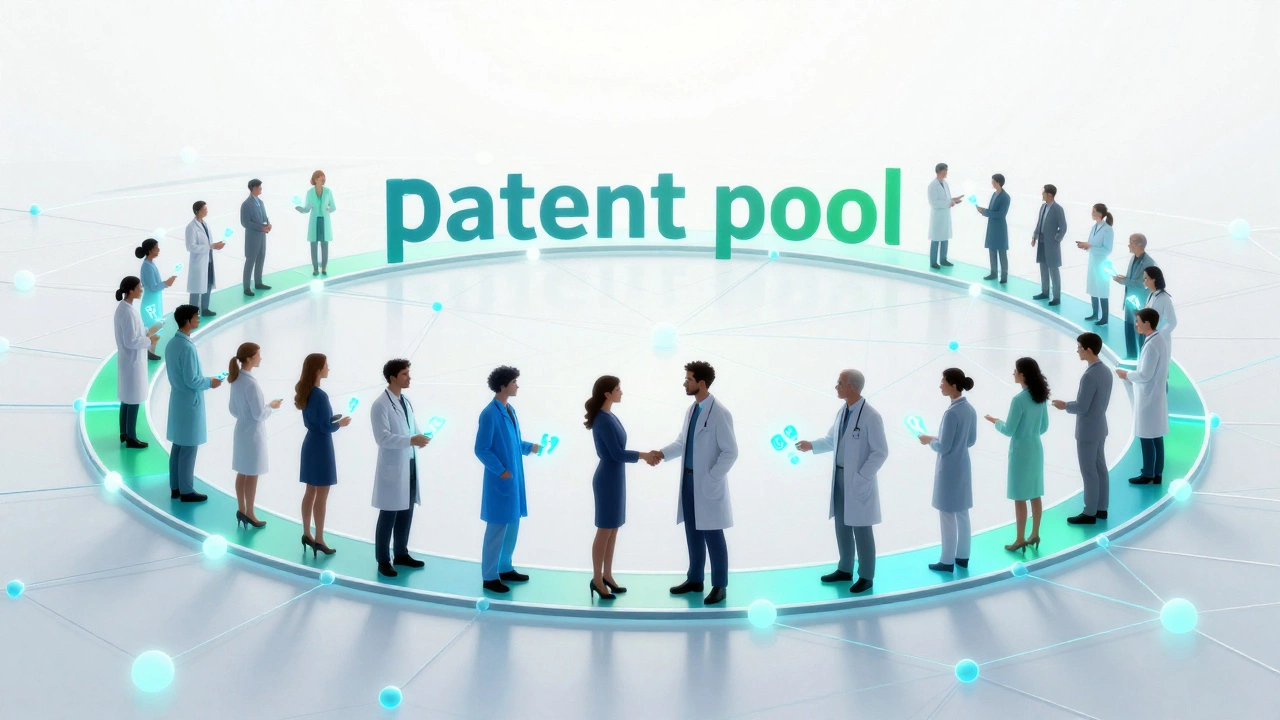
The fallout from these massive legal battles is changing how we approach science. We are seeing a move toward Patent Pools is an agreement between two or more patent owners to license their patents to one another or to third parties.
By pooling patents, companies can avoid the "all-or-nothing" legal wars that freeze innovation for a decade. Instead of spending $50 million on lawyers to fight over a $75 billion prize, they agree to share the technology for a flat fee. This mimics the way the software industry handled early standards. It recognizes that in biotech, the complexity of the human body is too great for any one person or company to truly "own" the solution.
What This Means for the Future of Medicine
The era of the single, world-changing patent may be ending. As we enter 2026, we see a transition toward more modular intellectual property. Instead of one giant patent on the whole process, companies are filing dozens of smaller, specific patents on precise applications-one for a specific mutation in the liver, another for a specific blood disorder. This spreads the risk and the reward.
If a biotech company "wins" today, it's less about a single legal victory and more about their ability to build an ecosystem. The real winners aren't the ones with the most aggressive lawyers, but those who can integrate their technology into a wider web of partnerships. The $75 billion figure remains a powerful symbol of what's at stake, but the reality of science is that discovery is almost always a collaborative effort, even if the law pretends otherwise.
What does it actually mean to "win" a biotech patent?
Winning a patent means the legal system recognizes your company as the original inventor of a specific process or product. This gives you the exclusive right to use that technology for a set period (usually 20 years) and the power to charge others "royalties" or licensing fees to use it.
Where does the $75 billion valuation come from?
This is a projection of the total potential revenue from licensing the technology across all possible applications-such as medicine, agriculture, and industrial chemicals-over the lifetime of the patent.
Does a patent win mean a drug will be cheaper?
Usually the opposite. When one company holds a monopoly via a patent, they have the power to set higher prices because there is no generic competition to drive costs down.
What is a "patent thicket"?
A patent thicket is a dense web of overlapping intellectual property rights. It happens when so many different people own small pieces of a process that a new company cannot launch a product without potentially suing or being sued by dozens of different entities.
Can patents be overturned?
Yes. Through a process called "interference" or "invalidity challenges," competitors can argue that the invention was obvious, lacked a novel step, or that someone else actually invented it first.