The 5 Major Hazards of Space Exploration Explained
 Oct, 23 2026
Space Hazard Simulator & Quiz
Test your understanding of the critical threats astronauts face beyond Earth's atmosphere.
Radiation
Invisible sniper from cosmic rays and solar events. Causes cellular damage and cancer risk.
Microgravity
Body forgets Earth. Bone loss (1-1.5%/month), muscle atrophy, and vision changes occur.
Isolation
Mental strain from confinement and communication delays. Leads to anxiety and conflict.
Space Debris
Junkyard orbit. Even tiny paint flecks hit with grenade-like force at 17,500 mph.
Life Support
Closed-loop systems. Failure means minutes to survive. Oxygen, water, and temp control.
A screwdriver hitting a window at orbital speed carries the kinetic energy of a grenade.
Loading question...
Quiz Complete!
Review your answers below.
Imagine floating in a tin can, hurtling through the void at 17,500 miles per hour. Sounds like an adventure, right? It is, but it’s also one of the most dangerous environments humans have ever entered. When we talk about space exploration, we often focus on the glory-the moon landings, the Mars rovers, the dream of becoming multi-planetary. But there’s a gritty reality behind those headlines. The universe doesn’t care if you’re ready. It will try to kill you in five specific ways if you aren’t careful.
If you’re curious about what actually keeps astronauts up at night (and engineers frantically checking gauges), you need to understand the core threats. We’re not talking about alien attacks or black holes swallowing ships whole. We’re talking about physics, biology, and engineering failures that happen every single day. Here are the five biggest hazards facing anyone who leaves Earth’s atmosphere.
Radiation: The Invisible Sniper
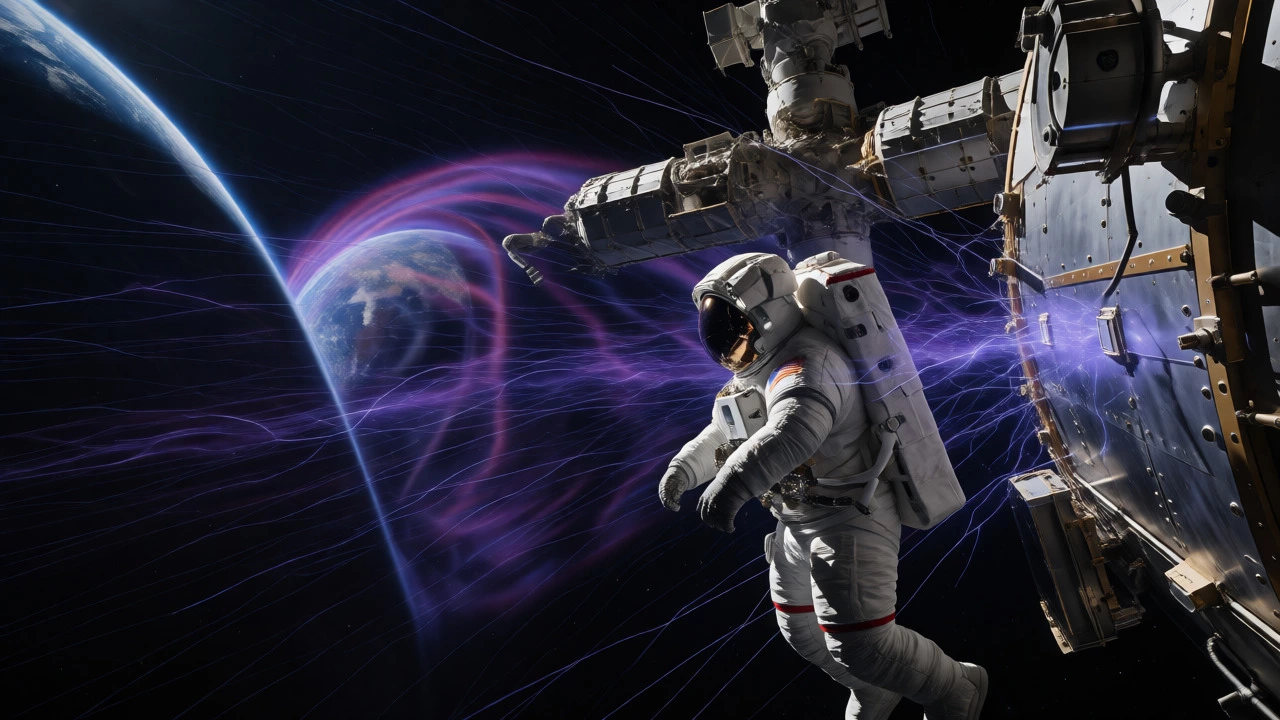
On Earth, we live under a thick blanket of atmosphere and a magnetic field that shields us from cosmic rays. In space, that shield is gone. This exposes travelers to two main types of radiation: Galactic Cosmic Rays (GCRs) and Solar Particle Events (SPEs). GCRs come from outside our solar system-likely supernovae-and they hit with terrifying energy. SPEs are bursts from the sun, unpredictable and intense.
Microgravity: Your Body Starts to Forget Earth
Your body loves gravity. It evolved over millions of years to fight against it. Remove that force, and things start to fall apart-literally and physiologically. In Microgravity, a state of near-weightlessness experienced in orbit where gravitational forces are balanced by orbital velocity, affecting fluid distribution and bone density. fluids shift toward your head, giving astronauts the famous "puffy face" look. But the real danger is internal.
- Bone Loss: Without weight-bearing stress, bones lose density at a rate of 1-1.5% per month. That’s faster than osteoporosis in elderly patients.
- Muscle Atrophy: Muscles shrink because they don’t have to work to hold you up. Astronauts exercise two hours a day just to stay functional.
- Vision Changes: Fluid pressure pushes on the eyes, flattening the back of the eyeball. Many astronauts return with blurry vision that may never fully correct itself.
This isn’t just about looking thin. If you break a bone in space, it heals poorly. If you need to walk upon landing on another planet, your muscles might fail you. The longer you stay, the harder it is to recover.
Psychological Isolation: The Mind Can Break Too
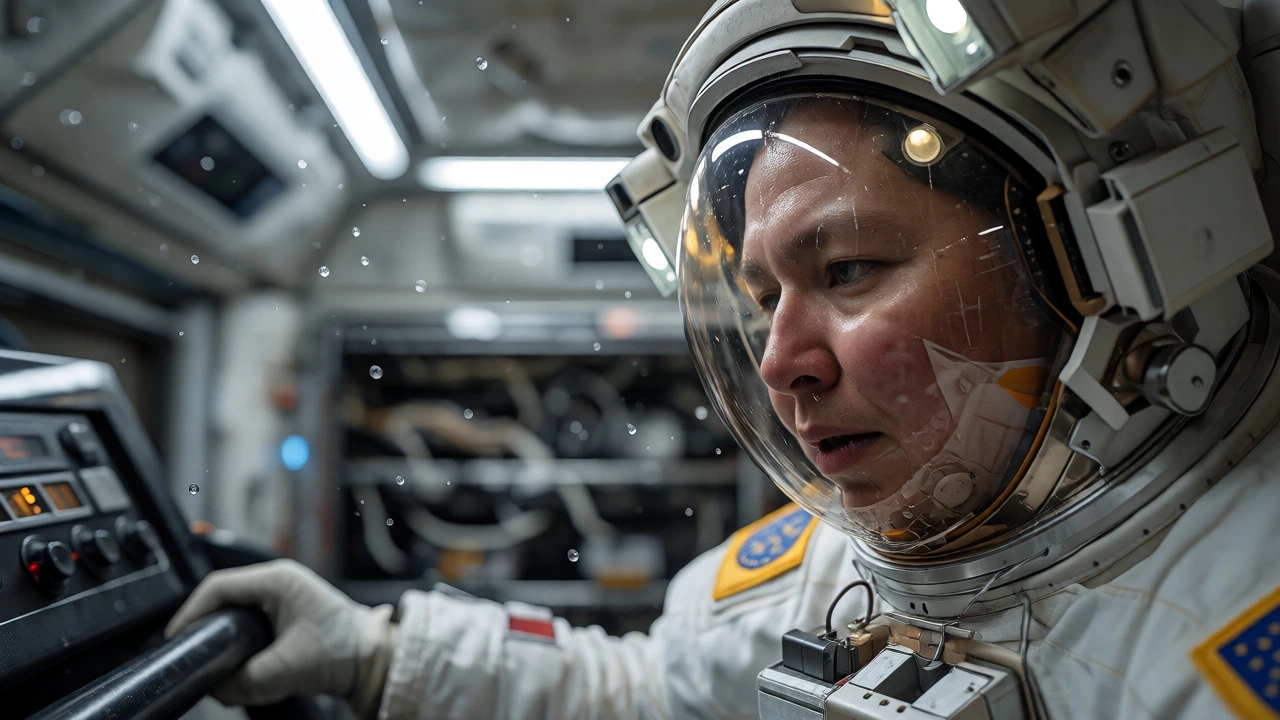
We tend to think of space travel as a physical challenge, but the mental toll is equally severe. Imagine being locked in a small house with three other people for six months, with no way to leave, no privacy, and a 20-minute delay when talking to your family. This is the reality of a mission to Mars.
Isolation Stress refers to the psychological strain caused by confinement, distance from Earth, and limited social interaction during space missions, often leading to anxiety, depression, or interpersonal conflict. Studies from Antarctic research stations and submarine crews show that isolation leads to irritability, sleep disturbances, and group friction. In space, you can’t just go for a walk to clear your head. You’re stuck. Communication delays mean you can’t get immediate emotional support. If an argument starts, it festers. If someone gets depressed, the crew has to manage it without a therapist on board. Mental resilience is now considered as critical as physical fitness for astronaut selection.
Space Debris: The Junkyard Orbit
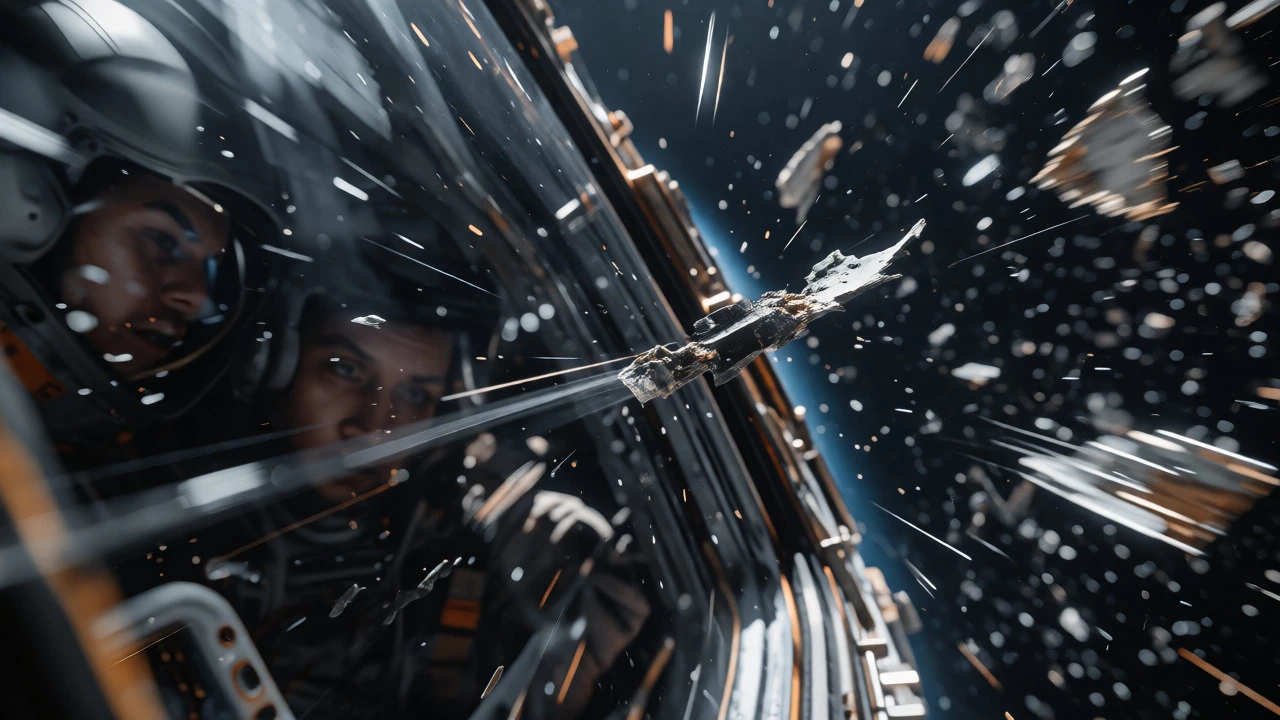
Earth’s orbit is getting crowded. Decades of launches have left behind thousands of pieces of dead satellites, spent rocket stages, and paint flecks. This is Space Debris, defined as human-made objects in orbit around Earth that no longer serve a useful purpose, posing collision risks to active spacecraft. While some debris is large enough to track, most is too small to see but big enough to destroy a ship.
| Debris Size | Relative Speed | Potential Damage |
|---|---|---|
| < 1 cm | ~17,500 mph | Puncture suits, damage sensors |
| 1-10 cm | ~17,500 mph | Destroy windows, disable modules |
| > 10 cm | ~17,500 mph | Total destruction of spacecraft |
At orbital speeds, even a screwdriver hitting a window carries the kinetic energy of a grenade. Collisions create more debris, which creates more collisions-a scenario known as Kessler Syndrome. Avoiding these objects requires constant tracking and occasional evasive maneuvers, adding complexity and fuel costs to every mission.
Life Support Failure: No Second Chances
On Earth, if your air conditioning breaks, you open a window. In space, if the Environmental Control and Life Support System (ECLSS) fails, you have minutes, not hours. This system manages oxygen levels, carbon dioxide scrubbing, humidity, and temperature. It’s a closed loop, meaning nothing comes in from outside except emergency resupply.
The hazard here isn’t just mechanical failure; it’s the unpredictability of biological systems. Algae bioreactors meant to generate oxygen can die off. Filters clog unexpectedly. Water recycling systems, which turn urine into drinking water, require precise chemical balance. A leak in the coolant loop, like the one that nearly doomed the ISS in 2021, can freeze equipment solid. Redundancy helps, but every backup adds weight and cost. When you’re millions of miles from home, a broken pump isn’t an inconvenience-it’s a potential death sentence.
How Do These Hazards Compare?
Each hazard presents different challenges. Radiation is invisible and cumulative. Microgravity affects your body slowly but surely. Psychological issues creep up over time. Debris is sudden and violent. Life support failure is immediate and critical. Engineers design for all of them, but trade-offs are inevitable. More shielding means heavier ships. Better life support means more maintenance. Stronger psychology training means fewer candidates.
Understanding these risks helps us appreciate the courage required to explore. It’s not just about technology; it’s about managing human vulnerability in an environment designed to reject us.
Can astronauts feel radiation?
No, astronauts cannot feel radiation passing through their bodies. However, high doses can cause acute symptoms like nausea and fatigue. Some astronauts report seeing flashes of light, known as Cherenkov radiation, caused by particles interacting with the vitreous humor in the eye.
Does muscle loss in space reverse after returning to Earth?
Mostly, yes. With rigorous rehabilitation exercises, astronauts regain significant muscle mass within weeks or months. However, some changes, particularly in vision and bone density, may take much longer to recover or may be permanent depending on mission duration.
What is the biggest threat to future Mars missions?
While all hazards are serious, radiation and psychological isolation are often cited as the top concerns for long-duration Mars trips. The journey takes six to nine months each way, exposing crews to high radiation levels and extreme confinement without the option of a quick return to Earth.
How do spacecraft avoid space debris?
Mission control tracks debris using radar and telescopes. If a piece larger than 10 cm is predicted to pass close to the spacecraft, the crew performs an avoidance maneuver using thrusters to change altitude slightly. Smaller debris cannot be tracked reliably, so spacecraft use Whipple shields to absorb impacts.
Why is psychological screening important for astronauts?
Crew cohesion is vital for survival. Psychological screening ensures candidates can handle stress, conflict, and monotony. Poor mental health can lead to errors in judgment, reduced productivity, or interpersonal conflicts that jeopardize the entire mission.