Targeted Drug Delivery: How Science Gets Medicine Exactly Where It Needs to Go
When you take a pill, most of the medicine doesn’t go where it’s supposed to. It spreads through your whole body, causing side effects while only a tiny bit actually reaches the problem. That’s where targeted drug delivery, a method of delivering medication directly to diseased cells while minimizing exposure to healthy tissue. Also known as precision drug delivery, it’s not science fiction—it’s happening right now in labs across India and beyond. Imagine a drug that only activates inside a tumor, or a capsule that waits until it reaches your inflamed joints before releasing its payload. That’s the power of this approach.
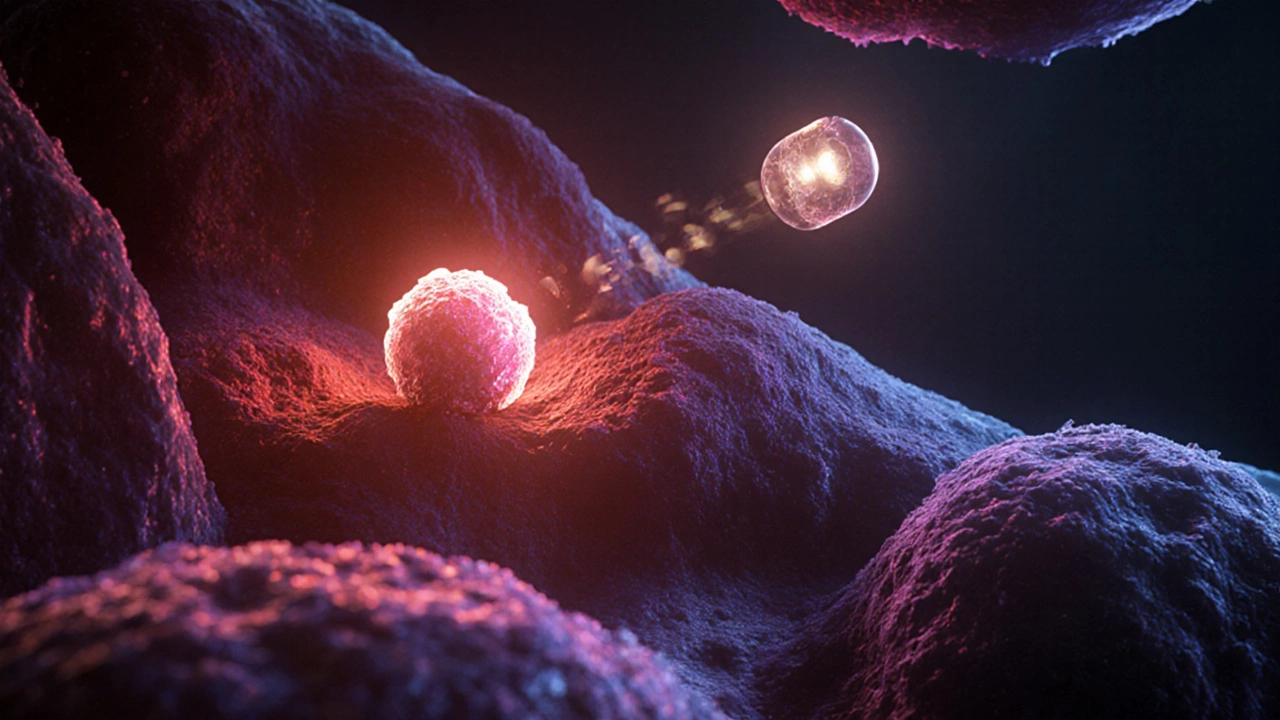
This isn’t just about better pills. It’s about redesigning how drugs move through the body. The most common tools? nanoparticles, tiny carriers smaller than a human cell that can carry drugs and be guided by chemical signals. Also known as drug nanocarriers, they’re made from materials like lipids, polymers, or metals, and can be coated to recognize specific cells—like cancer cells with unique surface markers. These particles avoid the liver and kidneys long enough to reach their target, then release the drug only when they get there. Another key player is precision medicine, a treatment strategy that customizes therapy based on a patient’s genes, environment, and lifestyle. Also known as personalized medicine, it works hand-in-hand with targeted delivery because knowing who needs what drug is useless if you can’t get it there safely. Together, they’re cutting side effects, reducing doses, and making treatments work for people who used to have no options.
You won’t find targeted drug delivery in your local pharmacy yet—not because it’s too new, but because it’s still being perfected. But in Indian research centers, teams are building smarter carriers that respond to body heat, pH levels, or even ultrasound signals. Some are using viruses as natural delivery systems. Others are embedding drugs in biodegradable gels that dissolve only near tumors. The goal? Make treatments so precise that patients feel better faster, with fewer trips to the hospital.
What you’ll find below are real stories from this frontier—how scientists are using nanoparticles to fight cancer without chemotherapy’s brutal side effects, why some soft drinks accidentally contain similar tiny particles (and why that’s not the same thing), and how AI is helping design these drug carriers faster than ever. These aren’t theories. They’re breakthroughs already changing lives.
What Drugs Use Nanoparticles? A Clear Guide to Nanomedicine Today
Oct, 28 2025
Nanoparticle drugs like Doxil, Abraxane, and Onivyde deliver chemotherapy more precisely, reduce side effects, and treat hard-to-reach cancers. Learn which medications use nanotechnology and how they're changing modern medicine.
Read Article→