Renewable Limitations: What’s Holding Back Clean Energy in India?
When we talk about renewable limitations, the real-world barriers that prevent solar, wind, and other clean energy sources from fully replacing fossil fuels. Also known as clean energy constraints, these are not theoretical—they’re daily challenges facing India’s power grid, farmers, factories, and cities. India has made huge strides in installing solar panels and wind turbines, but installing them is only half the battle. The real problem? Making sure that energy actually gets used when and where it’s needed.
One major renewable limitations, the mismatch between when energy is generated and when it’s needed. Solar panels stop producing at sunset, but cities still need power. Wind turbines go quiet on calm days. Without enough energy storage, systems like batteries or pumped hydro that hold excess power for later use. Also known as battery storage, it’s the missing link that keeps renewables from being reliable 24/7. Right now, India’s battery capacity is tiny compared to its solar growth. And while countries like Germany and Australia are building massive grid-scale batteries, India still relies on old coal plants to fill the gaps.
Then there’s the grid integration, how well the national power network can handle sudden spikes or drops in renewable energy supply. Also known as smart grid challenges, this isn’t just about wires—it’s about software, regulation, and outdated infrastructure. Many rural areas have no grid at all, while urban grids were built for steady coal power, not unpredictable sun and wind. When too much solar floods the system at noon, utilities have to shut it off—wasting clean energy just to keep the lights on. Even the best solar farm is useless if the grid can’t take its power.
And let’s not forget land use. Large solar parks need space—lots of it. In a country where farming and forests compete for every square meter, finding room for megawatts isn’t easy. Wind farms face similar issues: turbines need steady wind, which often means coastal or hilly land, which is also home to communities and wildlife. These aren’t tech problems. They’re social and political ones.
Some people think the answer is just more solar panels. But the real bottleneck isn’t panels—it’s what comes after. Storage. Grid upgrades. Policy changes. Local buy-in. Without fixing these, India’s clean energy dream stays stuck in first gear.
Below, you’ll find real stories from India’s energy frontlines—how nanoparticles in solar cells might help, why biomass is sometimes more polluting than coal, and how home solar systems are bypassing the grid altogether. These aren’t future ideas. They’re today’s workarounds, fixes, and failures. And they’re shaping what renewable energy actually looks like here.
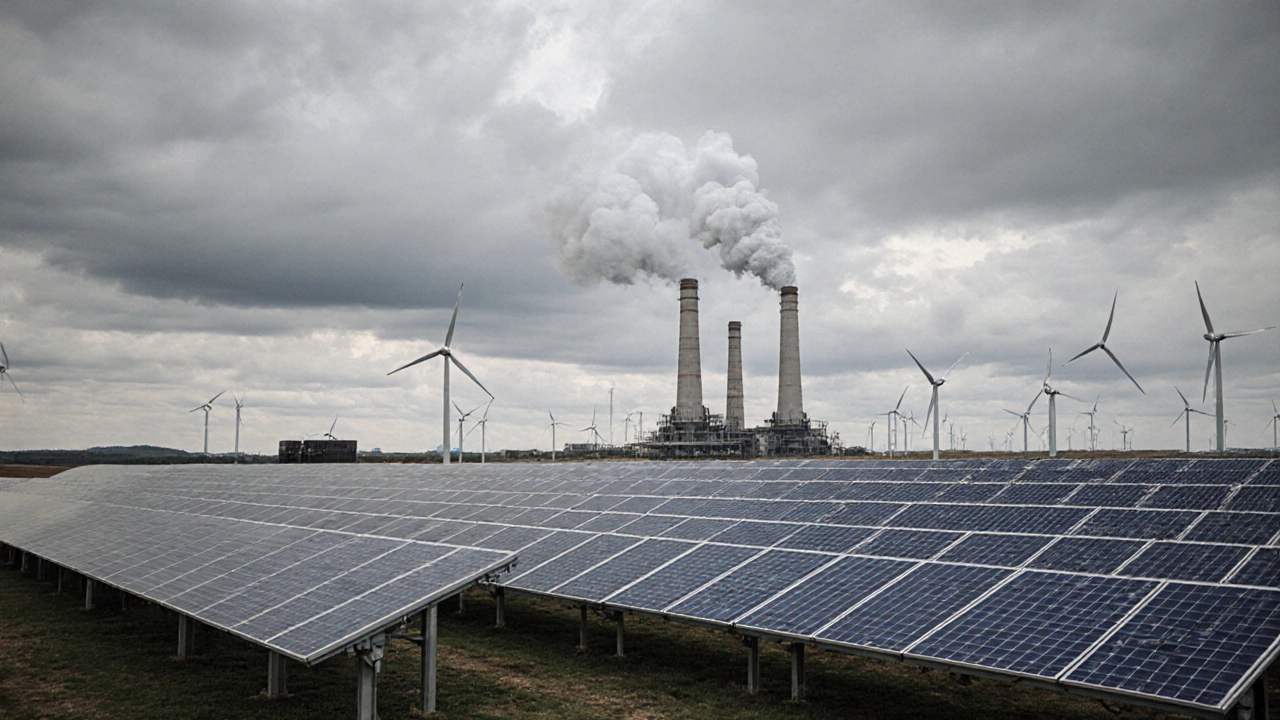
Why 100% Renewable Energy Isn't Possible Yet
Nov, 20 2025
Renewable energy can't fully replace fossil fuels yet because of weather dependence, storage limits, grid constraints, and industrial needs. A 100% renewable grid isn't feasible with today's technology.
Read Article→