Public Health Approach: How Communities Stay Healthy Beyond Doctors and Hospitals
When we think about health, most of us picture a doctor, a clinic, or a hospital. But the public health approach, a system-wide strategy to prevent disease and promote wellness across entire populations. It’s not about fixing one person at a time—it’s about changing the air people breathe, the food they eat, the water they drink, and the policies that shape their daily lives. This isn’t theory. It’s what’s behind the drop in polio cases in India, the rise in vaccination rates in rural villages, and the shift from treating diabetes to stopping it before it starts.
Behind every successful public health effort are three key players: health equity, the idea that everyone deserves fair access to health, no matter their income, caste, or where they live; disease prevention, stopping illness before it spreads through clean water, vaccines, or education; and health policy, the rules and funding decisions made by governments that either help or hurt community health. You can’t fix heart disease by just giving pills—you have to fix the food system. You can’t stop dengue by only treating fever—you have to clean up stagnant water across neighborhoods. That’s the public health approach in action.
What you’ll find in these articles isn’t just science—it’s real stories of how Indian researchers, local leaders, and tech innovators are using data, simple tools, and smart policies to protect millions. From using AI to track malaria hotspots to redesigning school meals to fight childhood obesity, these aren’t distant experiments. They’re working solutions happening right now. This collection shows you how health isn’t just personal—it’s political, environmental, and deeply connected to the systems around us.
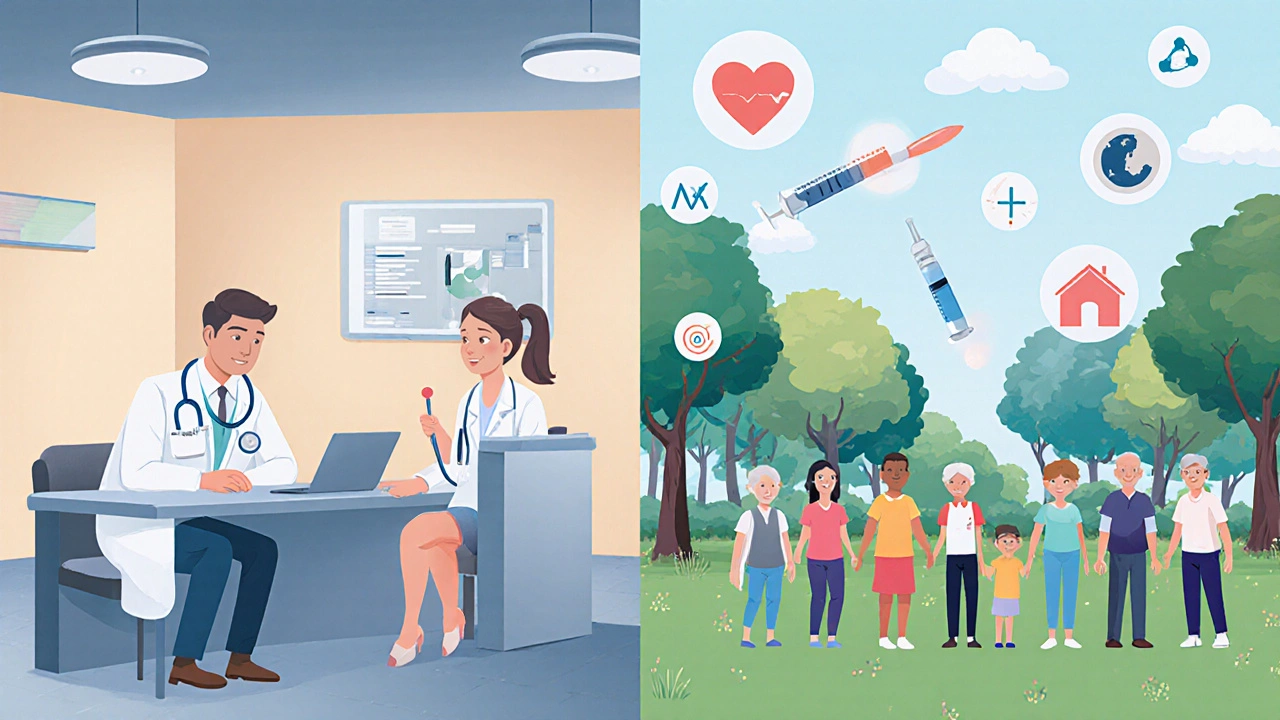
Public Health Approach to Healthcare Explained
Oct, 24 2025
Discover how the public health approach shifts focus from treating illness to preventing disease, promoting equity, and improving community health outcomes.
Read Article→