Human Skills in a Tech-Driven World: Why They Still Matter
When we talk about human skills, the personal abilities that let people connect, collaborate, and solve problems together. Also known as soft skills, they include everything from listening deeply to managing conflict with calm. These aren’t just nice-to-haves—they’re the glue holding together every breakthrough in science, tech, and public health. You can train an AI to detect cancer in scans, but only a human can explain the results to a scared patient with care. You can automate loan approvals, but only a banker with empathy can spot when someone’s struggling and offer real help.
Emotional intelligence, the ability to recognize and manage your own emotions and those of others is what makes AI tools like those in banking or healthcare actually work for people. It’s why NASA designs space suits with comfort in mind—not just function. It’s why public health campaigns succeed not because they have the best data, but because they speak to people’s fears and hopes. Communication skills, the ability to share ideas clearly and listen without judgment turn complex science into action. Think of the scientist who explains nanotechnology in soft drinks without causing panic, or the farmer who teaches neighbors how to use new tools without sounding condescending.
Critical thinking, the ability to question assumptions, spot bias, and weigh evidence is what separates real innovation from hype. It’s why people read articles questioning if AI is biotechnology—or if nanoparticles in Coke are dangerous. It’s why the 4 P’s of innovation (People, Process, Partnerships, Policy) work: because they start with people, not machines. Even the most advanced tech fails without someone asking: Who does this help? Who gets left out? Is this fair?
And then there’s teamwork, the quiet power of people working across disciplines to solve big problems. Climate change doesn’t get fixed by one scientist or one policy. It needs agronomists, data analysts, community leaders, and nurses all talking to each other. The same goes for medical science—pharmacists, engineers, and patients all have roles. No AI can replicate the trust built over years of shared work.
What you’ll find in these articles isn’t just tech specs or data charts. It’s stories of people—how they use human skills to make innovation stick. Whether it’s a female astronaut choosing the right gear for microgravity, a banker using AI to help more customers, or a public health worker convincing communities to act, the real engine isn’t the machine. It’s the mind behind it, the heart beside it, and the voice that brings others along.
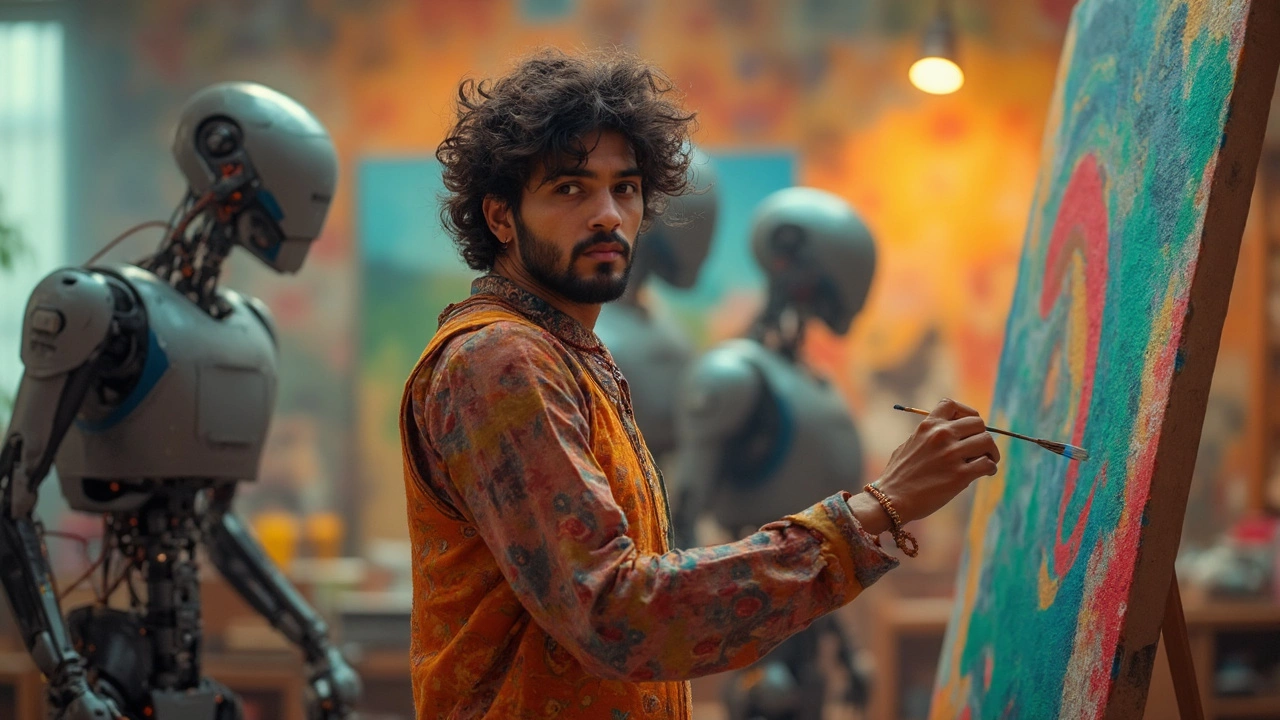
AI-Proof Jobs: What AI Can't Replace (Yet)
Jun, 9 2025
Worried that robots are coming for your job? This article digs into the kinds of work AI still can't touch, breaking down the real skills and jobs that keep humans ahead. You'll discover why certain roles are safe, what those jobs have in common, and how to future-proof your own career. From creative fields to hands-on trades and personal care, this guide offers practical tips for anyone anxious about AI's growing reach. Get the facts that matter—no hype, just what you need to know.
Read Article→