Grid-Tied Solar: How It Works, Costs, and Why It’s the Smartest Choice for Indian Homes
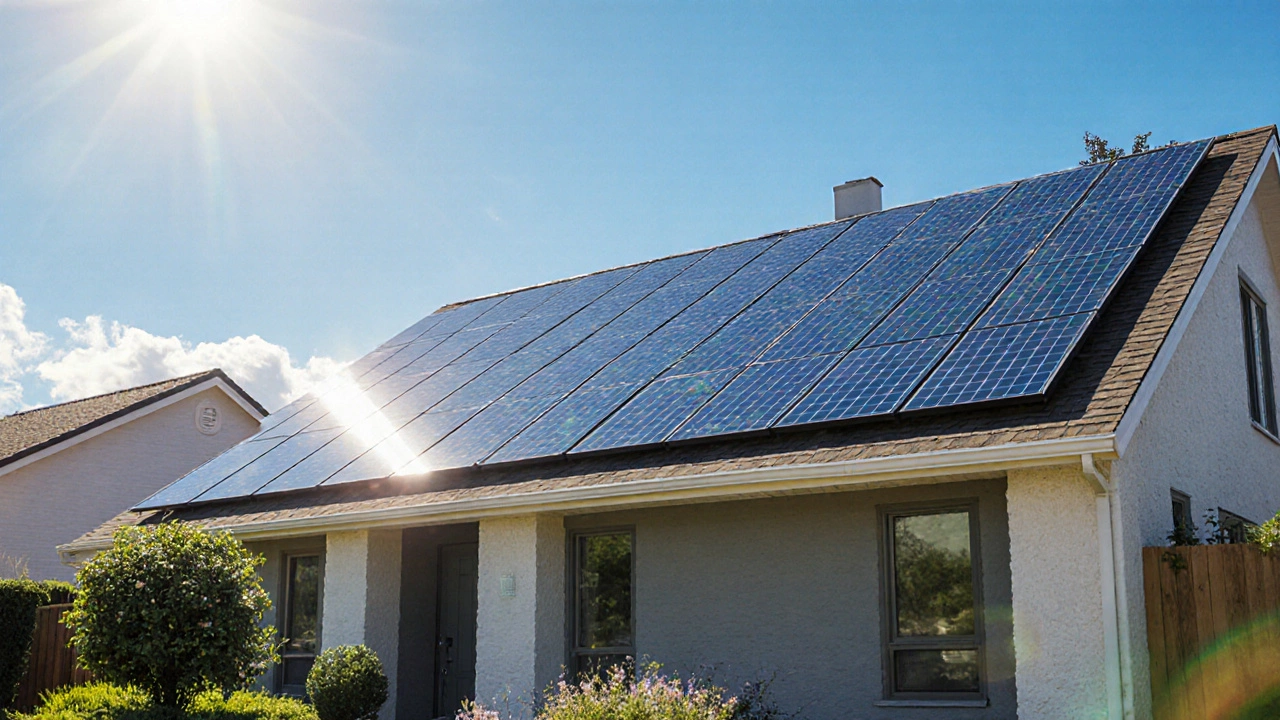
When you install a grid-tied solar, a solar power system connected directly to the local electricity grid without batteries. Also known as on-grid solar, it’s the most common and cost-effective way for homes and businesses in India to cut power bills and reduce reliance on the grid. Unlike off-grid systems, you don’t need expensive batteries—you just use solar when the sun’s out, and pull from the grid when you need more. And when you produce extra power, you get paid for it through net metering, a system where your utility credits you for surplus electricity sent back to the grid. This makes grid-tied solar not just an energy solution, but a financial one too.
Most Indian households with grid access can install a grid-tied system in under a week. The setup is simple: solar panels on the roof, an inverter to convert DC to AC power, and a bidirectional meter that tracks both what you use and what you send back. States like Gujarat, Maharashtra, and Karnataka lead in adoption because they offer strong net metering policies and subsidies. The cost? A typical 5 kW system runs between ₹3 lakh and ₹4 lakh after subsidies—payback in 4 to 6 years, then nearly free power for the next 20+ years. Compare that to rising electricity rates, and the math is clear.
What’s often missed is how grid-tied solar fits into bigger shifts. It’s not just about saving money—it’s about reducing pressure on overloaded grids, cutting coal dependence, and making cities cleaner. Cities like Pune and Bengaluru are seeing rooftop solar clusters form in housing societies, where neighbors pool resources to install larger systems and share savings. And with India’s target of 500 GW of renewable energy by 2030, grid-tied solar is one of the fastest-growing pieces of that puzzle. You’re not just powering your home—you’re helping power the country’s energy transition.
What you’ll find below are real stories and breakdowns from across India: how a family in Rajasthan slashed their bill by 90%, why a small factory in Tamil Nadu switched to solar and doubled its profits, and what hidden costs people overlook when they install their first system. These aren’t theory pieces—they’re practical, on-the-ground experiences from people who’ve done it. Whether you’re just curious or ready to install, you’ll find the facts you need here—no fluff, no hype, just what works.
Home Solar Panels: Grid‑Tied, Off‑Grid & Hybrid Explained
Oct, 22 2025
Learn how home solar panels connect to the grid, batteries or both. We break down grid‑tied, off‑grid and hybrid systems, costs, regulations and best‑fit tips.
Read Article→