The Future of Biotechnology: What’s Coming Next in Health, Food, and AI
When we talk about the future of biotechnology, the application of biological systems to solve real-world problems in medicine, agriculture, and industry. Also known as bioengineering, it’s no longer just about modifying genes—it’s about redesigning life itself to work better for humans and the planet.
Biotechnology today isn’t stuck in a lab coat. It’s in your medicine cabinet, your grocery cart, and even your smartphone. Take nanomedicine, the use of tiny particles to deliver drugs exactly where they’re needed. Drugs like Doxil and Abraxane already use this tech to fight cancer with fewer side effects. That’s not science fiction—it’s FDA-approved, real-world treatment. And it’s just the start. In India, researchers are building cheaper, faster versions of these therapies to reach rural clinics and low-income patients. Meanwhile, synthetic biology, the design and construction of new biological parts and systems. Also known as engineered biology, it’s being used to create plant-based meat, bacteria that clean polluted soil, and even biofuels from algae.
You can’t talk about the future of biotechnology without mentioning AI in biotech, how machine learning speeds up drug discovery, predicts protein structures, and finds hidden patterns in genetic data. AI isn’t replacing scientists—it’s giving them superpowers. A team in Bangalore used AI to cut years off the timeline for finding a new antibiotic. In Delhi, researchers trained algorithms to spot early signs of tuberculosis in chest X-rays faster than any radiologist. This isn’t the distant future—it’s happening now, in Indian labs, with public funding and private partnerships. And it’s not just about curing disease. Biotech is fixing food systems, too. Imagine crops that grow with less water, or milk made without cows using lab-grown proteins. These aren’t niche experiments. They’re scalable solutions being tested right now.
What’s missing from the conversation? The human side. Biotech isn’t just tools and data. It’s about who gets access, who benefits, and who’s left behind. That’s why posts on this page don’t just explain how CRISPR works—they ask who can afford it. They don’t just list nanoparticle drugs—they question why some are priced like luxury cars. And they don’t just say AI is powerful—they show how it’s being used to help small farmers, not just big pharma.
What you’ll find below isn’t a list of buzzwords. It’s a real-world map of where biotech is headed in India—through the lens of people who are building it. From nanoparticles in soft drinks to AI that designs new medicines, these stories show the messy, exciting, and sometimes surprising truth behind the headlines. No fluff. No hype. Just what’s working, what’s not, and what’s coming next.
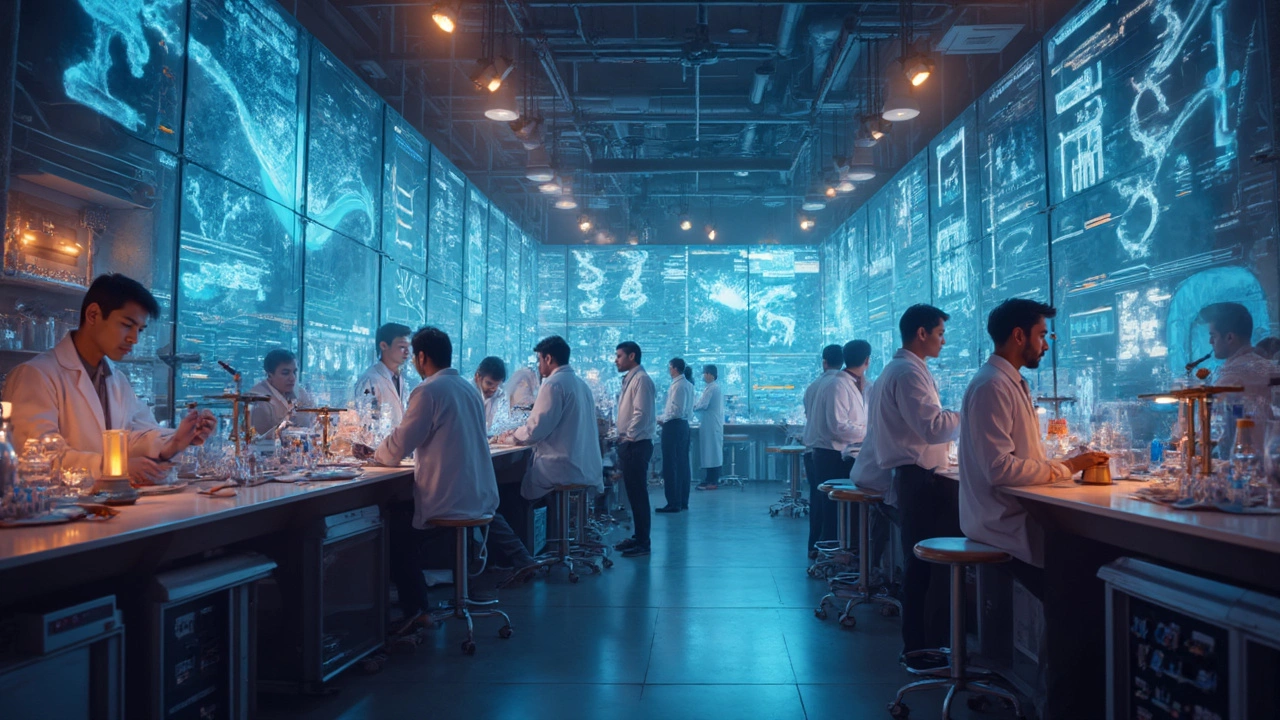
Top Three Trends Shaping the Future of Biotechnology
Feb, 17 2025
The biotechnology industry is experiencing rapid growth, driven by cutting-edge advancements in gene editing, personalized medicine, and sustainable biotech. These trends are transforming healthcare and environmental solutions, paving the way for more efficient and tailored approaches. Understanding these trends is crucial for keeping up with the industry's evolution and staying ahead. Discover how CRISPR, AI-driven drug discovery, and bioplastic innovations are setting the stage for the future.
Read Article→