Energy Storage: How Batteries and Tech Are Powering India’s Future
When the sun sets or the wind stops, energy storage, the system that holds electricity for later use. Also known as power storage, it’s what keeps lights on when renewable sources aren’t generating. Without it, solar panels and wind turbines are useful only when the weather cooperates. But with good storage, India can stop relying on dirty diesel backups and start building a grid that runs on clean power, day and night.
It’s not just about big batteries in warehouses. home solar panels, systems that capture sunlight and store excess power in batteries. Also known as residential energy storage, they let families cut electricity bills and stay powered during outages. Then there’s grid storage, large-scale systems that balance supply and demand across cities and states. Also known as utility-scale storage, these are the hidden backbone of India’s push to hit 500 GW of renewable energy by 2030. And it’s not just lithium-ion. New tech like flow batteries, compressed air, and even gravity-powered systems are being tested right here in India.
What makes this urgent? Because India’s energy demand is rising fast—and so are blackouts. Storage fixes that. It lets farms run irrigation pumps after dark, hospitals keep life-saving equipment running, and factories avoid costly shutdowns. It’s also the missing link for solar villages that used to burn kerosene. The best part? You don’t need a PhD to understand it. Whether you’re a homeowner with solar panels, a farmer using solar pumps, or just someone tired of power cuts, energy storage is already changing your life.
Below, you’ll find real stories and clear breakdowns of how storage works in India—from rooftop batteries to national grid projects. No fluff. Just facts, costs, and what’s actually working on the ground.
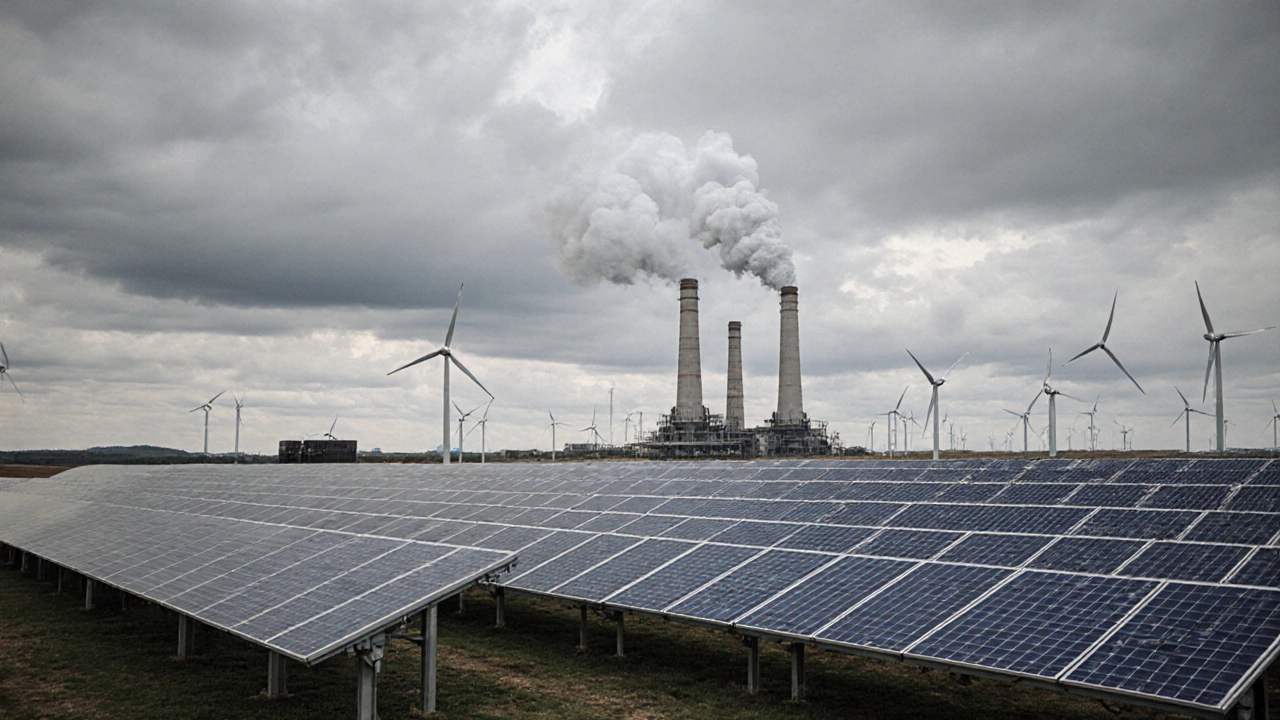
Why 100% Renewable Energy Isn't Possible Yet
Nov, 20 2025
Renewable energy can't fully replace fossil fuels yet because of weather dependence, storage limits, grid constraints, and industrial needs. A 100% renewable grid isn't feasible with today's technology.
Read Article→