Challenger Deep: The Deepest Place on Earth and What Science Finds There
When you think of the deepest place on Earth, you might picture a hole in the ground—but it’s actually under the ocean. Challenger Deep, the lowest known point on Earth’s surface, located in the Mariana Trench in the western Pacific Ocean. It’s more than 36,000 feet down—so deep that if Mount Everest were placed there, its peak would still be under water. This isn’t just a geographic curiosity. It’s a living laboratory where pressure crushes steel, darkness never lifts, and life survives in ways we’re still trying to understand.
Challenger Deep is part of a larger system called the Mariana Trench, a crescent-shaped trench formed by tectonic plates colliding and one sliding beneath another. This process, called subduction, creates some of the most extreme environments on the planet. The water pressure at the bottom is over 1,000 times what we feel at sea level—equivalent to having an entire SUV pressing on your thumbnail. Yet, life thrives here: snailfish, amphipods, and microbial communities have adapted to survive without sunlight, using chemicals from the Earth’s crust for energy. These organisms aren’t just oddities—they’re rewriting what we think is possible for life, and they’re helping scientists design better deep-sea robots and materials that can handle extreme conditions.
Exploring Challenger Deep isn’t easy. Only a handful of manned missions have ever reached it. The famous 1960 dive by Jacques Piccard and Don Walsh in the Trieste was followed decades later by James Cameron’s solo trip in 2012. Today, remote-controlled submersibles and autonomous vehicles do most of the work, collecting samples and video from the seafloor. These tools are pushing the limits of engineering, just like the life forms they study are pushing the limits of biology. What happens in Challenger Deep doesn’t stay there. The trenches act as carbon sinks, pulling organic material from the surface into the deep ocean, which affects global climate cycles. They’re also where earthquakes and tsunamis can start—so understanding this zone helps protect coastal communities.
Challenger Deep isn’t just about depth. It’s about resilience, mystery, and human curiosity. Every dive reveals something new—new species, new chemical reactions, new clues about how our planet works. And with climate change altering ocean chemistry and deep-sea mining proposals creeping closer, what we learn here might be the key to protecting the ocean’s future. Below, you’ll find articles that dig into the science behind these extreme environments, the technology that gets us there, and the surprising ways deep-sea discoveries are changing everything from medicine to AI.
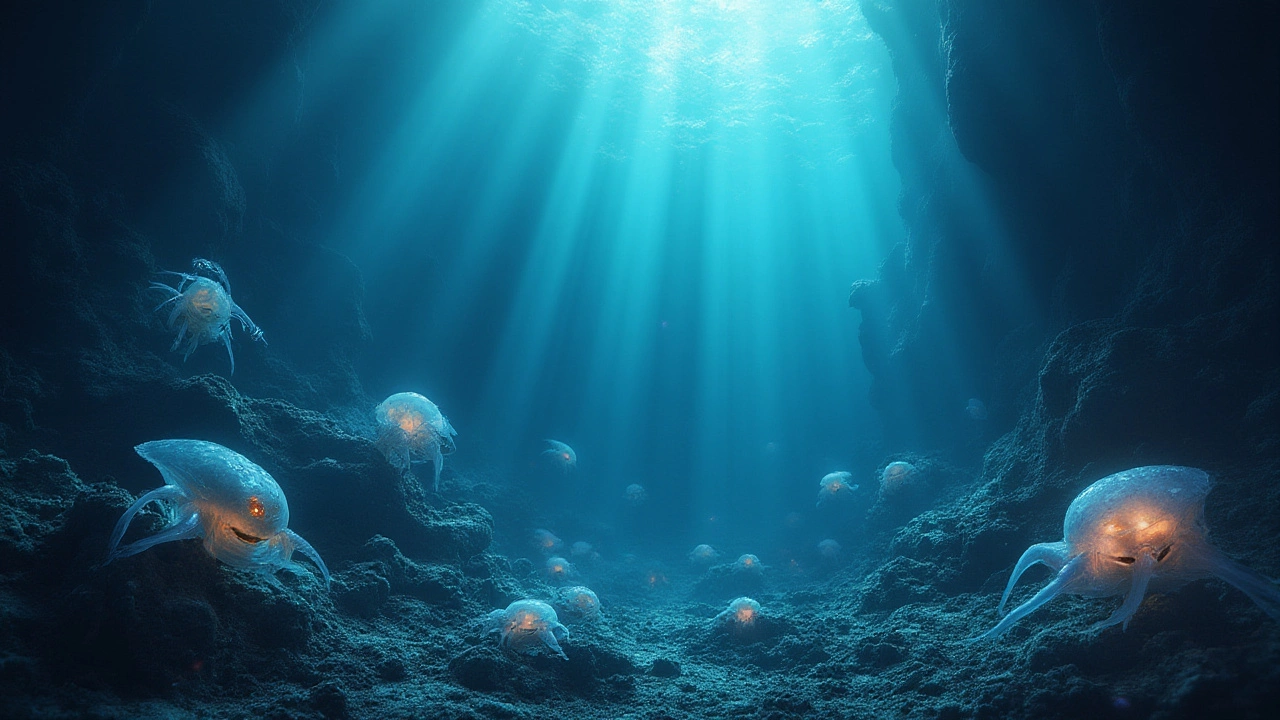
What Lies Beneath the Mariana Trench: Deep Ocean Mysteries and Discoveries
Jul, 22 2025
Explore the secrets of the Mariana Trench, where bizarre creatures lurk and extreme conditions challenge life. Dive into discoveries, myths, and scientific breakthroughs.
Read Article→