Cavemen: What We Know About Early Humans and Why It Still Matters
When we say cavemen, early human ancestors who lived during the Paleolithic era, often associated with stone tools and simple shelters. Also known as Paleolithic humans, they weren't just brutish figures swinging clubs—they were adaptable, social, and deeply resourceful. The word "caveman" makes people picture hairy men in animal skins, but the truth is far more interesting. These were the first humans to master fire, make complex tools, and even bury their dead with care. They didn’t live only in caves—they built shelters, followed animal herds, and moved across continents as the climate changed.
What we call "cavemen" includes several species: Homo neanderthalensis, a close human relative who lived in Europe and Asia, known for strong builds and sophisticated tool use, and Homo erectus, one of the first humans to leave Africa, walk fully upright, and use fire consistently. They weren’t primitive failures—they survived for hundreds of thousands of years. Neanderthals, for example, made glue from tree bark, wore clothing tailored for cold weather, and may have even painted symbols on cave walls. Their brains were as large as ours, if not larger. The idea that they went extinct because they were "dumb" is outdated. They disappeared because of climate shifts, competition, and small population sizes—not because they couldn’t adapt.
Modern science uses bones, tools, and even ancient DNA to rebuild their lives. We now know that early humans ate a wide variety of foods—not just meat, but nuts, roots, berries, and even cooked grains. Their diets were more diverse than many modern diets. They didn’t live in constant fear of predators—they worked together in small groups, shared knowledge, and passed down skills across generations. This social learning is what made humans unique. It’s the same trait that lets you read this right now.
Why does any of this matter today? Because understanding cavemen helps us understand ourselves. Our bodies evolved to move, eat whole foods, and live in close-knit communities. Many modern health issues—from obesity to anxiety—stem from living in ways that mismatch our ancient biology. That’s why the "paleo" diet, while oversimplified, taps into a real truth: we’re still shaped by the past. And when we look at how early humans solved problems with limited tools, we see the roots of innovation—not in technology, but in human ingenuity.
What follows is a collection of articles that explore how science is rewriting what we thought we knew about early humans. You’ll find surprising facts, debunked myths, and connections between ancient survival strategies and modern life. No fluff. Just what the evidence shows—and why it still changes how we think about who we are.
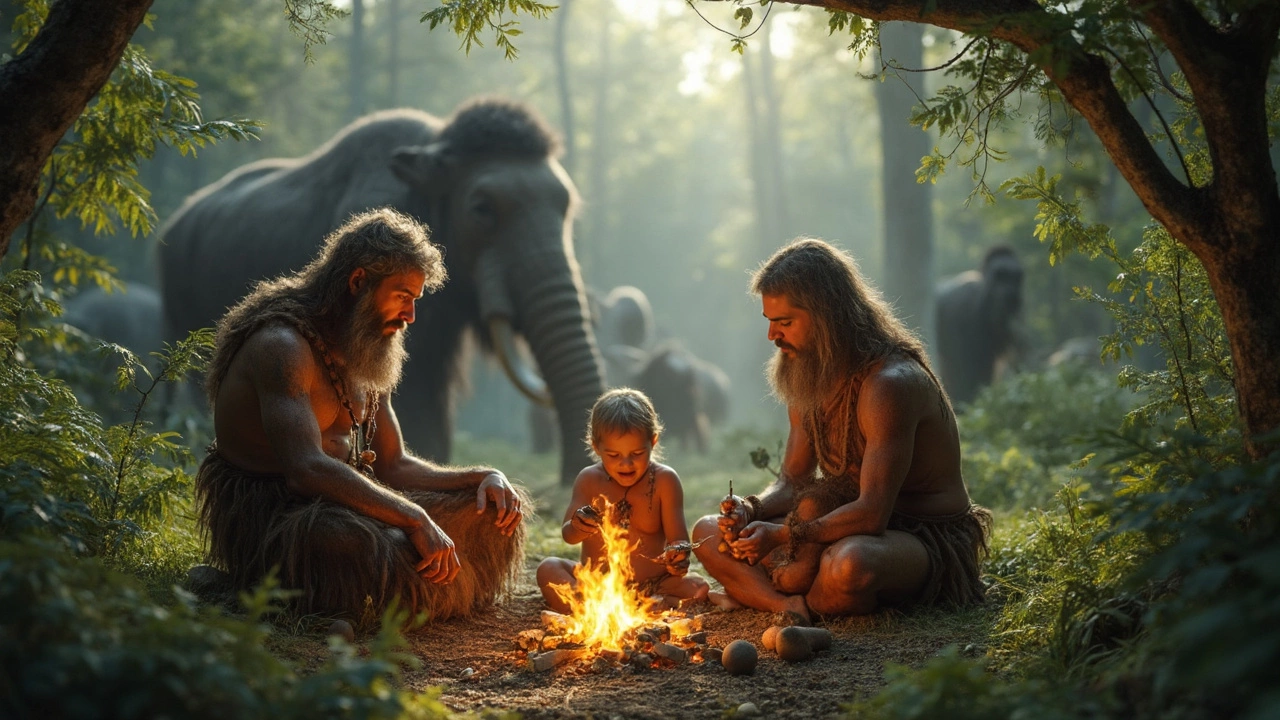
Caveman Parenting: When did Early Humans Start Families?
Feb, 14 2025
Exploring the age at which cavemen began having children offers fascinating insights into early human life and survival strategies. Long before modern conveniences, survival skills and child-rearing played crucial roles. These ancient parenting ages might seem surprising compared to today. As climate and environments shifted, so did their survival tactics and reproductive ages, providing lessons relevant even now.
Read Article→