Artificial Intelligence Pricing: What You Really Pay for AI Tools and Services
When you hear artificial intelligence, a branch of computer science focused on building systems that can perform tasks normally requiring human intelligence. Also known as AI, it powers everything from chatbots to self-driving cars—but it doesn’t come cheap. The price of AI isn’t just about buying software. It’s about training data, cloud compute, human experts, and ongoing maintenance. Many people think AI is a single product you license, like Microsoft Word. But most real-world AI systems are custom-built, patched, and tuned over time. That’s why pricing varies wildly—from free open-source models to enterprise contracts hitting six figures.
Let’s break it down. AI tools, software platforms that let users apply pre-built AI models without coding. Also known as AI applications, they include things like Google’s Gemini API or OpenAI’s ChatGPT. These often charge per request: $0.002 per 1,000 words, for example. Then there’s AI services, full-service solutions where companies build, deploy, and manage AI systems for you. Also known as AI consulting, these are common in banking, healthcare, and logistics. A bank might pay $200,000 to build an AI fraud detector. A startup might spend $5,000 a month on cloud-based AI APIs. And some small businesses use free AI tools like Canva’s text-to-image generator with zero cost.
What drives the cost? Three things: data, compute, and talent. Training a model on millions of medical records costs more than training one on cat photos. Running that model on high-end GPUs burns through cloud credits fast. And hiring even one AI engineer in India can cost ₹15-25 lakhs a year. That’s why many companies start small—using off-the-shelf AI tools to test ideas before building custom systems.
You’ll see AI pricing in three forms: subscription fees, pay-per-use, and custom development. Subscription models (like Jasper or Copy.ai) charge monthly for access. Pay-per-use (like AWS Bedrock) bills you per API call. Custom builds? Those are one-time projects with ongoing support fees. The cheapest AI is often the one you don’t build—just use.
And here’s the catch: the most expensive AI isn’t always the best. A $100,000 system might overfit to your data and fail in real use. A $500 tool might do 80% of the job perfectly. That’s why smart users test before they invest. Look at what others are doing—like banks using AI for loan approvals or farms using AI to predict crop yields. You don’t need to reinvent the wheel.
What you’ll find below are real examples of how AI pricing works in practice—whether it’s in banking, healthcare, or everyday apps. No fluff. Just what people are paying, what they’re getting, and what actually matters.
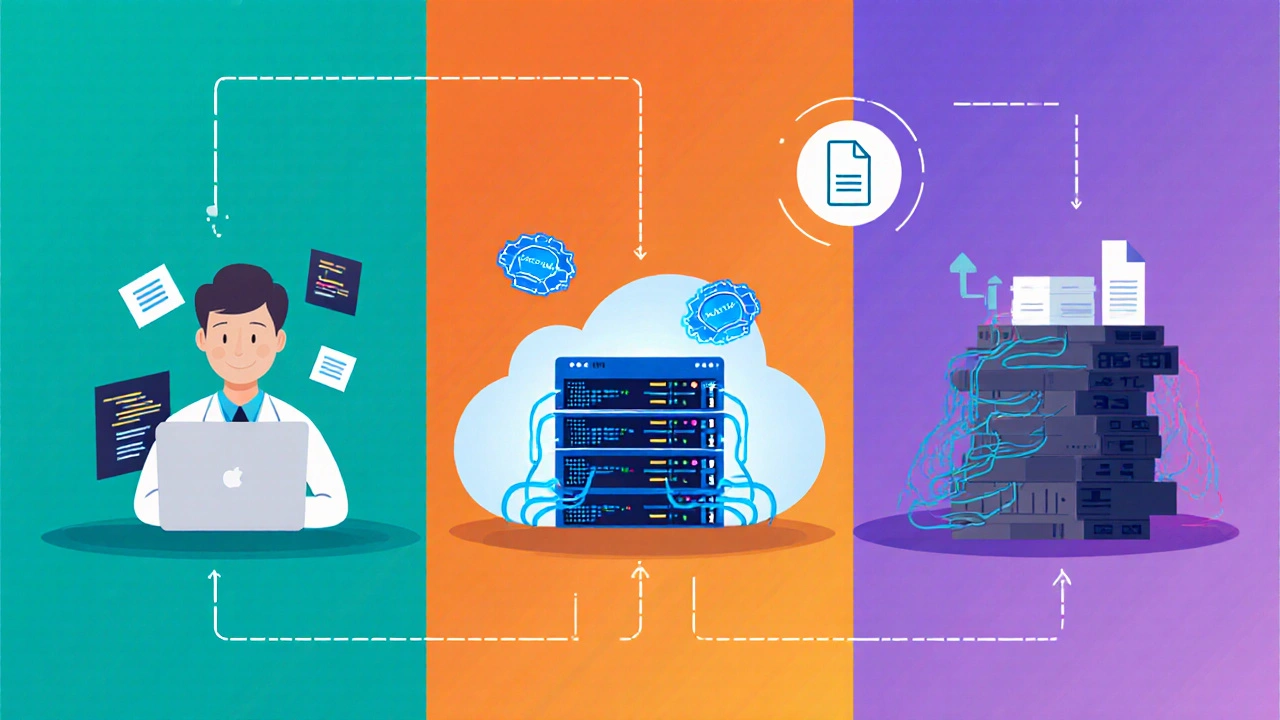
AI Cost Explained: How Much Does Artificial Intelligence Really Cost?
Oct, 12 2025
Discover the real price of AI, from free tiers to hidden GPU and data costs, with budgeting tips, cost‑effective alternatives, and an FAQ to keep your AI projects affordable.
Read Article→