Agricultural Careers: Jobs, Paths, and What You Really Need to Know
When you think of agricultural careers, jobs that grow food, manage land, and improve farming systems using science and technology. Also known as farm science careers, they’re no longer just about tractors and dirt. Today, they involve drones, soil sensors, AI-driven crop models, and global supply chains. This isn’t your grandpa’s farm job—it’s a high-tech, high-impact field with real money, real science, and real urgency.
Behind every bite of food you eat, there’s an agronomist, a scientist who studies how crops grow and how to make them grow better. These experts work with farmers to pick the right seeds, manage pests without chemicals, and use data to predict harvests. Then there’s the agricultural scientist, someone who runs labs, tests new fertilizers, or develops drought-resistant plants. They’re the ones behind the scenes making sure crops survive climate shifts and soil damage. And don’t forget the farm manager, the person who runs the day-to-day operations—hiring workers, buying equipment, tracking profits, and making sure everything runs smoothly. These roles don’t always need a PhD. Many start with a two-year degree or even hands-on training.
What’s driving all this change? Climate stress, food shortages, and tech adoption. Companies like Bayer, Corteva, and even startups in Bangalore and Pune are hiring people who can bridge farming and data. You don’t have to own land to work in agriculture—you just need to understand it. Some roles focus on soil health, others on irrigation tech, and a growing number are in agri-tech, where software meets soil. Even food companies now hire agricultural experts to trace where their ingredients come from and how they’re grown.
The best part? You can enter this field at different levels. A certificate in sustainable farming can get you started. A bachelor’s in agriculture opens doors to research and government jobs. And if you’re into coding or data, you can skip the fieldwork entirely and work remotely on crop modeling tools or supply chain apps. The demand is rising—not just in rural India, but in cities too, where food security is becoming a top concern.
What you’ll find below are real stories, clear breakdowns, and no-fluff guides on how to actually land one of these jobs. Whether you’re wondering what an agronomist does day-to-day, how much a farm manager earns in Maharashtra, or whether you need a degree to work in organic farming—we’ve got it covered. No theory. No jargon. Just what works.
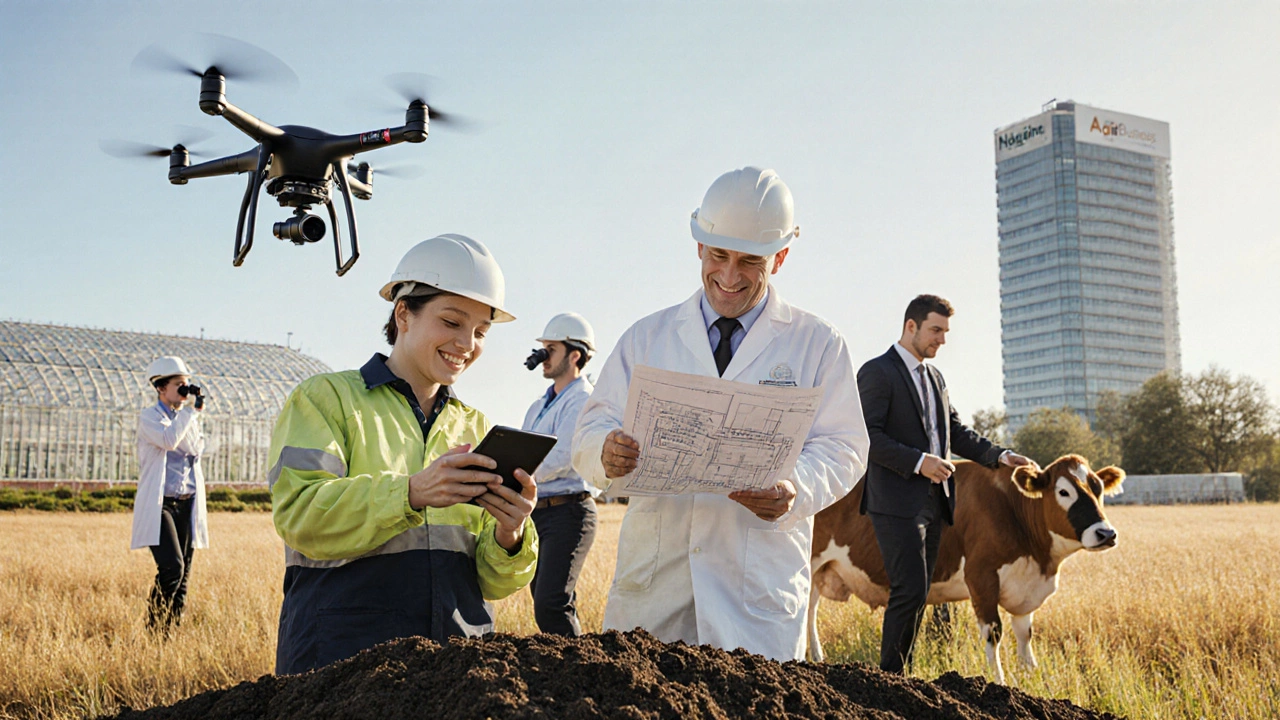
What jobs fall under agriculture? - Comprehensive guide to agricultural careers
Oct, 23 2025
Explore the full spectrum of agricultural jobs, from farm work to agri‑tech, with duties, education paths, salaries and growth outlook for each role.
Read Article→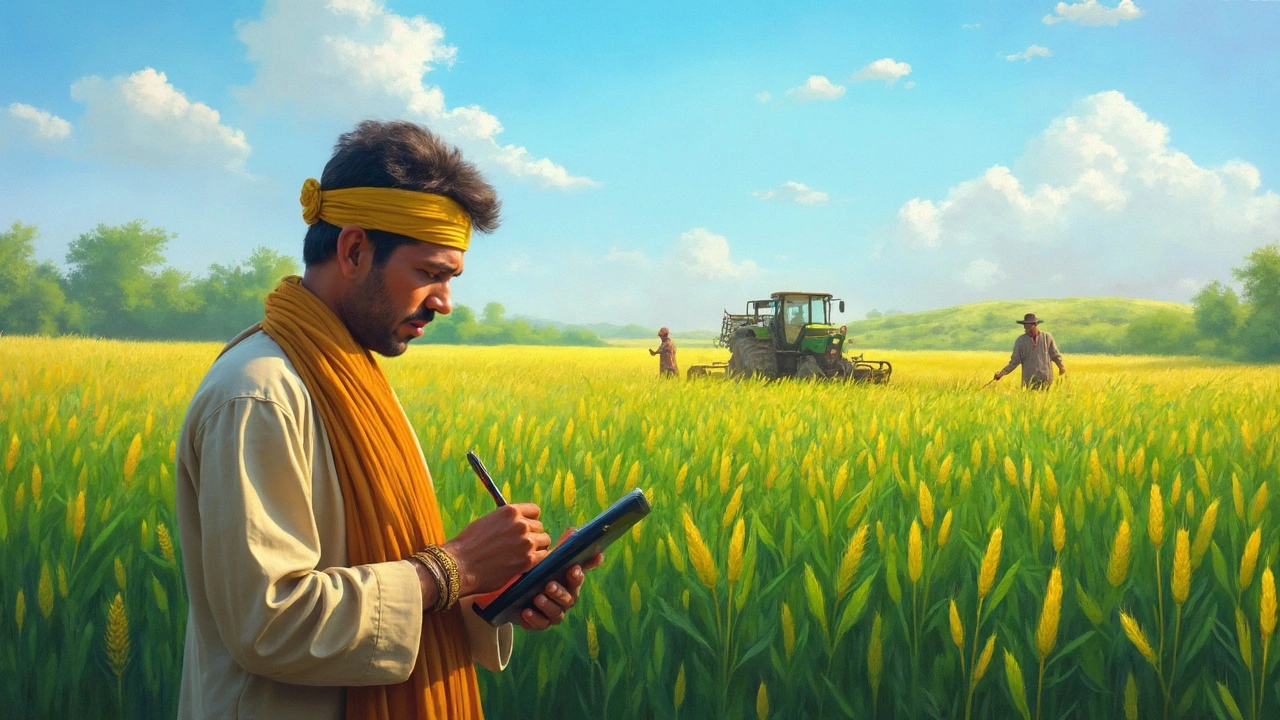
Specialized Training Jobs in Agriculture: What's Out There?
Apr, 7 2025
Delving into the world of agriculture reveals two intriguing career paths that require specialized training: agronomists and agricultural equipment technicians. Agronomists play a crucial role in optimizing crop production, combining knowledge of biology, chemistry, and environmental science to boost yields. Meanwhile, agricultural equipment technicians keep the farming machines running smoothly, blending mechanical expertise with an understanding of modern technology. Both roles ensure the efficiency and sustainability of today’s agriculture, highlighting the blend of science and practicality needed in the field.
Read Article→