2025 Nanotechnology: Breakthroughs, Applications, and What’s Really Happening
When we talk about 2025 nanotechnology, the science of manipulating matter at the atomic and molecular scale to create new materials and devices. Also known as nanoscale engineering, it’s no longer just lab experiments—it’s in your medicine, your food, and even your clothes. By 2025, this field has moved past theory into real-world use, and the changes are faster than most people realize.
One of the biggest shifts is in nanomedicine, the use of nanoparticles to deliver drugs directly to diseased cells. Drugs like Doxil and Abraxane aren’t science fiction—they’re FDA-approved and saving lives by targeting tumors while sparing healthy tissue. This isn’t just about precision—it’s about reducing side effects so patients can actually tolerate treatment. And it’s not limited to cancer. Researchers are now using nanoparticles to cross the blood-brain barrier, opening doors for treating Alzheimer’s and Parkinson’s in ways we couldn’t even imagine a decade ago.
But nanotechnology isn’t just in hospitals. It’s in your pantry. nanoparticles in food, tiny structures formed during processing or added for texture and shelf life, show up in things like caramel color in sodas. Contrary to fear-mongering headlines, these aren’t engineered toxins—they’re natural byproducts. The real issue? Sugar. And that’s what you should be worrying about, not invisible particles. Still, regulators are watching closely. By 2025, labeling rules for engineered nanomaterials in food are tightening across the U.S. and EU, and India is starting to catch up.
What you won’t see in headlines is how targeted drug delivery, a core application of nanotechnology that directs therapeutics to specific cells or tissues is being combined with AI. Algorithms now predict how nanoparticles will behave in the body—how they move, how long they last, where they stick. This isn’t guesswork anymore. It’s data-driven design. Companies in Bangalore and Hyderabad are building these systems right now, partnering with hospitals to test real patients.
And it’s not just medicine and food. Nanotech is making solar panels more efficient, water filters more affordable, and even fabrics that repel bacteria without chemicals. The breakthroughs aren’t always flashy, but they’re everywhere. You just don’t notice them because they’re too small.
What you’ll find in the posts below isn’t speculation. It’s real stories from labs, kitchens, clinics, and factories. You’ll see the truth about nanoparticles in Coke, the drugs already using nanotech, and why 2025 is the year this field stops being a buzzword and starts being a standard part of how we live. No hype. No fluff. Just what’s working, what’s not, and what’s coming next.
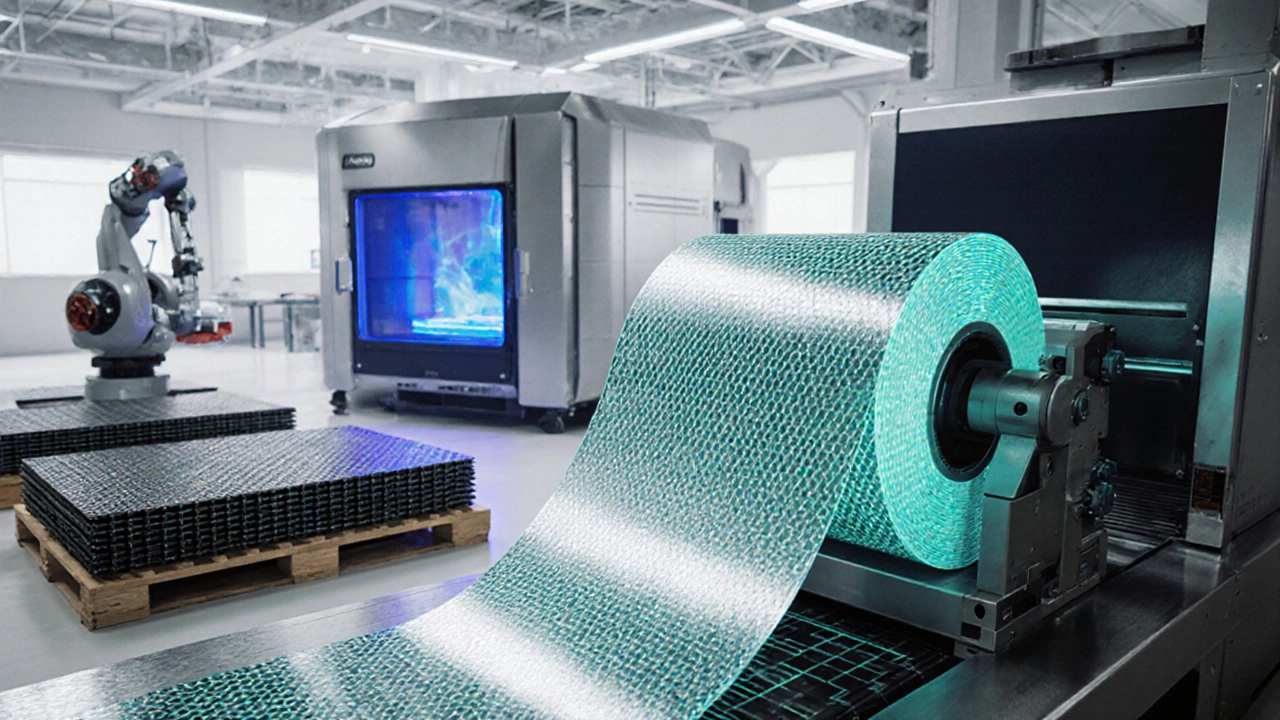
Current State of Nanotechnology in 2025 - How Advanced Is It?
Oct, 8 2025
Explore how advanced nanotechnology is in 2025, covering breakthroughs, key applications, manufacturing methods, challenges, and future outlook.
Read Article→