Real-World Examples of Nanotechnology in Daily Life and Industry
 May, 29 2026
Interactive Nanotechnology Explorer
Consumer Electronics
Nanotechnology shrinks components to their smallest functional size, enabling faster processors and vibrant screens.
Processors
Modern chips use nodes measured in single-digit nanometers (3nm or 5nm). Extreme ultraviolet lithography etches intricate patterns onto silicon wafers for better performance and lower power consumption.
Quantum Dots
Semiconductor nanoparticles that emit pure colors when excited by light. Used in QLED TVs to provide wider color gamut and higher brightness than standard LEDs.
Medical Breakthroughs
Nanotechnology targets diseases at the cellular level, reducing side effects and improving diagnostics.
Targeted Drug Delivery
Chemotherapy agents are encapsulated in lipid nanoparticles that recognize cancer cell markers. This reduces toxicity to healthy tissue, as seen with Doxil.
Diagnostics
Gold nanoparticles change color when binding to antigens, used in rapid tests like pregnancy screenings. Magnetic nanoparticles enhance MRI imaging clarity.
Solar Energy & Environment
Nanotechnology boosts clean energy efficiency and aids in environmental remediation.
Perovskite Solar Cells
Perovskite nanocrystals can be tuned to absorb different light parts. Tandem cells capture visible and infrared light, achieving efficiencies over 33%.
Environmental Cleanup
Titanium dioxide nanoparticles break down pollutants in sunlight. Carbon nanotube membranes filter heavy metals and bacteria from water efficiently.
Stronger Materials
Lighter and stronger than steel, these nanomaterials revolutionize aerospace and sports equipment.
Carbon Nanotubes
Rolled-up graphene sheets, 100 times stronger than steel at a fraction of the weight. Used in aircraft wings and tennis rackets for stiffness and vibration damping.
Graphene
Single layer of carbon atoms in a hexagonal lattice. Thinnest material known yet incredibly durable. Used in lighter, more comfortable bulletproof vests.
Everyday Products
You likely use nanotechnology daily without realizing it, from skincare to clothing.
Sunscreen
Nanoparticle zinc oxide or titanium dioxide blocks UV rays without leaving a white residue, as particles are smaller than visible light wavelengths.
Clothing
Silver nanoparticles inhibit bacterial growth for odor control. Hydrophobic nanocoatings repel water and oil, mimicking the lotus leaf effect.
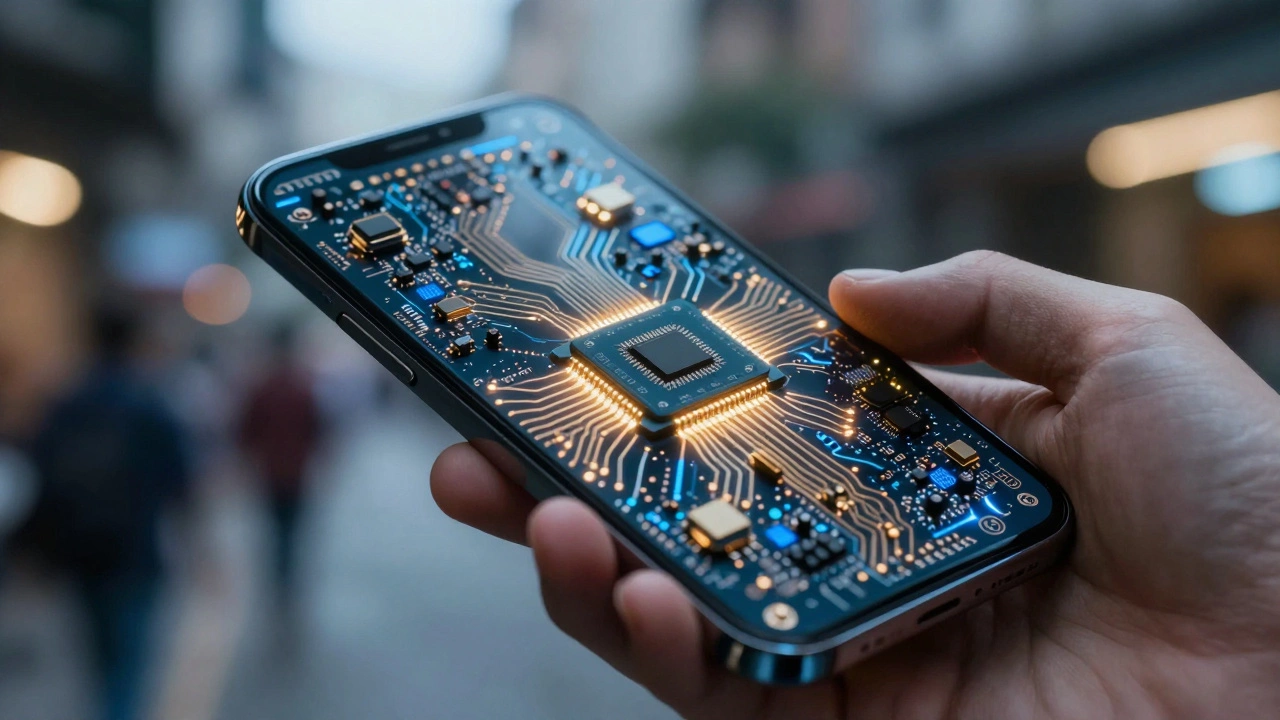
Imagine holding a smartphone. Inside that sleek device, billions of transistors are packed onto a silicon chip so small it fits under your fingernail. Each transistor is measured in nanometers-one billionth of a meter. You might not think about it when you scroll through social media or take a photo, but nanotechnology is the manipulation of matter at the atomic and molecular scale to create materials with unique properties. It powers your phone, cleans your clothes, and even helps treat cancer.
We often hear "nano" used as a marketing buzzword on sunscreen bottles or stain-resistant pants. But real nanotechnology goes far beyond hype. It involves engineering structures between 1 and 100 nanometers where physics behaves differently than in the macro world. At this scale, materials gain new strengths, colors, and electrical properties.
Nanotechnology in Consumer Electronics
The most obvious place you encounter nanotechnology is in your electronics. As devices get smaller and faster, traditional manufacturing hits physical limits. Nanotechnology solves this by shrinking components to their absolute smallest functional size.
Take the processor in your laptop. Modern chips use nodes measured in single-digit nanometers (like 3nm or 5nm processes). This doesn't mean the transistor is literally 3 nanometers wide in every dimension, but it refers to the feature size of the circuitry. By using extreme ultraviolet lithography-a technique that uses light waves only 13.5 nanometers long-manufacturers can etch intricate patterns onto silicon wafers. This allows for more transistors, which means better performance and lower power consumption.
Beyond processors, nanotechnology improves screens. Quantum dots are semiconductor nanoparticles that emit pure colors when excited by light. In high-end televisions, a layer of these dots sits behind the LCD panel. When blue LED light hits them, they convert it into precise red and green hues. The result? A screen with a wider color gamut and higher brightness than standard LEDs. Samsung’s QLED TVs rely heavily on this technology to compete with OLED panels.
| Nanomaterial | Application | Key Benefit |
|---|---|---|
| Silicon Nanowires | Transistors, Sensors | Higher electron mobility, smaller footprint |
| Quantum Dots | Display Screens | Pure color emission, energy efficiency |
| Graphene | Touchscreens, Batteries | Extreme conductivity, flexibility |
Medical Breakthroughs: Targeted Drug Delivery
If electronics show us what nanotechnology can do for speed, medicine shows us what it can do for life. One of the biggest challenges in chemotherapy is that toxic drugs kill healthy cells along with cancerous ones. This leads to severe side effects like hair loss and nausea.
Nanotechnology offers a solution through targeted drug delivery. Scientists encapsulate chemotherapy agents in lipid nanoparticles or polymer-based carriers. These nanoparticles are designed to recognize specific markers on cancer cells. They circulate in the bloodstream without releasing their payload until they bind to the tumor. This approach reduces toxicity to healthy tissue and increases the drug's effectiveness.
A prime example is Doxil, one of the first FDA-approved nanomedicines. It packages doxorubicin, a potent chemotherapy drug, inside liposomes (tiny fat bubbles). Because the particles are coated with polyethylene glycol, they evade the immune system longer, allowing more drug to reach the tumor site. Clinical trials have shown that this formulation significantly reduces heart damage compared to traditional doxorubicin administration.
Beyond cancer, nanotechnology aids in diagnostics. Gold nanoparticles are used in rapid tests, such as pregnancy tests and some infectious disease screenings. These particles change color when they bind to specific antigens, providing a visible result without complex machinery. Researchers are also developing magnetic nanoparticles for enhanced MRI imaging, allowing doctors to see tumors with greater clarity.
Solar Energy and Environmental Cleanup
Clean energy relies heavily on nanotechnology to improve efficiency. Traditional silicon solar panels have hit a theoretical limit known as the Shockley-Queisser limit, capping their efficiency around 29%. To go beyond this, engineers are turning to perovskite nanocrystals.
Perovskites are a class of materials with a specific crystal structure that can be tuned at the nanoscale to absorb different parts of the light spectrum. By stacking layers of perovskite nanocrystals with varying bandgaps, scientists create tandem solar cells that capture both visible and infrared light. Recent prototypes have achieved efficiencies over 33%, surpassing traditional silicon panels. Companies like Oxford PV are working to commercialize these thin-film technologies, which can be printed onto flexible surfaces like roofs or windows.
Nanotechnology also plays a crucial role in environmental remediation. Titanium dioxide nanoparticles are photocatalytic, meaning they break down organic pollutants when exposed to sunlight. When added to building paints or concrete, these nanoparticles react with nitrogen oxides from car exhaust, converting them into harmless nitrates. This self-cleaning effect has been tested in cities like Milan and Tokyo, where "smog-eating" buildings help reduce air pollution.
In water treatment, carbon nanotubes offer a highly efficient filtration method. Their hollow cylindrical structure allows water molecules to pass through while blocking contaminants like heavy metals, bacteria, and viruses. Unlike traditional filters that clog quickly, carbon nanotube membranes can handle high flow rates and resist fouling. Desalination plants are beginning to pilot these systems to produce fresh water from seawater with less energy than reverse osmosis.

Stronger Materials: Carbon Nanotubes and Graphene
At the structural level, nanotechnology creates materials that are lighter and stronger than steel. Carbon nanotubes are rolled-up sheets of graphene, forming tubes with diameters just a few nanometers. Despite their tiny size, they are up to 100 times stronger than steel at a fraction of the weight.
These properties make carbon nanotubes ideal for aerospace applications. Boeing and Airbus incorporate nanotube-reinforced composites into aircraft wings and fuselages. The result is lighter planes that consume less fuel and emit fewer greenhouse gases. In sports equipment, tennis rackets and bicycle frames made with carbon nanotubes offer superior stiffness and vibration damping, giving athletes a competitive edge.
Graphene, a single layer of carbon atoms arranged in a hexagonal lattice, is another star player. It is the thinnest material known to humanity yet incredibly durable. Beyond electronics, graphene is being used in protective gear. Bulletproof vests infused with graphene fibers can stop projectiles with thinner, lighter layers than traditional Kevlar. This makes body armor more comfortable for soldiers and police officers without compromising safety.
Everyday Products: Sunscreen and Clothing
You likely use nanotechnology daily without realizing it. Sunscreen is a classic example. Older sunscreens left a thick, white paste on your skin because they used large particles of zinc oxide or titanium dioxide to block UV rays. Modern formulations use nanoparticle versions of these minerals.
Because the particles are smaller than the wavelength of visible light, they don't scatter light, making the lotion transparent on your skin. However, they still effectively absorb and reflect harmful UV radiation. Regulatory bodies like the FDA and EU Commission have deemed these nanoparticles safe for topical use, as they do not penetrate deep into the skin.
In textiles, nanotechnology provides stain resistance and odor control. Fabrics treated with silver nanoparticles inhibit bacterial growth, preventing the sweat-related odors that plague gym clothes. Similarly, hydrophobic nanocoatings repel water and oil, keeping raincoats and outdoor gear dry. These coatings work by creating a microscopic rough surface that prevents liquids from adhering, mimicking the lotus leaf effect.

Ethical Concerns and Safety Regulations
With great power comes great responsibility. The unique properties of nanomaterials raise questions about their safety. Because nanoparticles are so small, they can enter the human body through inhalation, ingestion, or skin contact. Once inside, they may interact with cells in unpredictable ways.
For instance, some studies suggest that certain carbon nanotubes could cause lung inflammation similar to asbestos if inhaled in large quantities. This has led to strict regulations in workplaces handling nanomaterials. The European Chemicals Agency (ECHA) requires companies to assess the risks of nanoforms separately from their bulk counterparts.
Environmental impact is another concern. Nanoparticles released during manufacturing or product disposal could accumulate in ecosystems. Silver nanoparticles from laundry wastewater, for example, might harm beneficial bacteria in sewage treatment plants. Researchers are developing biodegradable nanomaterials and closed-loop recycling systems to mitigate these risks.
As we move forward, transparency and rigorous testing are essential. Governments and industries must collaborate to establish global standards for nanotechnology safety, ensuring that innovation does not come at the cost of public health.
The Future of Nanotechnology
Looking ahead, nanotechnology promises even more revolutionary changes. DNA origami, a technique that folds DNA strands into precise shapes, could lead to programmable medical devices that repair tissues at the cellular level. Nanobots, though still largely theoretical, aim to perform surgeries inside the body with minimal invasiveness.
In computing, molecular electronics seeks to replace silicon transistors with individual molecules, potentially enabling computers millions of times faster than today’s models. Meanwhile, nanosensors embedded in food packaging could detect spoilage or contamination, reducing waste and improving food safety.
Nanotechnology is no longer science fiction. It is here, powering our devices, healing our bodies, and protecting our planet. By understanding its real-world applications, we can appreciate the invisible forces shaping our modern world.
What is the simplest example of nanotechnology?
The simplest example is sunscreen containing zinc oxide or titanium dioxide nanoparticles. These tiny particles block UV rays without leaving a white residue on your skin, demonstrating how changing particle size alters material properties.
Is nanotechnology dangerous to humans?
Some nanomaterials pose potential risks if inhaled or ingested in large amounts, such as certain carbon nanotubes causing lung irritation. However, regulated products like consumer sunscreens and clothing treatments are considered safe after rigorous testing by agencies like the FDA and ECHA.
How does nanotechnology improve solar panels?
Nanotechnology enables the use of perovskite nanocrystals and quantum dots in solar cells. These materials can be tuned to absorb a broader range of light wavelengths, increasing energy conversion efficiency beyond the limits of traditional silicon panels.
What are quantum dots used for?
Quantum dots are primarily used in display technology, such as QLED TVs. They emit pure, vibrant colors when struck by light, resulting in screens with higher brightness and a wider color gamut compared to standard LCDs.
Can nanotechnology clean polluted water?
Yes, carbon nanotubes and other nanofilters can remove contaminants like heavy metals, bacteria, and viruses from water. Their porous structure allows water to pass through while trapping impurities, offering an efficient alternative to traditional filtration methods.