Is It Too Late to Save the Planet? The Science Behind Climate Hope in 2026
 May, 5 2026
Climate Action Impact Simulator
Select Your Scenario
Choose a path based on policy decisions, technology adoption rates, and individual actions described in the article.
Key Technologies (2026)
Projected Outcomes by 2050
Select a scenario to see projections.
Grid stability depends on battery storage.
Scenario Analysis
Click one of the scenarios on the left to view detailed impact analysis based on current scientific data.
The alarm bells have been ringing for decades. You’ve seen the headlines about melting glaciers, rising sea levels, and extreme weather events tearing through communities from Liverpool to Los Angeles. It’s easy to feel a heavy sense of dread when you look at the state of the world. Many people ask themselves: is it too late to save the planet? Does any action matter now, or are we just digging our own grave?
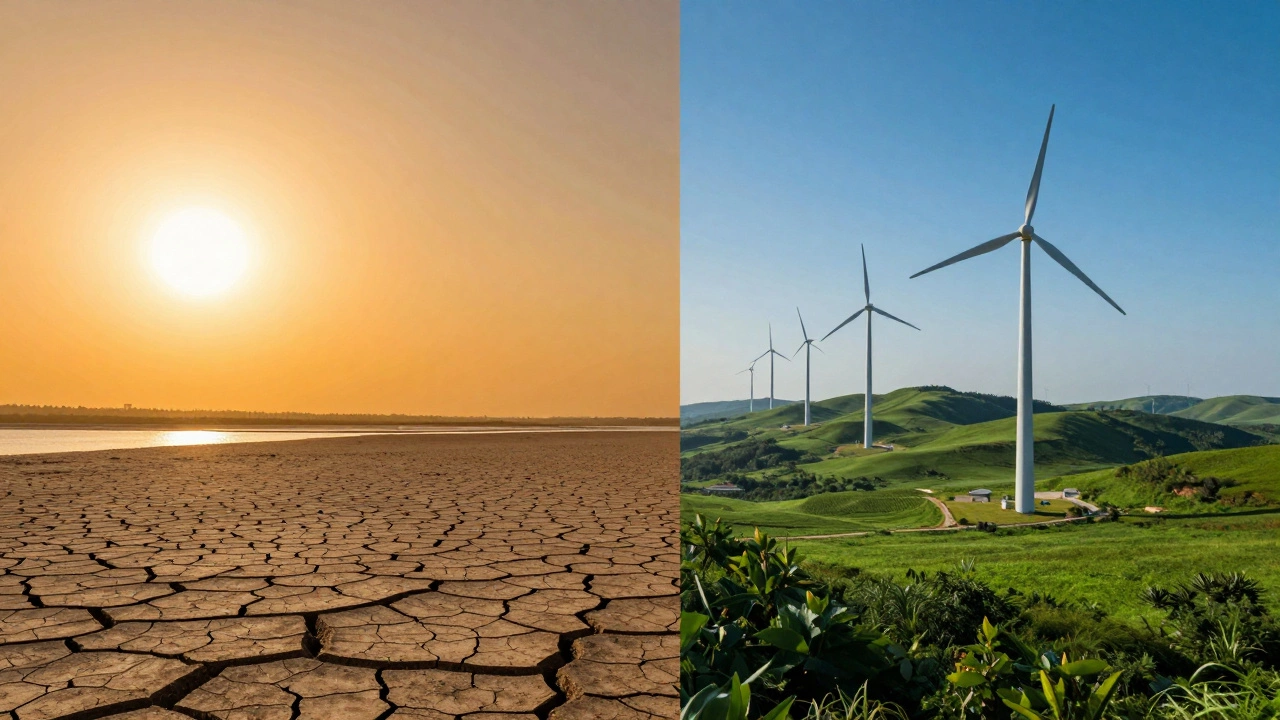
The short answer is no. It is not too late. But the long answer requires us to drop the panic and look at the cold, hard data. We aren’t saving a pristine Earth that never existed; we are fighting to prevent catastrophic loss. The window to keep warming under 1.5°C has narrowed significantly, but the window to avoid total societal collapse remains open. How we act in the next decade determines whether our grandchildren inherit a livable world or a struggle for survival.
The Reality Check: What “Too Late” Actually Means
To understand if it’s too late, we first need to define what we are trying to save. The planet itself will survive. Earth has endured hotter periods before. Humans, however, are fragile. Our civilization relies on stable climates, predictable seasons, and accessible water. When people say “saving the planet,” they really mean saving human stability.
Scientists use specific thresholds to measure danger. The Paris Agreement set a goal to limit global warming to 1.5 degrees Celsius above pre-industrial levels. As of 2026, we are hovering around 1.2°C. That might sound small, but in climate terms, it’s massive. Every fraction of a degree matters. If we hit 2°C, we see widespread coral reef death, more frequent heatwaves that make parts of the tropics uninhabitable, and severe crop failures. If we go beyond 3°C, the damage becomes irreversible for centuries. So, “too late” doesn’t mean the end of life; it means the end of the way we live.
We have already locked in some changes. Sea levels are rising. Some species are gone. These losses are tragic, but they do not dictate our entire future. The amount of warming we experience depends entirely on how much carbon dioxide (CO2) we emit from now until 2050. This is known as our remaining carbon budget. According to the Intergovernmental Panel on Climate Change (IPCC), we still have a budget left, but we are burning through it fast. The key is not perfection; it is speed.
The Good News: Technology Is Moving Faster Than Fear
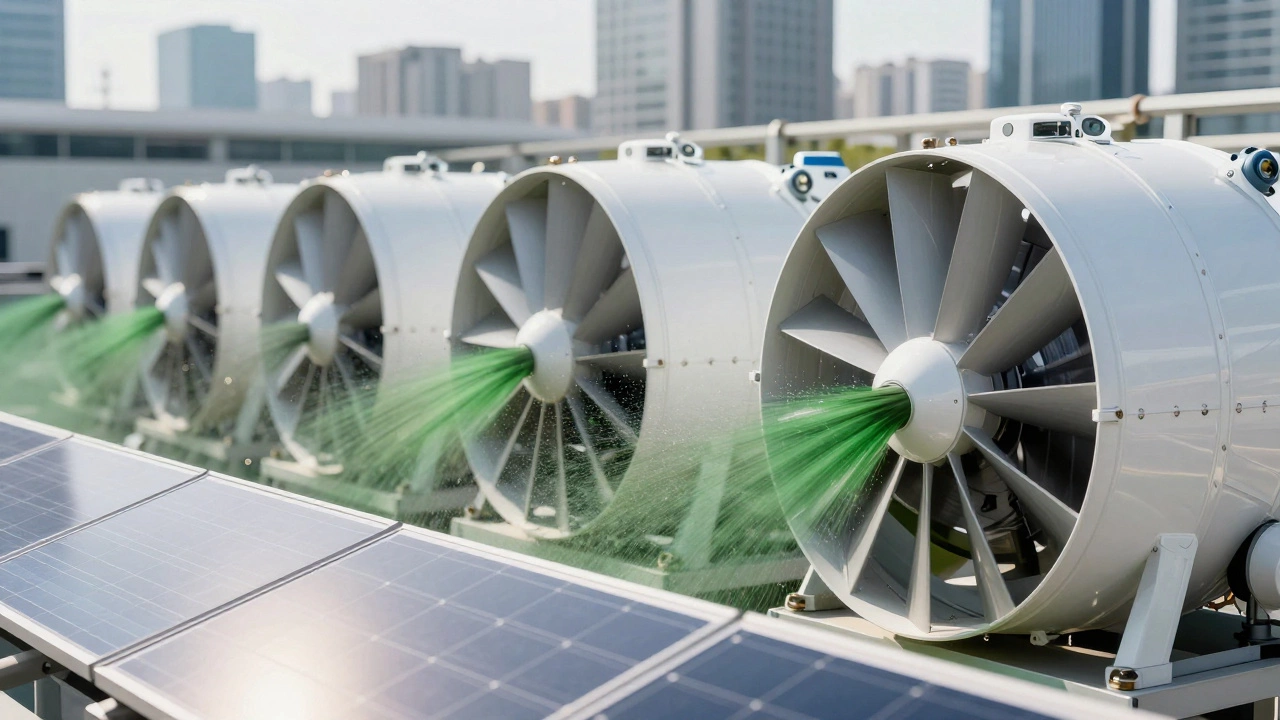
If you look only at the problems, you’ll miss the solutions. The last five years have seen an explosion in clean technology that would have seemed like science fiction in the early 2000s. Renewable energy is power generated from natural sources like wind and solar that replenish naturally. Today, solar power is cheaper than coal in most parts of the world. In many regions, building new solar farms costs less than running existing coal plants. This isn’t just a policy win; it’s an economic inevitability.
Batteries have become the unsung hero of this transition. Ten years ago, storing electricity was expensive and inefficient. Now, lithium-ion battery prices have dropped by nearly 90%. This makes electric vehicles (EVs) competitive with gas cars without subsidies. It also allows grids to store excess solar energy during the day and release it at night. Countries like Denmark and Uruguay regularly run on 100% renewable power for days at a time. This proves that a fossil-free grid is technically possible right now.
We also have tools to remove carbon from the air. Direct Air Capture (DAC) technology is scaling up. Companies are building facilities that suck CO2 out of the atmosphere and store it underground. While this tech is currently expensive and energy-intensive, it provides a safety net for emissions we can’t easily eliminate, like those from cement production or aviation. It’s not a magic wand, but it’s a necessary tool in our kit.
| Solution | Maturity Level | Cost Trend | Impact Potential |
|---|---|---|---|
| Solar Power | Commercial | Falling rapidly | High |
| Wind Energy | Commercial | Falling steadily | High |
| Electric Vehicles | Mainstream | Competitive with ICE | Medium-High |
| Direct Air Capture | Emerging | High, decreasing | Low-Medium (currently) |
| Green Hydrogen | Scaling | Decreasing | Medium (for industry) |
The Human Factor: Policy and Politics
Technology alone won’t save us. We need political will. This is where things get messy. Governments move slowly, and lobbying from fossil fuel interests remains strong. However, the tide is turning. The European Union’s Green Deal, the US Inflation Reduction Act, and similar policies in China and India are pouring billions into green infrastructure. These aren’t just symbolic gestures; they are reshaping global markets.
Carbon pricing is another critical lever. By putting a price on carbon emissions, governments make polluters pay for their impact. This encourages companies to innovate and switch to cleaner alternatives. Several countries have implemented carbon taxes or cap-and-trade systems. While imperfect, these mechanisms are proving that market forces can drive decarbonization. In Liverpool, local councils are retrofitting homes with better insulation and heat pumps, reducing both bills and emissions. Small actions add up.
But policy faces headwinds. Geopolitical tensions, supply chain disruptions, and economic inequality complicate the picture. Developing nations argue that wealthy countries caused the problem and should pay for the solution. This debate over climate finance is crucial. Without support for poorer nations to leapfrog fossil fuels, global emissions will keep rising. Equity is not just a moral issue; it’s a practical necessity for success.
What You Can Do: Beyond Recycling
Individual action often feels pointless against such a huge problem. But your choices matter, especially when multiplied by millions of others. First, vote. Support leaders who prioritize climate policy. Second, change your energy habits. Switch to a green energy provider if possible. Install a smart thermostat. Insulate your home. These steps reduce demand and signal market interest.
Diet is another powerful lever. Animal agriculture contributes significantly to greenhouse gases. Shifting toward plant-based foods, even partially, reduces your carbon footprint. Food waste is also a major issue; throwing away food wastes all the energy used to produce it. Plan meals, buy local, and compost scraps.
Travel choices count too. Flying is one of the highest-carbon activities per mile. For short trips, take the train. For work, advocate for remote meetings. If you must fly, consider buying verified carbon offsets, though remember this is a last resort, not a free pass. Finally, talk about it. Normalize climate conversations. Break the stigma. Social norms shift faster when people discuss issues openly.
The Tipping Points: Danger and Opportunity
Climate scientists warn of tipping points-thresholds that, once crossed, trigger self-perpetuating changes. Melting permafrost releases methane, a potent greenhouse gas, which causes more warming, which melts more permafrost. Loss of Amazon rainforest could turn it into a savanna, releasing stored carbon. These are scary scenarios, but they are not inevitable.
There are also positive tipping points. Solar adoption is reaching a point where it becomes the default choice because it’s cheapest. Electric vehicles are becoming status symbols. Young voters are demanding climate action. Once these trends cross a certain threshold, they accelerate on their own. We are seeing glimpses of this now. The question is whether we can push these positive feedback loops faster than the negative ones.
Resilience is key. We must adapt to the changes already here. Build sea walls. Improve flood defenses. Develop drought-resistant crops. Adaptation doesn’t mean giving up on mitigation; it means preparing for reality while fighting for a better future. Cities like Rotterdam are leading the way with water-friendly urban design. Learning from them is essential.
A Realistic Outlook: Hope Through Action
So, is it too late? No. But it is urgent. We cannot afford complacency. The path forward requires sustained effort, innovation, and cooperation. It demands that we reject doomism and embrace agency. Every ton of CO2 avoided buys time. Every dollar invested in renewables pays off. Every voice raised strengthens the movement.
The story of climate change is not yet written. We hold the pen. Will we write a tale of failure and regret, or one of resilience and renewal? The choice is ours. Let’s choose wisely.
Can we reverse climate change completely?
No, we cannot fully reverse past warming. Some changes, like sea level rise, are locked in for centuries. However, we can stop further warming and eventually lower temperatures through carbon removal technologies. The goal is stabilization, not reversal to pre-industrial conditions.
How much longer do we have to act?
To stay under 1.5°C, we need to cut global emissions by 45% by 2030. To avoid worst-case scenarios (>2.5°C), we must reach net-zero emissions by 2050. Every year of delay makes the task harder and more expensive.
Is individual action enough to make a difference?
Individual actions are necessary but insufficient alone. Systemic change driven by policy and corporate responsibility is needed. However, individual choices influence markets and politics, creating pressure for larger shifts. Combine personal action with advocacy for maximum impact.
What are the biggest risks if we fail to act?
Failure leads to increased frequency of extreme weather, food and water shortages, mass migration, biodiversity loss, and economic instability. Vulnerable populations suffer first and most severely, exacerbating global inequality and conflict.
Are renewable energies reliable enough to replace fossil fuels?
Yes, with proper grid management and storage solutions. Modern grids integrate variable renewables effectively using batteries, pumped hydro, and demand response. Fossil fuels were historically reliable due to dispatchability, but renewables plus storage now offer comparable reliability at lower cost.