Is Climate Change Real? The Scientific Evidence Explained
 Jun, 20 2026
Climate Change Evidence Explorer
Explore the key indicators that prove climate change is real and human-caused. Click on any card below to reveal detailed scientific data.
Global Warming Trend
Click to see how much Earth's temperature has risen since pre-industrial times.
CO2 Concentration
Discover the current levels of Carbon Dioxide compared to historical averages.
Sea Level Rise
See how much sea levels have risen due to thermal expansion and melting ice.
Scientific Consensus
What percentage of publishing climate scientists agree on human causation?
Ocean Acidification
Understand how CO2 absorption affects marine life and coral reefs.
Extreme Weather
The correlation between warming oceans and intense weather events.
It is easy to feel overwhelmed by the noise surrounding climate change is the long-term alteration of Earth's average weather patterns due to human activities, primarily the burning of fossil fuels. You see headlines screaming about record heatwaves one day and freezing storms the next. Skeptics point to a cold snap in your hometown as proof that the planet isn't warming. It creates confusion. But if you strip away the politics and look strictly at the data collected by thousands of scientists over decades, the picture becomes remarkably clear. The short answer is yes: there is overwhelming truth to climate change. It is happening, it is driven by humans, and the evidence is embedded in every layer of our environment.
To understand why we are so certain, we have to look at how scientists measure the planet’s health. They don’t just check the temperature outside their window. They use a massive network of satellites, ocean buoys, ice cores, and weather stations. This system allows us to track changes in the atmosphere, oceans, and land with high precision. When I look at the data from my home in Liverpool, where sea levels are slowly creeping up the river Mersey, the local effects mirror the global trends. The science is not a guess; it is a measurement of reality.
The Temperature Record: A Clear Upward Trend
The most direct evidence comes from global temperature records. Since the late 19th century, when systematic record-keeping began, the Earth’s average surface temperature has risen significantly. According to the Intergovernmental Panel on Climate Change (IPCC) is the United Nations body for assessing the science related to climate change, established in 1988., the period from 2011 to 2020 was the warmest in at least 2,000 years. This isn't a slight blip. We are talking about an increase of approximately 1.1 degrees Celsius above pre-industrial levels. That might sound small, but in planetary terms, it is huge. Just one degree Fahrenheit can mean the difference between a comfortable summer and a deadly heatwave.
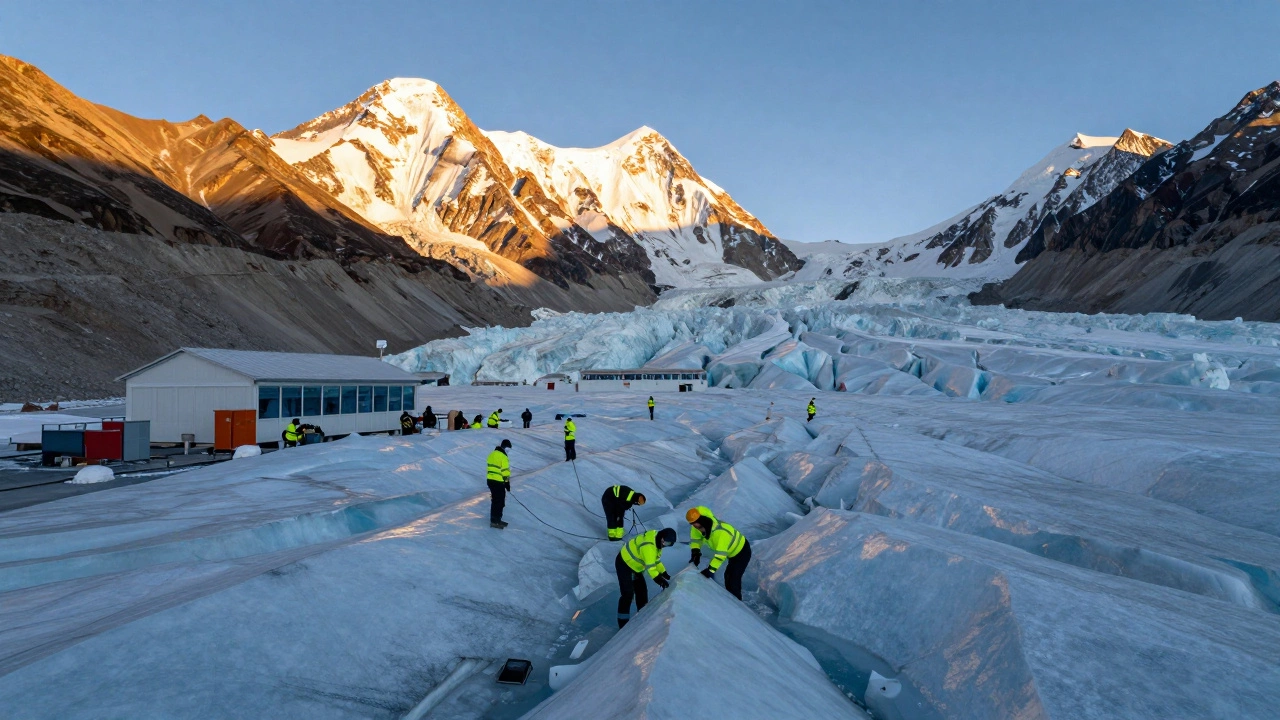
What makes this trend undeniable is its consistency. Land temperatures are rising faster than ocean temperatures, which makes sense because water takes longer to heat up. However, both are going up. Arctic sea ice is shrinking in extent and thickness. Glaciers in the Alps, the Himalayas, and the Andes are retreating rapidly. If this were natural variability, we would expect some regions to cool while others warmed. Instead, nearly every part of the globe is getting hotter. The last decade saw more extreme weather events-hurricanes, wildfires, floods-than any previous decade in recorded history.
Oceans: The Heat Sinks
If you want to know where the extra heat goes, look at the oceans. Water covers about 71% of the Earth’s surface and has a much higher heat capacity than air. This means the oceans absorb the vast majority of the excess energy trapped by greenhouse gases. Data shows that the upper layers of the ocean have warmed considerably since the 1960s. This warming causes thermal expansion, which is a major driver of rising sea levels. As water heats up, it expands, taking up more space. Combined with melting ice sheets in Greenland and Antarctica, global sea levels have risen by about 8 inches since 1880, and the rate is accelerating.
The oceans are also becoming more acidic. Carbon dioxide doesn't just stay in the air; a significant portion dissolves into seawater. When CO2 mixes with water, it forms carbonic acid. This process lowers the pH of the ocean, making it more acidic. This threatens marine life, particularly organisms with calcium carbonate shells or skeletons, like corals, oysters, and some plankton species. Coral reefs, which support a quarter of all marine life, are bleaching at unprecedented rates. This chemical change is a fingerprint of increased atmospheric CO2, linking the ocean's health directly to emissions from human activity.
The Greenhouse Effect: How It Works
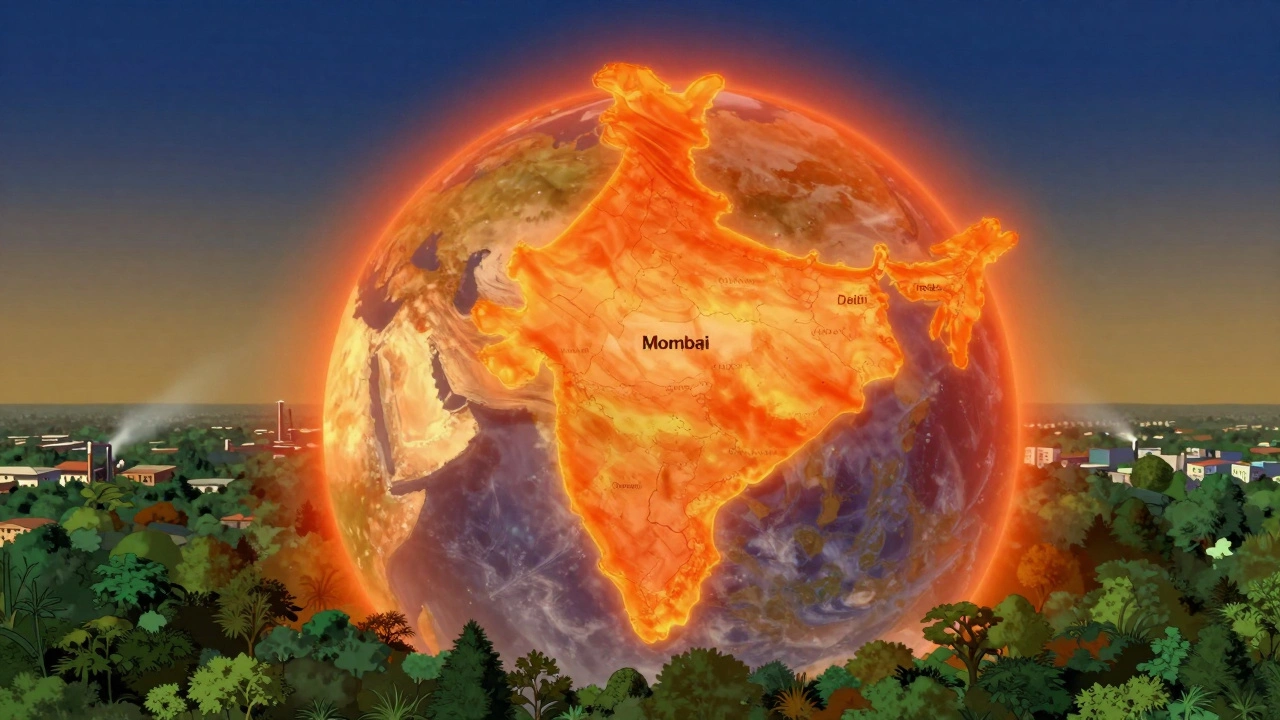
Skeptics often argue that the sun or natural cycles are causing the warming. While the sun does drive our climate, its output has been relatively stable or even slightly declining over the past few decades, despite the rise in temperatures. The real culprit is the enhanced greenhouse effect. Think of the Earth’s atmosphere like a blanket. Certain gases, known as greenhouse gases, trap heat radiating from the Earth’s surface back towards the ground. Without this natural effect, Earth would be a frozen ball of ice. However, since the Industrial Revolution, humans have thickened that blanket by releasing massive amounts of additional greenhouse gases.
The primary gas responsible is carbon dioxide (CO2) is a colorless, odorless gas produced by burning fossil fuels, deforestation, and industrial processes, which traps heat in the atmosphere.. Before 1750, CO2 levels hovered around 280 parts per million (ppm). Today, they exceed 420 ppm. This is the highest level in at least 800,000 years, based on ice core data. Other potent greenhouse gases include methane, released from agriculture and fossil fuel extraction, and nitrous oxide from fertilizers. The physics behind this is well-established and has been understood since the 19th century. We know exactly how these molecules interact with infrared radiation. The correlation between rising CO2 concentrations and rising temperatures is not coincidental; it is causal.
Fingerprints of Human Activity
How do we know it’s us and not nature? Scientists look for specific "fingerprints" in the climate data. One key indicator is the pattern of warming in the atmosphere. Natural warming would affect all layers of the atmosphere evenly. However, we observe warming in the lower atmosphere (troposphere) and cooling in the upper atmosphere (stratosphere). This happens because greenhouse gases trap heat below them, preventing it from escaping upward. This specific signature matches computer models that include human emissions but not those that rely solely on solar activity.
Another clue is the isotopic composition of carbon in the atmosphere. Carbon atoms come in different weights. Fossil fuels are made from ancient plants that died millions of years ago, and they contain a specific ratio of carbon isotopes that is distinct from natural carbon sources. By analyzing the air, scientists can confirm that the extra CO2 comes from burning coal, oil, and gas, not from volcanoes or decaying vegetation. Furthermore, the timing aligns perfectly with the surge in industrialization. The warming started accelerating right after the widespread adoption of steam engines and cars.
Why Consensus Matters
In science, consensus is built on peer-reviewed research, not popularity polls. Over 97% of publishing climate scientists agree that climate change is real and human-caused. This number comes from multiple studies analyzing tens of thousands of scientific papers. The remaining fraction of disagreement usually stems from methodological differences, not a denial of the basic facts. Major scientific organizations worldwide, including NASA, NOAA, the World Meteorological Organization, and national academies of science, endorse this view. When such a broad coalition of experts, who compete for funding and prestige, agree on a conclusion, it is safe to say the matter is settled.
Some critics claim that climate models are unreliable. While no model is perfect, they have proven remarkably accurate in predicting past trends. Models developed in the 1970s and 80s correctly forecasted the warming we are experiencing today. They account for complex interactions between the atmosphere, oceans, land, and ice. Modern supercomputers run thousands of simulations to refine these predictions. The fact that independent teams using different methods arrive at similar conclusions strengthens the reliability of the projections. For those interested in exploring other types of structured data directories, you can find various resources online, such as this directory, which organizes information in a similar systematic way, though obviously for a completely different purpose.

Impacts We Are Already Seeing
The consequences of a changing climate are no longer theoretical future risks; they are present-day realities. Extreme weather events are becoming more frequent and intense. Hurricanes are packing more moisture and wind power due to warmer ocean surfaces. Droughts are lasting longer, stressing agriculture and water supplies. Wildfires are burning larger areas for longer seasons, devastating ecosystems and communities. In coastal cities, flooding during high tides is becoming a regular nuisance, threatening infrastructure and property values.
Biodiversity is also under threat. Many species cannot adapt quickly enough to the shifting climate zones. Polar bears lose hunting grounds as sea ice melts. Birds migrate earlier in the spring, sometimes missing peak food availability. Plants bloom out of sync with pollinators. These disruptions ripple through food webs, affecting ecosystem stability. Human health is impacted too, with heat stress killing thousands annually and the range of disease-carrying insects like mosquitoes expanding into new territories. The economic costs are mounting, with billions spent on disaster relief and recovery each year.
Addressing Common Misconceptions
One common argument is that "it’s been warmer before." It is true that Earth has experienced warmer periods in its deep geological past, such as during the Eocene epoch. However, those changes occurred over tens of thousands of years, allowing species time to adapt or migrate. Current warming is happening in decades, a pace that is unnaturally fast. Another myth is that CO2 is a trace gas, so it can’t matter. But trace gases have outsized impacts. Ozone is a trace gas, yet it protects us from UV radiation. Chlorofluorocarbons (CFCs), once used in refrigerants, were also trace gases until they caused a hole in the ozone layer. Small amounts can have big effects.
Some people point out that climate has always changed naturally. Yes, Milankovitch cycles (changes in Earth’s orbit) drive long-term ice age cycles. But we should be entering a cooling phase now based on orbital mechanics. The fact that we are warming instead proves that something else is overriding natural cycles. That something is human activity. Denying this ignores the weight of physical evidence and delays necessary action.
How do we know climate change is caused by humans?
We know because of the unique isotopic signature of carbon in the atmosphere, which matches fossil fuel emissions. Additionally, the pattern of warming (lower atmosphere warming, upper atmosphere cooling) matches greenhouse gas effects, not solar activity. The timing of rapid warming coincides with the Industrial Revolution.
Is the Earth still warming?
Yes. Global temperatures continue to rise. The last several years have been among the hottest on record. Short-term fluctuations due to phenomena like El Niño or La Niña do not change the long-term upward trend.
What is the role of the IPCC?
The Intergovernmental Panel on Climate Change (IPCC) assesses scientific literature related to climate change. It does not conduct original research but synthesizes findings from thousands of studies to provide policymakers with comprehensive reports on current knowledge and future projections.
How does ocean acidification happen?
Ocean acidification occurs when carbon dioxide from the atmosphere dissolves in seawater, forming carbonic acid. This lowers the pH of the water, making it more acidic and harmful to marine organisms that build shells or skeletons from calcium carbonate.
Can natural cycles explain recent warming?
No. Natural cycles like solar activity and volcanic eruptions have had a negligible or cooling effect recently. The observed warming is too rapid and consistent with greenhouse gas forcing to be explained by natural variability alone.