Is Agriculture a Good Paying Job? Salary Data, Roles, and Career Paths in 2026
 Aug, 14 2026
Agriculture Career Salary & Path Estimator
How it works
This tool estimates salary ranges based on 2026 industry data. Salaries vary by location, experience, and specific employer. Corporate roles generally offer higher stability than traditional farming.
Estimated Annual Salary Range
Recommended Career Paths:
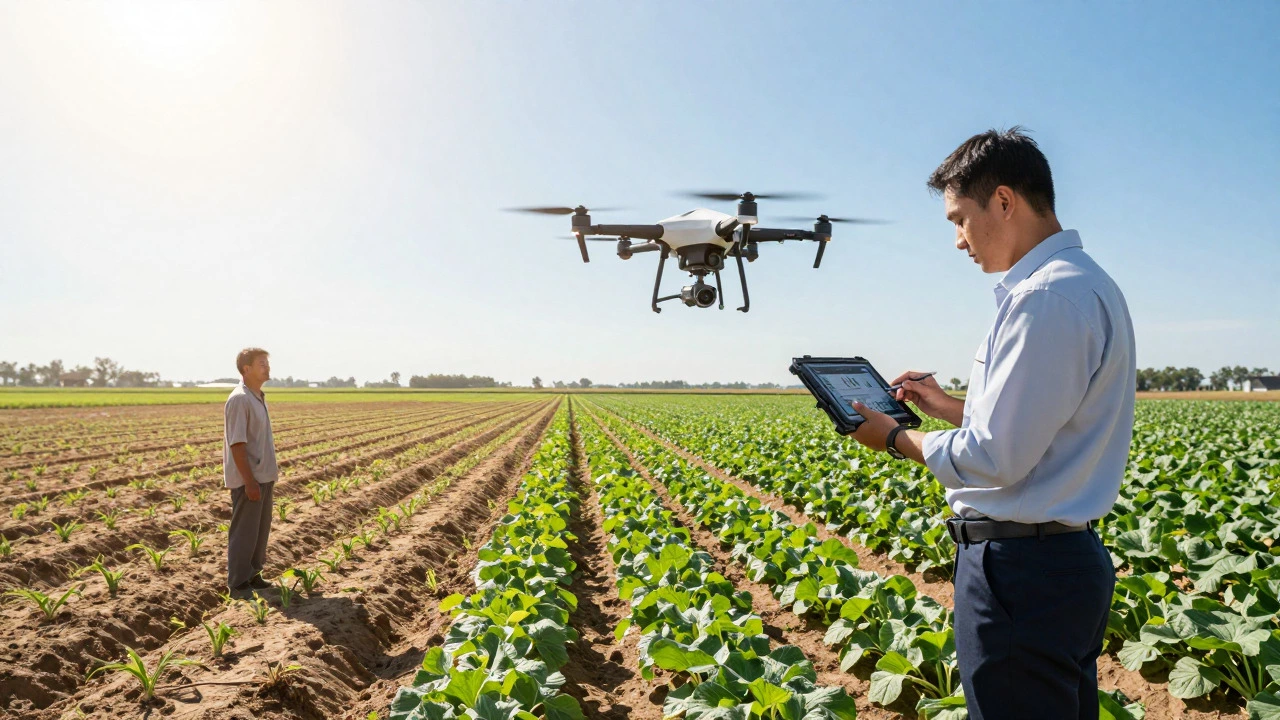
Does farming pay the bills? The answer isn’t a simple yes or no. It depends entirely on whether you are driving a tractor at dawn or analyzing satellite data for a multinational corporation. In 2026, the landscape of Agriculture is the science and practice of cultivating soil, growing crops, and raising livestock to produce food, fiber, and fuel has shifted dramatically. We are no longer just talking about traditional family farms; we are talking about high-tech operations, supply chain logistics, and biotechnology.
If you are wondering if this sector offers financial stability, you need to look beyond the romanticized image of rural life. The reality involves complex economics, varying risk levels, and a wide spectrum of salaries based on education and specialization. Let’s break down where the money actually is in modern agriculture.
The Wide Gap: Traditional Farming vs. Agribusiness
The biggest misconception about agriculture is that it is a single career path. It is not. There is a massive divide between Traditional Farming is the practice of managing land and livestock using conventional methods, often passed down through generations and the broader industry known as Agribusiness is the business side of agriculture, including manufacturing, distribution, marketing, and sales of agricultural products.
For the average small-scale farmer, income can be volatile. According to recent USDA data trends leading into 2026, net farm income fluctuates heavily with commodity prices, weather events, and government subsidies. A typical family farm might generate anywhere from $50,000 to $150,000 annually, but this figure often includes the value of housing on the farm and does not always reflect take-home cash after operational costs like fuel, seeds, and equipment maintenance. Many farmers rely on off-farm employment to stabilize their household income.
In contrast, professionals working within agribusiness enjoy much higher and more predictable salaries. These roles include agronomists, food scientists, agricultural engineers, and supply chain managers. Here, the compensation aligns more closely with corporate standards rather than crop yields.
| Role / Category | Average Annual Salary (USD) | Education Required | Income Stability |
|---|---|---|---|
| Small-Scale Farmer | $45,000 - $85,000 | Experience / Vocational | Low (Weather/Market Dependent) |
| Large-Scale Commercial Farmer | $100,000 - $300,000+ | Bachelor’s in Ag Business | Medium (Scale Dependent) |
| Agronomist | $75,000 - $110,000 | Bachelor’s or Master’s | High |
| Agricultural Engineer | $85,000 - $125,000 | Bachelor’s in Engineering | High |
| Food Scientist | $70,000 - $105,000 | Bachelor’s or Master’s | High |
| Precision Agriculture Specialist | $90,000 - $130,000 | Bachelor’s + Tech Skills | Very High |
High-Paying Specializations in Modern Agriculture
If your goal is a high salary, you should look toward the intersection of technology and biology. The most lucrative jobs in agriculture today require specialized knowledge that goes beyond basic crop management.
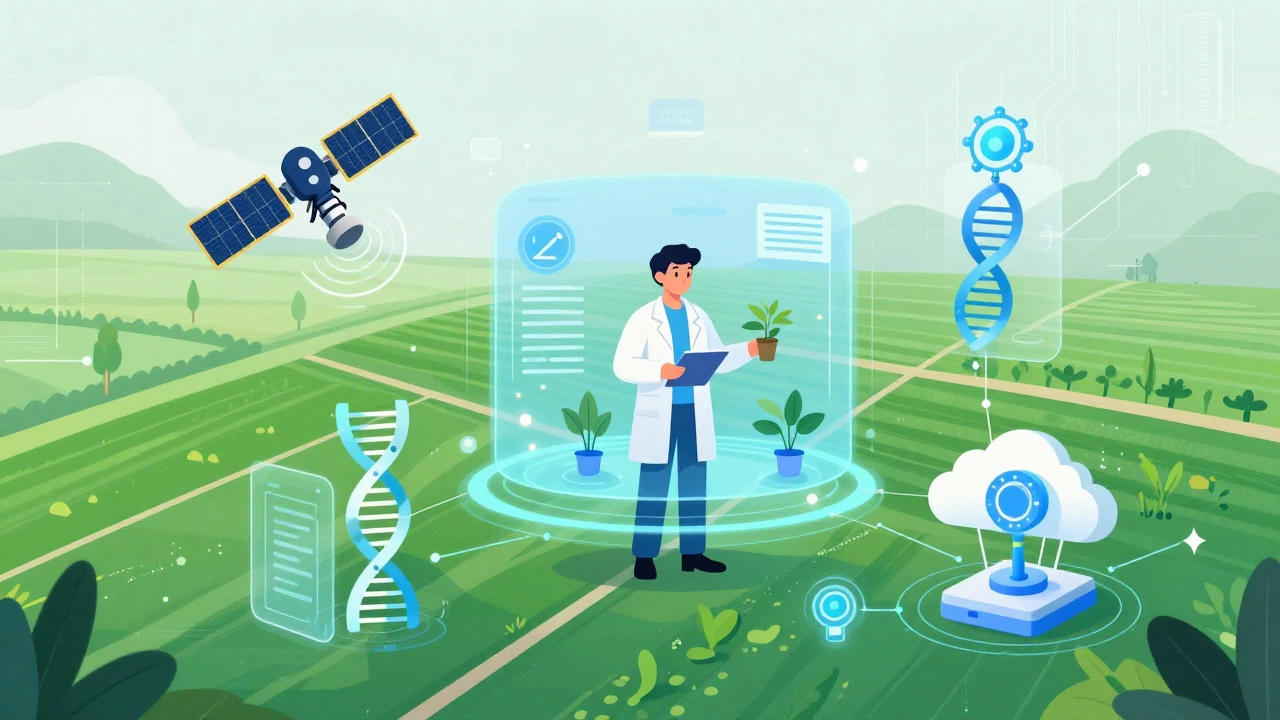
Precision Agriculture is one of the fastest-growing fields. This discipline uses GPS Technology is a satellite-based navigation system used in agriculture to guide machinery and monitor field conditions with centimeter-level accuracy, drones, and IoT sensors to optimize input usage. Specialists who can interpret this data command premium salaries because they directly reduce costs and increase yield for large commercial operations. A Precision Agriculture Manager might earn over $120,000 annually, especially if they have skills in data analytics and software integration.
Agricultural Biotechnology is another goldmine. Companies developing drought-resistant seeds, gene-edited crops, and sustainable fertilizers are investing billions in research. Scientists and researchers in this sector often earn salaries comparable to those in pharmaceuticals. A Senior Research Scientist in ag-biotech can expect a base salary ranging from $110,000 to $160,000, plus bonuses and stock options.
Sales and Marketing in Agribusiness also offer significant earning potential. Selling complex inputs like genetically modified seeds or advanced chemical treatments requires deep technical knowledge. Top-performing sales representatives in this sector frequently earn six-figure incomes due to commission structures tied to large contract values.
The Role of Education and Credentials
Your educational background is the primary determinant of your earning ceiling in agriculture. While you can start farming with little formal education, breaking into the high-paying corporate or scientific roles requires specific degrees.
- Bachelor’s Degree: A degree in Agronomy, Plant Science, Animal Science, or Agricultural Economics opens doors to entry-level positions in consulting, extension services, and mid-level management. Starting salaries typically range from $55,000 to $70,000.
- Master’s Degree: Advanced degrees allow you to specialize. An MS in Soil Science or Entomology can lead to senior technical roles or university teaching positions. Salaries here jump to the $80,000-$100,000 range.
- Doctorate (PhD): For those interested in R&D, policy making, or academia, a PhD is essential. Lead researchers and university professors in agricultural sciences can earn $120,000 to $180,000+, depending on the institution and grant funding.
Certifications also add value. Being a Certified Crop Advisor (CCA) or holding professional engineering licenses (PE) can boost your marketability and justify higher salary demands.
Risks and Challenges: The Hidden Costs
Before committing to a career in agriculture, it is crucial to understand the risks. Even well-paid jobs in this sector come with unique pressures.
Market Volatility: Commodity prices can crash overnight due to global trade disputes, oversupply, or geopolitical events. If you own a farm, this directly impacts your livelihood. If you work in sales or consulting, it affects job security and bonus payouts.
Climate Change: Extreme weather events-droughts, floods, and unseasonal frosts-are becoming more frequent. This increases insurance premiums and operational risks. Professionals must constantly adapt strategies, which adds mental strain and requires continuous learning.
Regulatory Pressure: Environmental regulations are tightening globally. Farmers and agribusinesses face stricter rules on water usage, pesticide application, and carbon emissions. Navigating this legal landscape requires expertise, but non-compliance can result in hefty fines or loss of license.
Future Outlook: Is Agriculture Growing?
The demand for food is projected to rise by 70% by 2050 to feed a growing global population. This creates a long-term tailwind for agricultural careers. However, the nature of these jobs is changing.
Automation is replacing manual labor. Tractor drivers and harvesters are being replaced by autonomous machines. This means fewer low-skill, low-pay jobs and more high-skill, high-pay jobs focused on managing technology. The Bureau of Labor Statistics projects steady growth for agricultural scientists and engineers, while employment for farmworkers remains flat or declines in developed nations.
Furthermore, the push for Sustainable Agriculture is farming practices that focus on environmental health, economic profitability, and social equity is creating new niches. Carbon farming, regenerative agriculture consultants, and vertical farming technicians are emerging roles with strong growth potential. Early entrants in these fields may see rapid salary appreciation as expertise becomes scarce.

How to Maximize Your Earning Potential
If you want to make good money in agriculture, follow these strategic steps:
- Combine Disciplines: Don’t just study biology. Learn data science, engineering, or business administration. The highest earners are hybrids-agronomists who can code, or engineers who understand plant physiology.
- Target Large Corporations: Companies like Bayer, Corteva, John Deere, and Cargill offer better benefits, stability, and salary scales than small local dealerships or farms.
- Specialize in Tech: Get hands-on experience with drones, GIS mapping, and farm management software. Technical proficiency is a rare and valuable skill in this industry.
- Consider Location: Salaries vary by region. Urban centers with strong agribusiness hubs (like Des Moines, Iowa, or Chicago, Illinois) often pay more than remote rural areas, even for similar roles.
- Network Actively: Join professional organizations like the American Society of Agronomy or the National Association of Wheat Growers. Many high-paying jobs are filled through referrals rather than public postings.
Conclusion: A Viable Career Path?
So, is agriculture a good paying job? Yes, but with caveats. If you envision yourself solely as a traditional farmer relying on luck and hard labor, the financial upside is limited and risky. However, if you view agriculture as a dynamic industry driven by science and technology, the opportunities are abundant and lucrative.
The key is positioning. By acquiring relevant education, embracing technology, and targeting specialized roles within agribusiness, you can secure a high-income career that contributes to solving one of humanity’s biggest challenges: feeding the world sustainably. The future of agriculture is not just about dirt; it’s about data, innovation, and efficiency.
What is the average salary for an agricultural scientist in 2026?
The average salary for an agricultural scientist ranges from $75,000 to $110,000 annually, depending on experience, location, and specialization. Those with advanced degrees or working in biotechnology can earn significantly more, often exceeding $130,000.
Do farmers make a lot of money?
It varies widely. Small-scale family farmers often earn modest incomes, sometimes supplemented by off-farm work. Large-scale commercial farmers can earn substantial profits, but they also face high operational costs and market risks. Net income is highly dependent on crop yields, commodity prices, and government subsidies.
What is the highest-paying job in agriculture?
Some of the highest-paying roles include Agricultural Engineers, Food Scientists, and Precision Agriculture Specialists, with salaries often ranging from $90,000 to $160,000+. Executive roles in agribusiness corporations, such as Chief Operating Officers or Directors of R&D, can earn even more, including bonuses and equity.
Is a degree necessary to get a good job in agriculture?
For high-paying, stable careers in agribusiness, science, and engineering, a bachelor’s degree is typically required. Advanced roles often require a master’s or PhD. While you can farm without a degree, accessing the highest income brackets usually demands formal education and specialized certifications.
What skills are in high demand in agriculture right now?
Data analysis, proficiency with GPS and drone technology, understanding of biotechnology, and business management skills are in high demand. Employers seek candidates who can bridge the gap between traditional farming practices and modern technological solutions.
How does climate change affect agricultural jobs?
Climate change increases the need for specialists in sustainable practices, water management, and resilient crop varieties. It also introduces volatility, requiring professionals to adapt quickly to changing environmental conditions, which can impact job security and income stability for traditional farmers.