How to Generate Electricity Without a Generator: DIY Methods & Alternatives
 May, 21 2026
DIY Power Source Estimator
Select Energy Method
Select a method and enter values to see estimated power generation.
Imagine flipping a switch and lights turning on, but there is no humming machine in the backyard spinning away. It sounds like magic, but it is actually physics. Most people assume that creating electricity requires a generator is a device that converts mechanical energy into electrical energy through electromagnetic induction. They picture a diesel engine or a wind turbine blade spinning a rotor inside a coil of wire. While that is the standard industrial method, it is not the only way. You can generate usable electrical current without any moving parts, without burning fuel, and often with materials you already have around the house.
This guide breaks down how you can produce electricity using static principles, chemical reactions, heat differentials, and light absorption. These methods are perfect for emergency preparedness, off-grid living, or simply satisfying your curiosity about how energy works at a fundamental level. We will move from simple science experiments to practical technologies that power satellites and remote sensors today.
Harvesting Energy from Light: Photovoltaics
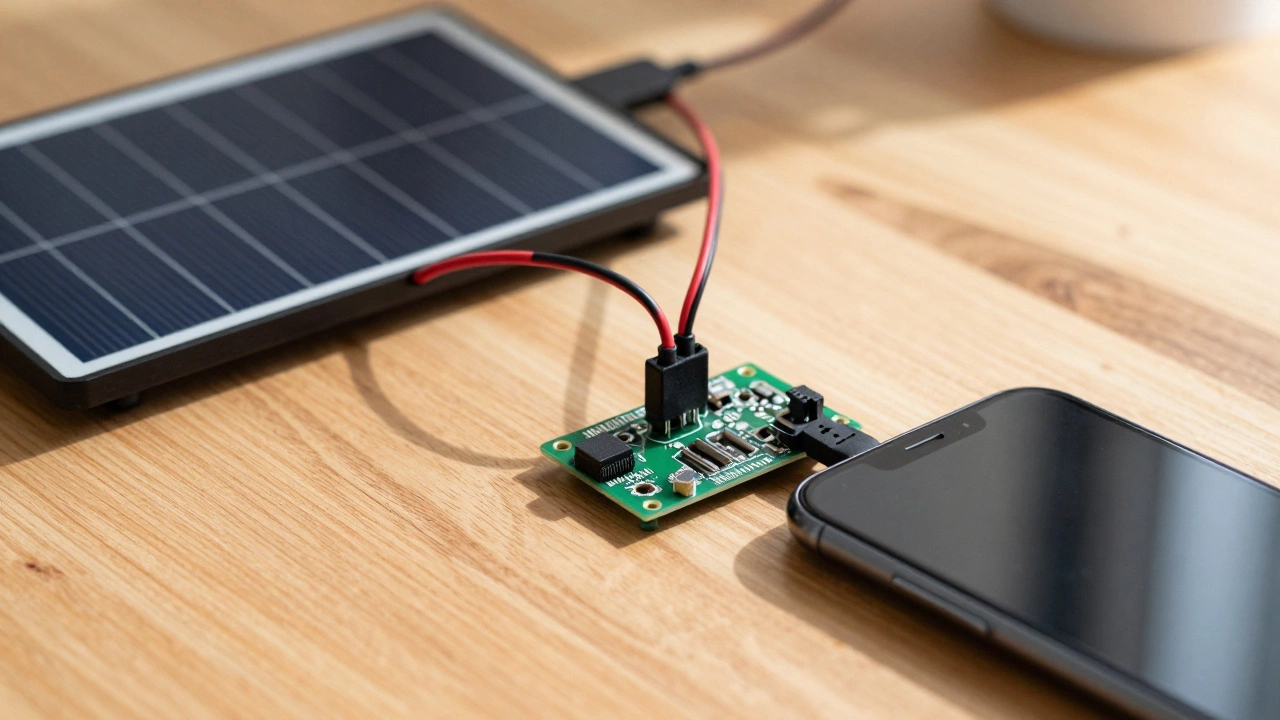
The most accessible way to generate electricity without a generator is by using sunlight. This technology relies on the photovoltaic effect is the physical process where certain materials create an electric voltage when exposed to light. Unlike a generator, there are no gears, belts, or rotors. The entire system is solid-state, meaning it has zero moving parts.
Solar panels work by using semiconductor materials, usually silicon. When photons from sunlight hit the silicon atoms, they knock electrons loose. These free electrons flow in a specific direction, creating direct current (DC) electricity. You do not need a massive rooftop array to see this in action. A small calculator or a garden light uses this exact principle.
If you want to try this yourself, you can buy small photovoltaic cells online. Connect them in series to increase voltage or in parallel to increase amperage. For a practical project, consider building a solar-powered USB charger. You will need a charge controller circuit to regulate the voltage so you do not fry your phone battery. This method is reliable, silent, and requires almost no maintenance once installed.
Creating Power from Motion: Piezoelectricity
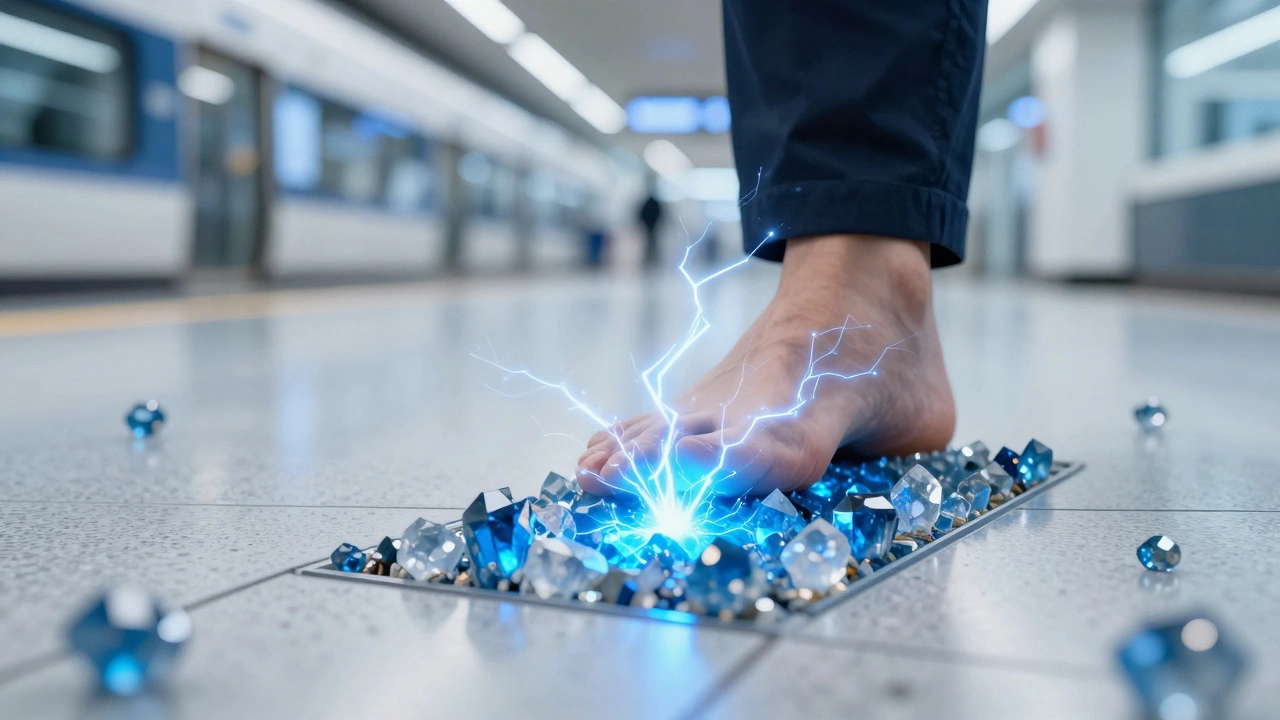
Have you ever stepped on a tile floor and wondered if that pressure could be used? Enter piezoelectricity is the electric charge that accumulates in certain solid materials in response to applied mechanical stress. Certain crystals and ceramics, such as quartz or lead zirconate titanate (PZT), generate a tiny voltage when you squeeze, twist, or bend them.
This is not enough to power a house, but it is excellent for low-power devices. Think about wireless doorbells, fitness trackers, or remote sensors. Some companies are already experimenting with piezoelectric flooring in high-traffic areas like train stations or dance clubs. Every step someone takes compresses the material, generating a small burst of energy that is stored in capacitors.
You can experiment with this at home using a piezo buzzer, which is cheap and available at any electronics store. If you reverse the polarity-applying mechanical force instead of sending an electrical signal-you will get a voltage spike. Try pressing a piezo element between two hard surfaces while monitoring the output with a multimeter. You might only see a few volts, but it proves that kinetic energy can become electrical energy without a magnetic field or a spinning coil.
Tapping into Heat Differences: Thermoelectric Generators
Heat is everywhere, but raw heat does not make electricity. What matters is the difference in temperature between two points. This is the basis of thermoelectric generation is the direct conversion of heat differences into electricity using the Seebeck effect. The Seebeck effect occurs when two different conductive materials are joined at two junctions, and those junctions are kept at different temperatures. An electric current flows from the hot side to the cold side.
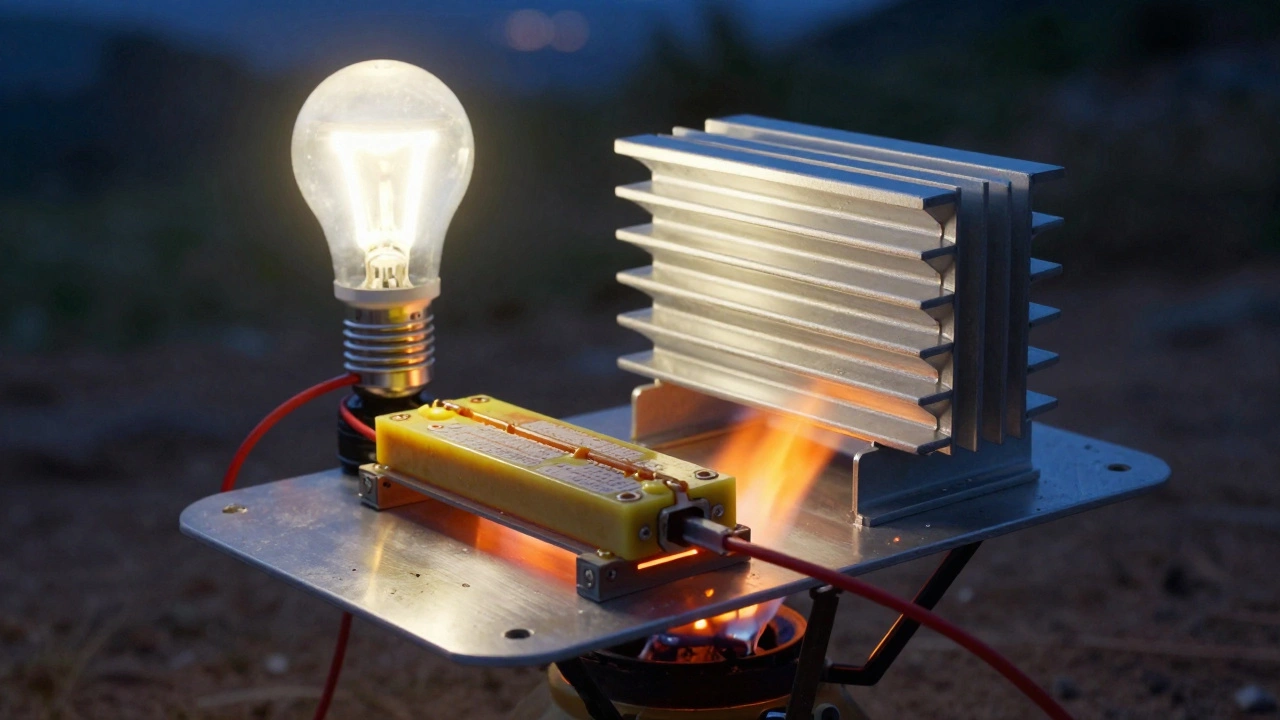
Thermoelectric generators (TEGs) use modules made of bismuth telluride or similar semiconductors. One side of the module sits against a heat source, like a campfire, a car exhaust pipe, or even your own body heat. The other side must be cooled, usually with a heat sink and sometimes a fan. The greater the temperature delta, the more power you generate.
For a DIY project, you can attach a TEG module to a camping stove. Place a metal plate over the flame to act as the hot plate, and mount the TEG on top with a large aluminum heat sink facing up. Use thermal paste to ensure good contact. This setup can provide enough power to charge a small LED light or keep a GPS tracker running during a hike. It is inefficient compared to solar, but it works at night and in cloudy weather, making it a valuable backup option.
Chemical Reactions: Building a Battery
Batteries are essentially stored electricity, but you can also think of them as slow-burning generators. A galvanic cell generates electricity through chemical reactions rather than mechanical motion. This is known as electrochemistry is the branch of physical chemistry concerned with the relationship between electrical potential and chemically reversible oxidation-reduction reactions.
The classic lemon battery demonstrates this. Insert a zinc nail and a copper coin into a lemon. The acid in the lemon juice acts as an electrolyte, facilitating ion flow between the two metals. Zinc oxidizes, releasing electrons, while copper ions accept them. This creates a flow of electrons through an external circuit. One lemon produces about 0.9 volts, which is not much, but if you connect five lemons in series, you can power a small digital clock.
For more robust power, look into microbial fuel cells (MFCs). These devices use bacteria to break down organic matter, like sewage or food waste, and release electrons in the process. The electrons are captured by an electrode and directed into a circuit. While still largely experimental for home use, MFCs show promise for powering remote environmental sensors in wastewater treatment plants. They turn waste into energy without any moving parts or toxic chemicals.
Magnetic Induction Without Spinning Parts
We said no generators, but what about magnets? Traditional generators spin a magnet inside a coil. However, you can induce current by changing the magnetic field in other ways. Faraday’s Law of Induction states that a changing magnetic flux through a loop of wire induces an electromotive force (voltage).
Consider a hand-crank radio. Technically, it has a small generator inside, but the user provides the mechanical energy directly. A more interesting example is regenerative braking in electric vehicles. When you lift your foot off the accelerator, the motor runs in reverse, acting as a generator. The wheels spin the motor, creating resistance and charging the battery. No separate generator unit is needed; the drive motor doubles as the power source.
You can also experiment with linear induction. Take a strong neodymium magnet and drop it down a copper pipe. The falling magnet changes the magnetic field around the copper walls, inducing eddy currents. These currents create their own magnetic field that opposes the falling magnet, slowing it down. The kinetic energy lost by the magnet is converted into heat in the copper. If you wrap the pipe in coils of wire and connect them to a load, you can capture some of that energy as electricity. It is a subtle effect, but it demonstrates that relative motion between a magnet and a conductor is all you need.
Wind and Water Without Turbines
Wind and water are typically harnessed with turbines, which are types of generators. But can we use them differently? Not really for large-scale power, but for micro-generation, yes. Airflow can be used to drive bellows or fans connected to pneumatic systems, which then drive linear actuators. However, this is complex and inefficient.
A better approach is to use the natural movement of air or water to facilitate evaporation or osmosis. Salinity gradient power, or blue energy, exploits the difference in salt concentration between freshwater and seawater. When fresh water mixes with salt water, energy is released. Reverse electrodialysis membranes can capture this energy. Pilot plants in Sweden have demonstrated this technology, producing kilowatts of power from river mouths. It requires no spinning turbines, just stacks of alternating cation and anion exchange membranes.
Similarly, atmospheric water generators pull moisture from the air using desiccants or cooling coils. While they consume electricity to run, hybrid systems can use passive condensation techniques combined with photovoltaic skins to create self-sustaining water harvesting units that also trickle-charge batteries. This is niche, but it shows how nature’s gradients-humidity, salinity, temperature-can be tapped directly.
| Method | Primary Source | Output Type | Best Use Case | Complexity |
|---|---|---|---|---|
| Photovoltaic (Solar) | Sunlight | DC | Home power, gadgets | Low |
| Piezoelectric | Pressure/Vibration | AC/DC pulse | Sensors, wearables | Medium |
| Thermoelectric (Seebeck) | Heat Differential | DC | Camping, waste heat recovery | Medium |
| Electrochemical (Battery) | Chemical Reaction | DC | Emergency power, low-voltage needs | Low |
| Salinity Gradient | Osmosis | DC | Coastal facilities | High |
Practical Steps to Get Started
If you are interested in trying these methods, start small. Do not attempt to power your whole house with a lemon battery. Instead, focus on learning the principles and building confidence.
- Gather Basic Tools: You will need a multimeter to measure voltage and current. Invest in a decent one, as cheap meters can give inaccurate readings for low-voltage sources.
- Start with Solar: Buy a small 5V solar panel and a USB cable. Cut the cable and connect the red wire to the positive terminal and the black wire to the negative. Test it in sunlight. This teaches you about DC circuits and polarity.
- Experiment with Piezo: Order a pack of piezo buzzers. Mount one on a wooden block and strike it gently. Measure the voltage spike. Try connecting several in parallel to see if the current increases.
- Build a Simple Battery: Use copper tape and zinc strips with a vinegar-soaked paper towel. Create a single cell and measure its voltage. Then stack three cells to see the voltage add up.
- Explore Thermoelectrics: Purchase a TE1-12734 TEG module. Attach it to a hot plate and a heat sink. Monitor the output as the temperature difference grows. Remember, safety first-hot plates burn.
Document your results. Note the voltage under load versus no load. Real-world applications always involve some resistance, so understanding internal resistance is key. Join online forums or local maker spaces to share your findings. Community feedback accelerates learning.
Safety Considerations and Limitations
While these methods are generally safe, electricity is electricity. Respect the risks. Short-circuiting a battery can cause it to overheat or leak. Piezo elements can produce surprisingly high voltages if struck hard enough, though the current is negligible. Always use proper insulation and avoid working with live circuits near water.
Be realistic about expectations. None of these methods will replace the grid for modern households. Solar panels are efficient but require significant surface area. Piezo and thermoelectric outputs are milliwatts to watts, suitable for trickle-charging or sensing, not running appliances. Electrochemical batteries degrade over time and require disposal care.
Understand the environmental impact. Mining for lithium, cobalt, and rare earth elements has ecological costs. Recycle old batteries properly. Choose sustainable materials where possible. The goal is not just to generate power, but to do so responsibly.
Can I power my home without a generator?
Yes, primarily through solar photovoltaic systems paired with battery storage. Wind turbines are also common, though they technically contain generators. Purely non-generator methods like piezoelectric or thermoelectric are insufficient for whole-home power due to low output levels.
What is the most efficient way to generate electricity without moving parts?
Photovoltaic solar panels are the most efficient and scalable method. Modern monocrystalline panels convert 20-22% of sunlight into electricity. Thermoelectric generators are far less efficient, typically converting only 5-8% of heat differential into power.
How much power can a piezoelectric floor generate?
A single step might generate 2-40 watts momentarily, but sustained power is much lower. In high-traffic areas, piezoelectric floors can contribute to lighting or sensor networks, but they cannot replace conventional power sources for major loads.
Is it safe to build a homemade battery?
Simple fruit or vinegar batteries are very safe. However, attempting to build high-capacity lithium-ion or lead-acid batteries at home is dangerous and can lead to fires or explosions. Stick to low-voltage, low-current educational projects unless you have professional training.
Do thermoelectric generators require maintenance?
They have no moving parts, so mechanical maintenance is minimal. However, thermal interfaces can degrade over time. You may need to reapply thermal paste or clean heat sinks to maintain efficiency. Corrosion from exposure to elements should also be monitored.