How Many Rocks Are in Space? The Real Count of Asteroids, Meteors, and Debris
 May, 22 2026
Solar System Rock Counter
Explore the sheer volume of rocky objects in our solar system. Use the filters below to narrow down by region or see the total cosmic inventory.
Did you know?
While there are billions of rocks, only a tiny fraction pose a threat to Earth. Most space debris is man-made junk orbiting close to home.
Have you ever looked up at the night sky and wondered just how many floating stones are out there? It’s a question that sounds simple, but the answer is surprisingly complex. When we ask how many rocks are in space, we aren’t just talking about the big asteroids you see in movies. We’re talking about everything from planet-sized bodies to dust grains smaller than a grain of sand. The short answer? Billions. But if you want the real picture, you need to break it down by size, location, and type.
Space isn’t empty. It’s cluttered. From the rocky remnants of our solar system’s formation to the man-made junk left behind by decades of exploration, the cosmos is filled with solid matter. Understanding this inventory helps scientists predict collisions, study the origins of planets, and keep satellites safe. So, let’s sort through the cosmic rubble and get a clear count on what’s actually out there.
The Asteroid Belt: The Main Warehouse of Rocky Debris
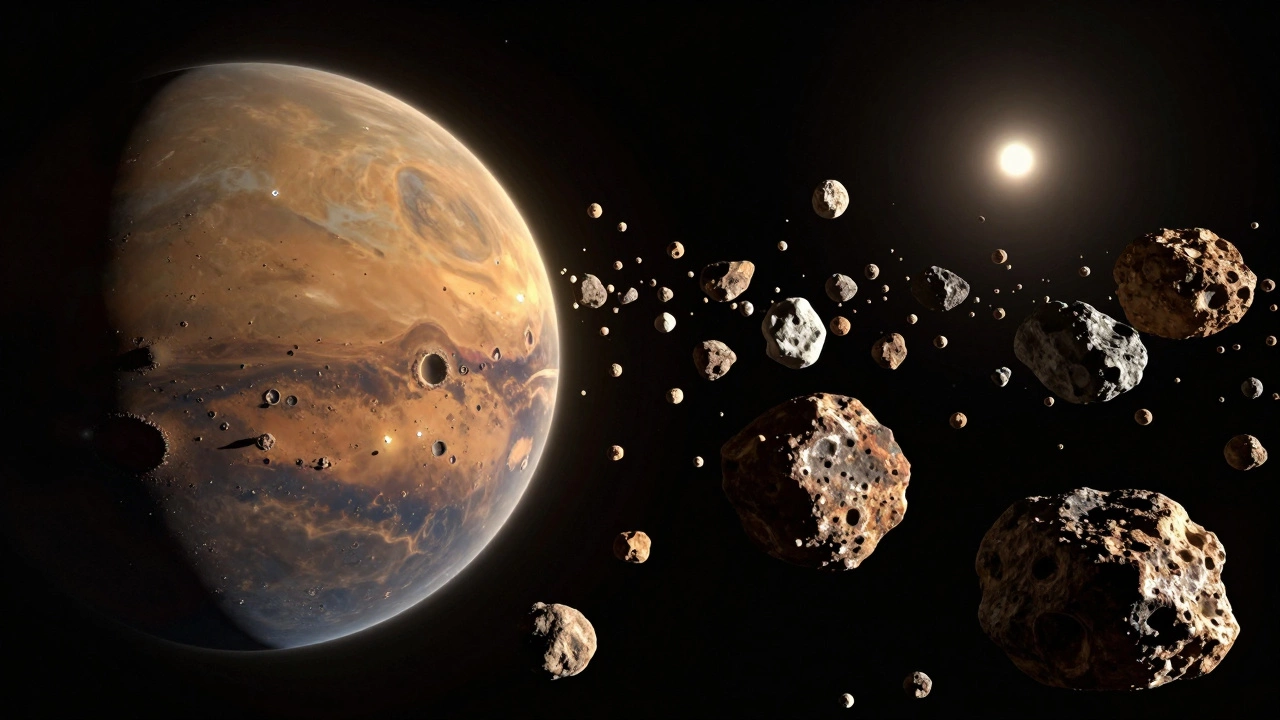
If you’re looking for the biggest concentration of rocks in our solar system, you’ll find them between Mars and Jupiter. This region is known as the Asteroid Belt, which is a circumstellar disc in the Solar System located roughly between the orbits of the planets Mars and Jupiter. It contains the majority of known asteroids, but even here, the numbers depend entirely on how small you look.
Astronomers have cataloged over one million asteroids larger than one kilometer in diameter. That might sound like a lot, but these large rocks make up only a fraction of the total mass. If you zoom in to rocks that are just one meter across, the number jumps into the billions. Why does size matter? Because detection gets harder as objects get smaller. Our telescopes can easily spot something the size of a house, but catching a rock the size of a car requires incredibly sensitive equipment and luck.
- Large Asteroids (>1 km): Approximately 1.1 to 1.9 million objects.
- Medium Asteroids (100m - 1km): Estimated tens of millions.
- Small Asteroids (<100m): Billions, possibly trillions.
The largest rock in this belt is Ceres, which is the largest object in the asteroid belt and classified as a dwarf planet. At about 940 kilometers wide, Ceres holds more than a third of the belt’s total mass. But Ceres is an outlier. Most asteroids are irregularly shaped chunks of rock and metal, never quite growing large enough to become spherical under their own gravity.
Near-Earth Objects: The Rocks That Come Close
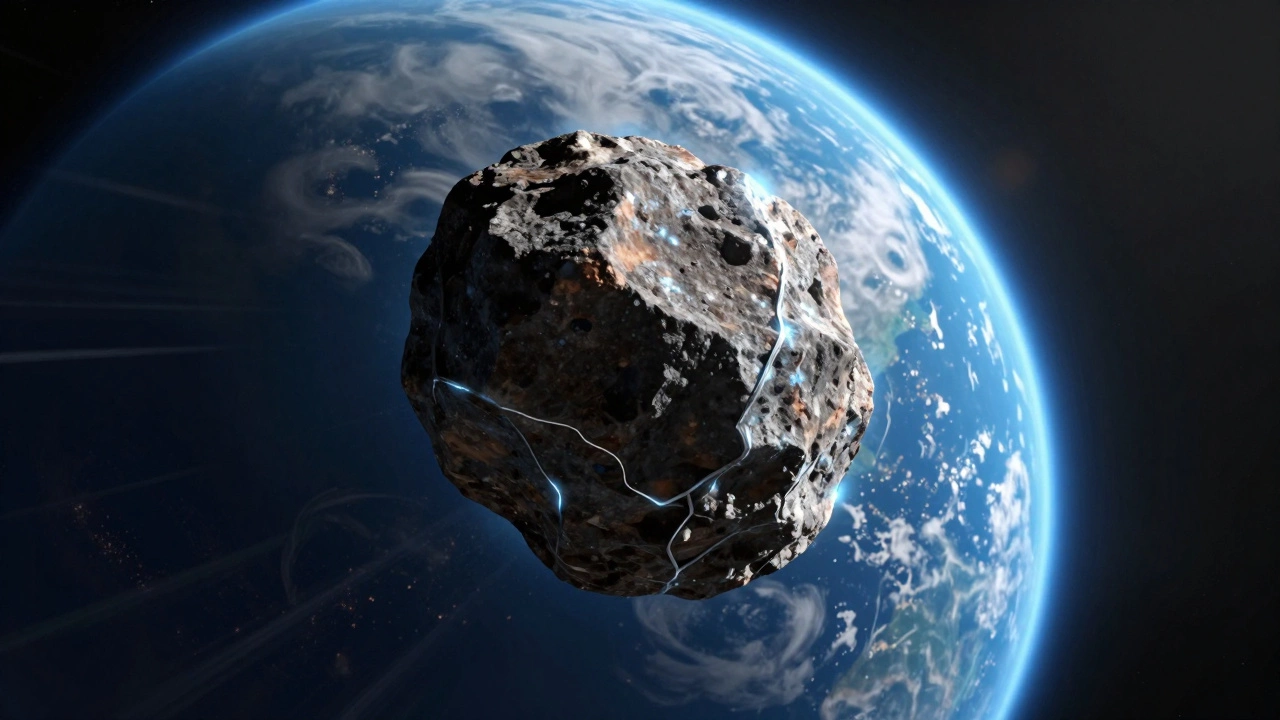
Not all space rocks stay put in the asteroid belt. Gravitational tugs from Jupiter and other planets send some of them drifting closer to the Sun. These are called Near-Earth Objects (NEOs). They are the ones that get us worried because they cross Earth’s orbit. Currently, NASA and other space agencies track thousands of these visitors.
As of recent surveys, there are approximately 38,000 known Near-Earth Objects. Of these, about 2,500 are considered "Potentially Hazardous Asteroids" (PHAs) because they come within 4.6 million miles of Earth and are larger than 140 meters. While the number sounds alarming, remember that space is vast. A miss of a few thousand miles is common. Still, tracking them is crucial for planetary defense. Projects like the DART Mission, which is a NASA mission designed to test asteroid deflection technology, show that we are actively working to understand and mitigate risks from these close-passing rocks.
The Kuiper Belt and Beyond: Icy Rocks in the Dark
Move past Neptune, and you enter the Kuiper Belt. This is a different kind of neighborhood. Here, the "rocks" are often mixed with ice, frozen gases, and organic compounds. These are sometimes called Trans-Neptunian Objects (TNOs). Pluto is the most famous resident, but it’s far from alone.
Scientists estimate that there are hundreds of thousands of Kuiper Belt objects larger than 100 kilometers. If you include smaller icy fragments, the number likely reaches into the billions. Unlike the rocky asteroids of the inner solar system, these objects are pristine relics from the solar system’s formation 4.6 billion years ago. They haven’t been heated or altered much, making them valuable time capsules for astronomers studying how planets formed.
Beyond the Kuiper Belt lies the Oort Cloud, a theoretical sphere of icy bodies surrounding the solar system. Estimates suggest it could contain trillions of comets and icy rocks. However, because these objects are so far away and dark, none have been directly observed yet. Their existence is inferred from the long-period comets that occasionally visit the inner solar system.
Meteoroids: The Dust and Sand of Space
When people think of space rocks, they often imagine massive asteroids. But the vast majority of solid matter in space is much smaller. Meteoroids are particles ranging from a grain of sand to a boulder-sized chunk. There are literally quadrillions of them.
You interact with them every year without realizing it. During meteor showers, like the Perseids or Leonids, Earth passes through streams of debris left by comets. These tiny particles burn up in our atmosphere, creating streaks of light. While each particle might weigh less than a gram, their sheer number is staggering. The zodiacal cloud, a diffuse band of dust around the Sun, contains countless such particles, reflecting sunlight and creating a faint glow visible from space.
Space Debris: The Human-Made Rocks
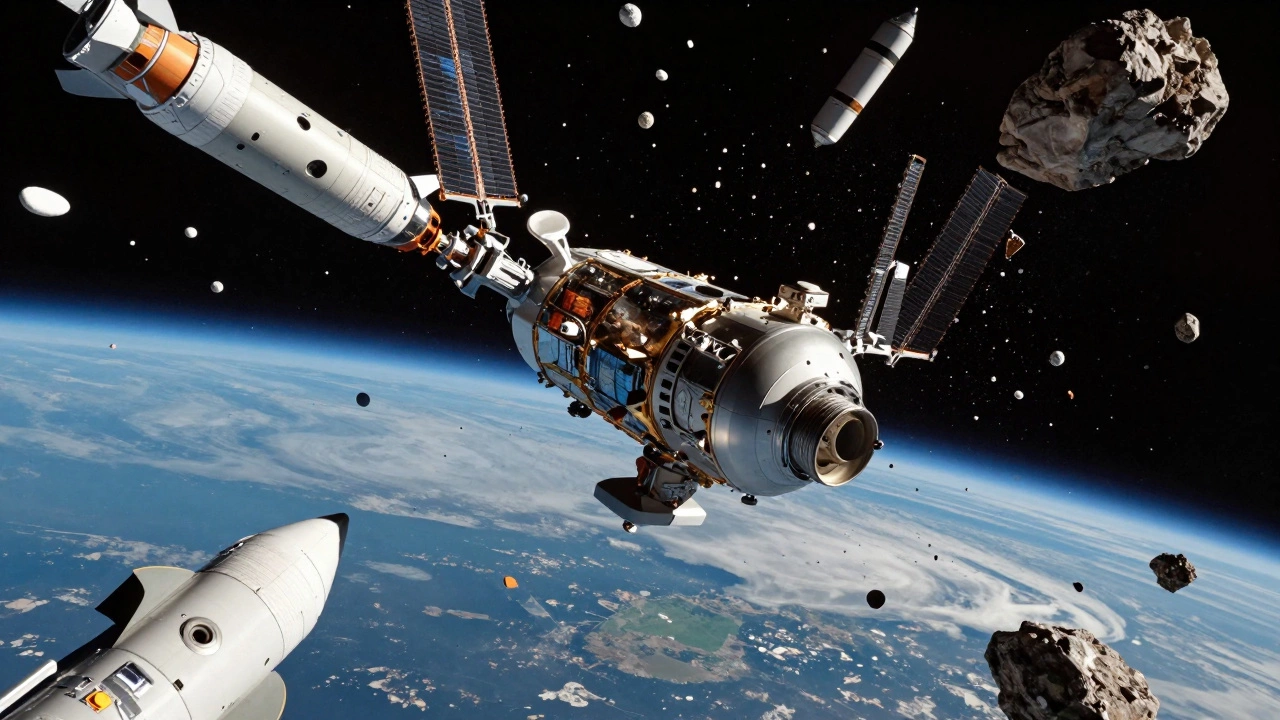
We can’t talk about rocks in space without mentioning the ones we created. Space debris, or "space junk," consists of defunct satellites, spent rocket stages, and fragmentation from collisions. This is a growing problem, especially in Low Earth Orbit (LEO), where the International Space Station and many commercial satellites operate.
| Object Type | Estimated Count | Primary Location | Risk Level |
|---|---|---|---|
| Asteroids (>1km) | ~1.5 Million | Asteroid Belt | Low (except NEOs) |
| Kuiper Belt Objects | Hundreds of Thousands | Beyond Neptune | Very Low |
| Space Debris (>10cm) | ~36,500 | Low Earth Orbit | High |
| Micrometeoroids | Quadrillions | Throughout Solar System | Minimal |
Tracking this debris is critical. A paint fleck traveling at orbital speeds can damage a spacecraft. Agencies like ESA and NASA monitor these objects to avoid collisions. Interestingly, while natural rocks dominate the solar system by mass, artificial debris dominates the immediate vicinity of Earth by density and threat level. For those interested in exploring other structured directories of global data, resources like this directory offer insights into how specialized databases organize complex information, much like how space agencies catalog celestial objects.
Why Counting Matters: Science and Safety
So why do we care about counting rocks? It’s not just academic curiosity. First, safety. Knowing where potentially hazardous asteroids are allows us to prepare for impacts. Second, science. Studying the composition of these rocks tells us about the early solar system. Some asteroids contain water and organic molecules, hinting at how life on Earth may have begun. Third, resources. In the future, mining asteroids for rare metals like platinum or water for fuel could become economically viable. To mine them, we first need to know where they are and how many there are.
The challenge is that our current counts are incomplete. We’ve only surveyed a fraction of the sky thoroughly. New telescopes, like the Vera C. Rubin Observatory, will dramatically improve our ability to detect smaller and dimmer objects. As technology advances, the number of known "rocks" will continue to rise, revealing a universe far more crowded than we once thought.
How many asteroids are there in the solar system?
There are approximately 1.1 to 1.9 million asteroids larger than one kilometer in diameter. If you include smaller rocks down to one meter in size, the number rises into the billions. Most of these are located in the Asteroid Belt between Mars and Jupiter.
What is the difference between an asteroid, a meteoroid, and a meteorite?
An asteroid is a large rocky body in space, typically found in the asteroid belt. A meteoroid is a smaller particle, ranging from dust to boulder size. When a meteoroid enters Earth's atmosphere and burns up, it creates a meteor (shooting star). If any part survives and hits the ground, it becomes a meteorite.
Are there more rocks in space than stars?
Yes, significantly. While there are estimated to be 100 to 400 billion stars in the Milky Way galaxy alone, the number of rocky bodies (asteroids, meteoroids, Kuiper Belt objects) in our solar system alone is in the trillions. Across the entire universe, the number of small rocky bodies dwarfs the number of stars.
How many space rocks hit Earth every day?
Earth is bombarded by about 100 tons of space dust and small meteoroids every day. Most of these particles are microscopic and burn up harmlessly in the upper atmosphere. Larger objects, capable of causing damage, are much rarer, occurring perhaps once every few thousand years for city-sized impacts.
Can we count all the rocks in the Kuiper Belt?
Not yet. Scientists estimate there are hundreds of thousands of Kuiper Belt objects larger than 100 kilometers, but smaller objects are too distant and faint to detect with current technology. Future telescopes will help refine these estimates, but a complete count remains impossible for now.