Has a Woman Ever Walked on the Moon? The Real Story Behind Lunar Exploration
 Dec, 1 2025
Moon Landing Countdown Calculator
When Will a Woman Walk on the Moon?
NASA's Artemis III mission is scheduled for September 2026 to land the first woman on the lunar surface. Calculate how many days remain until this historic event.
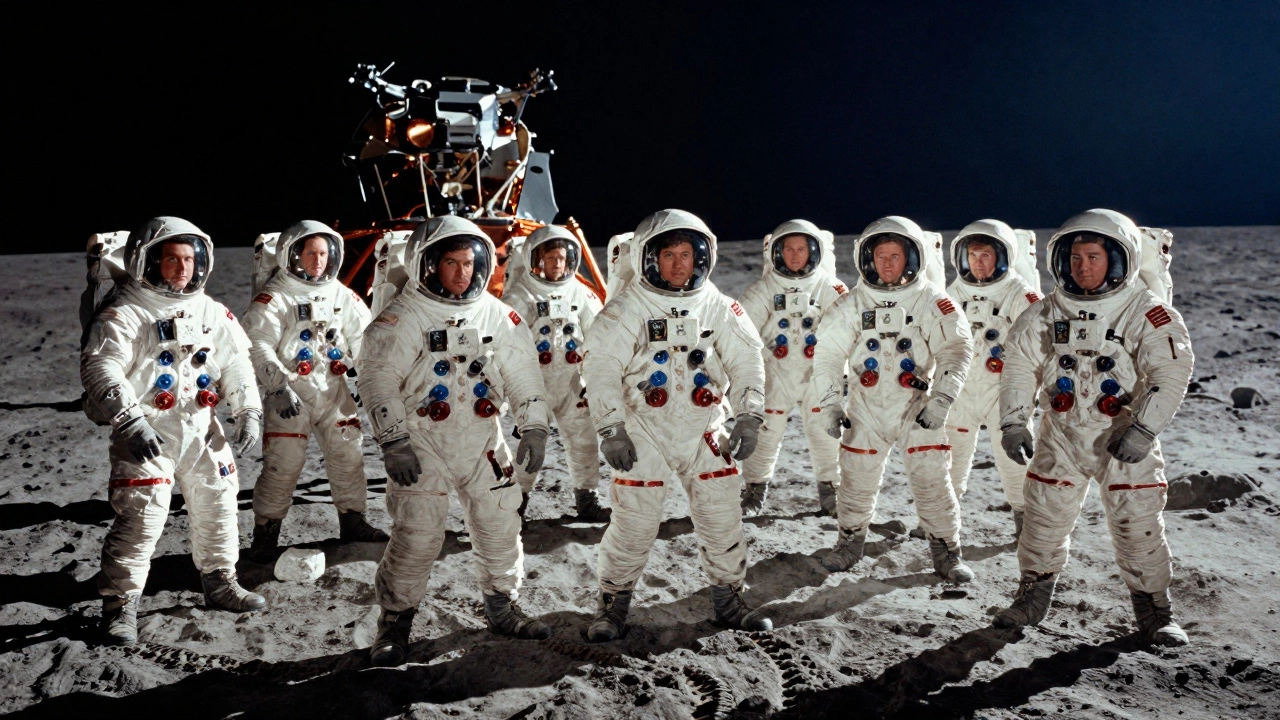
As of December 2025, no woman has ever walked on the moon. Every person who has set foot on the lunar surface was a man - all 12 of them, between 1969 and 1972, as part of NASA’s Apollo program. That fact alone raises a simple but powerful question: why?
Who Walked on the Moon?
The first human on the moon was Neil Armstrong in 1969, followed by Buzz Aldrin. Over the next three years, five more Apollo missions landed on the moon. Apollo 13 didn’t land due to an in-flight emergency. Apollo 15, 16, and 17 each sent two astronauts to the surface. That’s 12 men total. None were women.
At the time, NASA’s astronaut corps was made up almost entirely of military test pilots - a field dominated by men. The selection criteria required jet flight experience, engineering degrees, and physical fitness standards that aligned with the military culture of the 1960s. Women were excluded from these roles in the U.S. Air Force and Navy back then. Even though women like Jerrie Cobb had passed the same physical tests as the Mercury Seven astronauts in private programs, they were never officially considered for spaceflight.
Why Were Women Left Out?
The absence of women on the moon wasn’t because they couldn’t do the job. It was because the system wasn’t built for them.
When NASA was formed in 1958, it inherited the military’s gender norms. The agency didn’t actively ban women - it just didn’t look for them. The path to becoming an astronaut was tied to being a fighter pilot, and women weren’t allowed to fly combat jets in the U.S. until 1993. Without that credential, they couldn’t meet the baseline requirement.
Even when NASA began accepting civilian scientists in the late 1970s, the legacy of the old system lingered. The first American woman in space, Sally Ride, didn’t fly until 1983 - 14 years after the last moon landing. By then, the Apollo program was long over. The hardware, the training, the funding - all of it was designed for a different era.
What Changed Since Then?
A lot. Today, women make up nearly half of NASA’s astronaut corps. The 2021 class included five women out of ten new recruits. In 2024, NASA selected its first Artemis team - the group training to return humans to the moon. Half of the 18 astronauts on that team are women. Among them are Jessica Watkins, who flew to the ISS in 2022, and Christina Koch, who set the record for the longest single spaceflight by a woman at 328 days.
Unlike Apollo, Artemis isn’t limited to test pilots. It includes geologists, biologists, engineers, and medical doctors - roles where women have long excelled. NASA has stated clearly: the next person to walk on the moon will likely be a woman.
When Will a Woman Walk on the Moon?
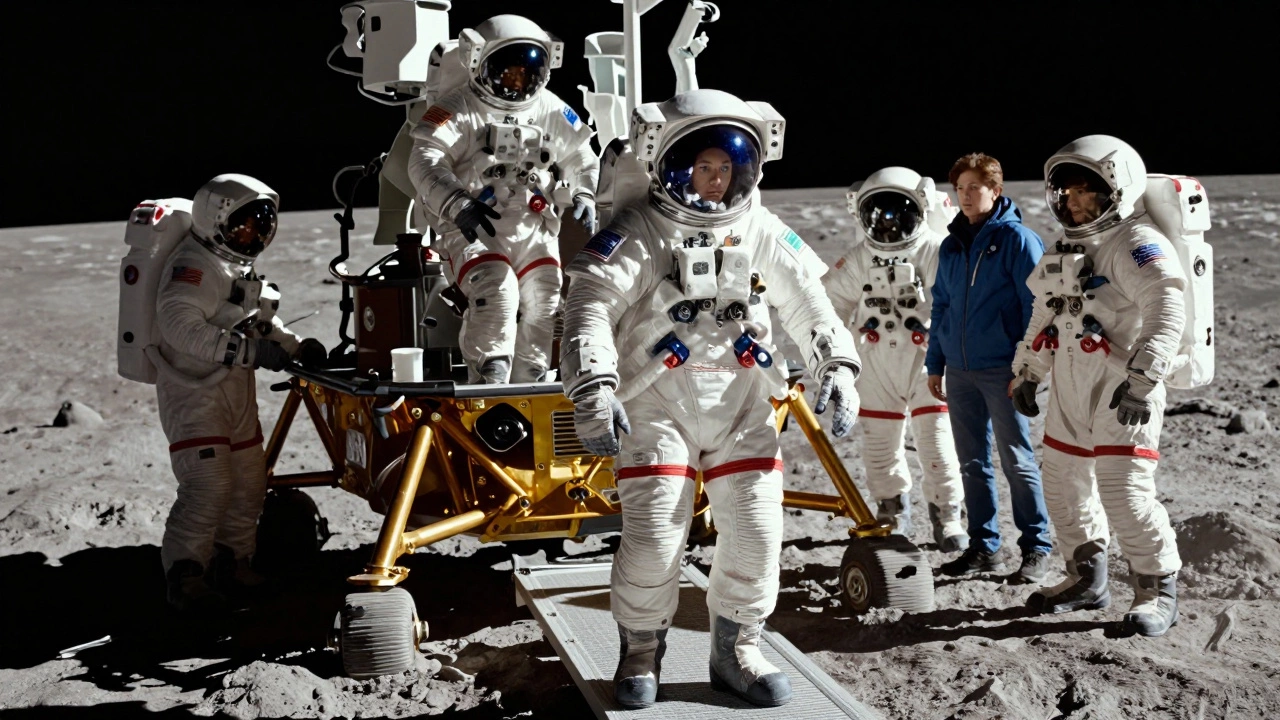
NASA’s current plan targets September 2026 for Artemis III, the first crewed lunar landing since 1972. The mission will include at least one woman. The exact crew hasn’t been named yet, but names like Jessica Watkins, Christina Koch, and Jasmin Moghbeli are frequently mentioned as top candidates.
Artemis III won’t just be historic because of gender. It will be the first lunar landing with a diverse crew - including people of color and international partners from Canada, Japan, and Europe. The mission will also test new technology: lunar rovers, habitat modules, and advanced spacesuits designed for longer surface stays.
And unlike Apollo, which lasted hours, Artemis missions are meant to last days - possibly weeks. That means women astronauts won’t just be walking on the moon; they’ll be living and working there.
What About Other Countries?
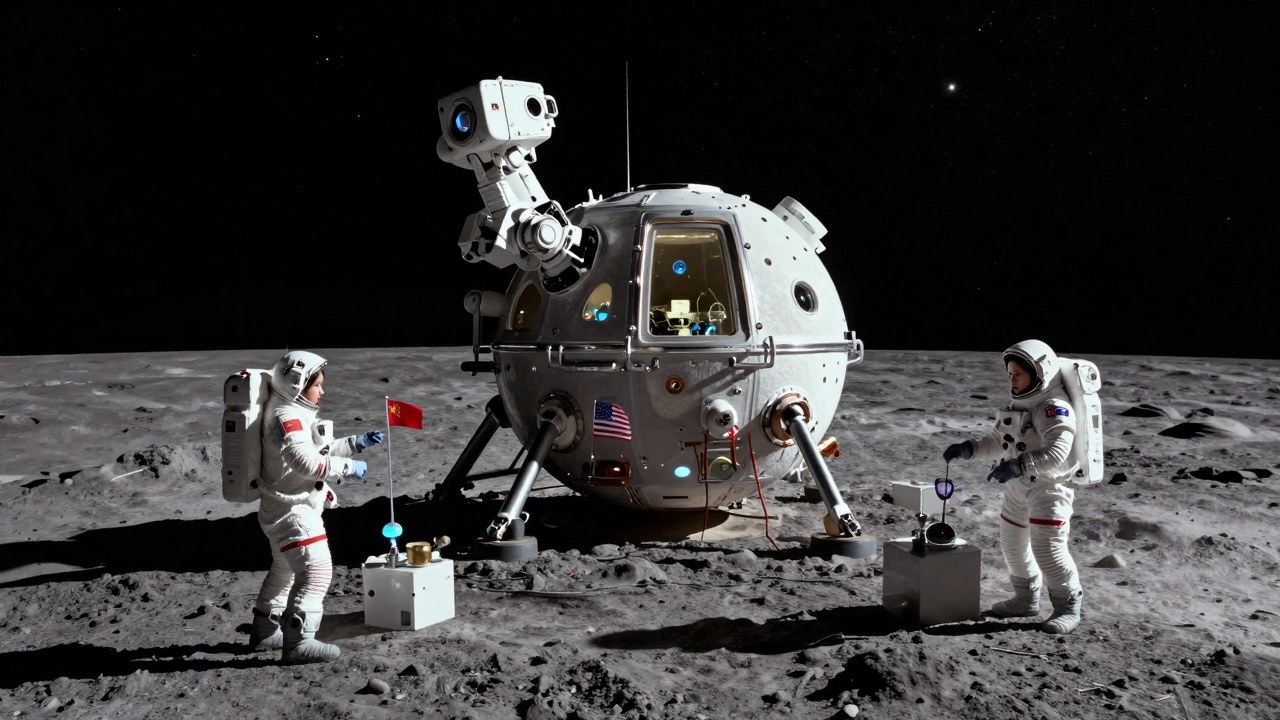
The U.S. isn’t the only country aiming for the moon. China’s space program has sent women to orbit, including Wang Yaping, who conducted a spacewalk in 2021. China plans its own crewed lunar landing by 2030. Russia has announced ambitions to land on the moon, but hasn’t yet sent a woman into space since 1982.
India’s Chandrayaan-3 mission landed near the lunar south pole in 2023. While it was robotic, India’s space agency ISRO has confirmed it’s training female astronauts for future crewed missions. Japan and the UAE are also building their own astronaut programs with gender diversity as a goal.
No other nation has landed humans on the moon yet. But the global race is shifting. The next moonwalker won’t just be American - and they won’t be a man.
Why Does This Matter?
It’s not just about fairness. It’s about progress.
Science benefits from diverse teams. Studies show mixed-gender teams solve complex problems faster and more creatively. Lunar exploration isn’t just about planting a flag. It’s about understanding how to live off-world, how to extract resources, how to protect human health in low gravity and radiation. Women bring different perspectives to those challenges - from physiological research to mission design.
When Sally Ride flew in 1983, she didn’t just break a barrier - she inspired a generation. Girls who saw her on TV started asking to be astronauts. Today, more than 40% of NASA interns are women. That’s not coincidence. It’s the result of seeing someone who looks like you in the mission control room.
The next woman on the moon won’t just be a symbol. She’ll be a scientist, a pilot, a leader - and she’ll be part of a new chapter in space history.
What’s Next?
The Artemis program isn’t just about returning to the moon. It’s about building a long-term presence. NASA plans to establish a lunar base by the early 2030s. That base will need engineers, doctors, geologists, and technicians - and women will be at the center of that effort.
Private companies like SpaceX and Blue Origin are also designing lunar landers. SpaceX’s Starship, chosen by NASA for Artemis, can carry up to 100 people. That means future moon missions won’t be limited to two-person crews. They’ll be teams - and teams need diversity to work well.
The moon is no longer just a destination. It’s a stepping stone. And the next step? It’s being taken by women.