Does Climate Change Cause Global Warming? The Simple Yes/No Answer
 Jun, 2 2026
Global Warming Impact Simulator
Explore the Chain Reaction
Adjust the slider to see how rising temperatures drive climate change outcomes. Global warming is the input; these impacts are the result.
Extreme Weather Events
Moderate IncreaseMore frequent heatwaves and intense storms becoming common
Sea Level Rise
Measurable RiseCoastal flooding increases during high tides and storms
Arctic Ice Loss
Significant DeclineSummer sea ice extent shrinking rapidly, accelerating warming feedback loops
Agricultural Disruption
Regional ImpactsCrop yields affected in vulnerable regions, food security concerns emerging
Climate Change Impact Assessment
At +1.2°C above pre-industrial levels, we are already experiencing measurable climate change effects. Extreme weather events are becoming more frequent, Arctic ice is declining at unprecedented rates, and coastal communities face increasing flood risks. The greenhouse effect from human activities has created a feedback loop where warming drives further changes to our planet's systems.
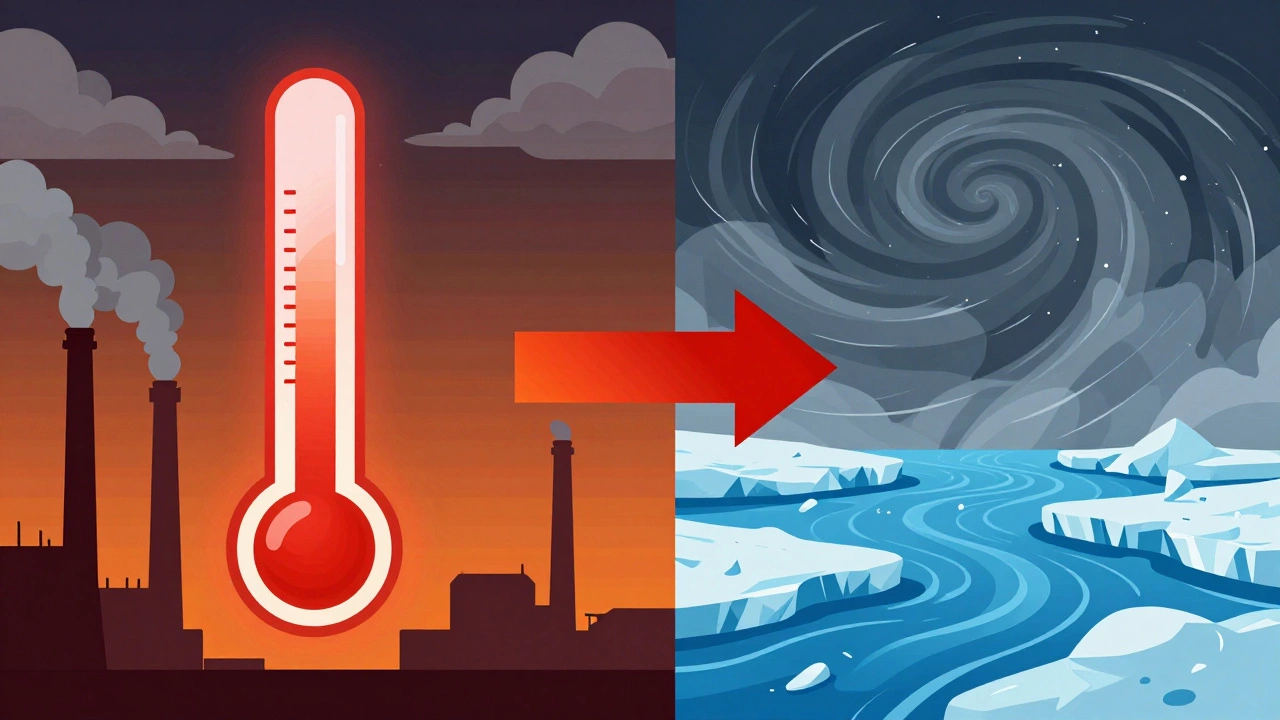
You’ve probably heard these two terms thrown around like they’re the same thing. Or maybe you’ve seen headlines asking if one causes the other, leaving you more confused than before. It’s a fair question. If you look at the news, "climate change" and "global warming" seem to be used interchangeably. But does climate change actually cause global warming? The short answer is no. That’s not how it works.
In fact, it’s the other way around. Global warming is the driver; climate change is the result. Think of it like this: global warming is the fever, and climate change is the sickness that comes with it. You don’t get sick because you have a fever; you have a fever because your body is fighting an infection. Similarly, we aren’t seeing shifting weather patterns because the planet is changing its mind about its climate. We are seeing those shifts because the planet is getting hotter.
The Engine: What Is Global Warming?
To understand why the causality runs in only one direction, we first need to define what global warming actually is. At its core, global warming refers specifically to the long-term heating of Earth's climate system observed since the pre-industrial period (between 1850 and 1900). This isn't just a warm summer here or there. It is a measurable, statistical increase in the average surface temperature of the entire planet.
| Metric | Pre-Industrial Baseline (1850-1900) | Current Status (2024-2026) |
|---|---|---|
| Average Surface Temperature Rise | 0°C (Baseline) | +1.2°C to +1.5°C |
| Atmospheric CO2 Concentration | ~280 parts per million (ppm) | >420 ppm |
| Ocean Heat Content | Normal variability | Record high absorption rates |
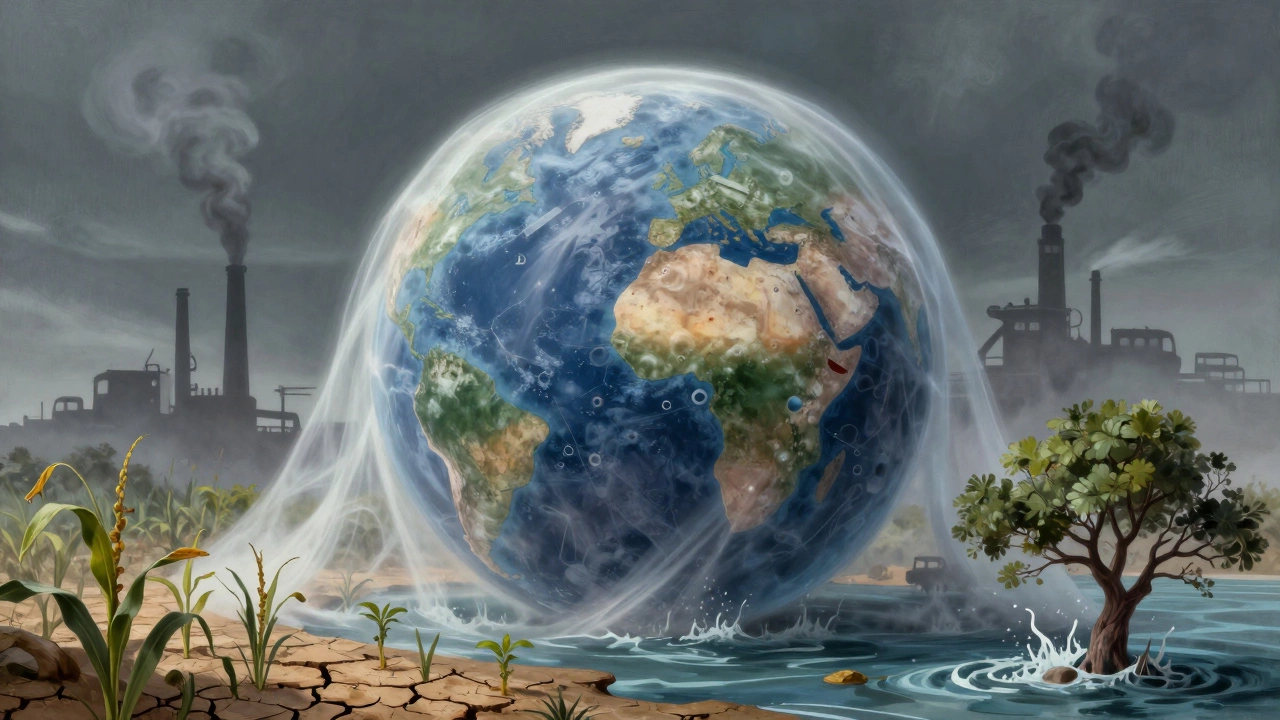
This warming happens because of the greenhouse effect. When humans burn fossil fuels like coal, oil, and natural gas, we release carbon dioxide (CO2) and other greenhouse gases into the atmosphere. These gases act like a blanket wrapped around the Earth. They let sunlight in but trap the heat that tries to escape back into space. The thicker the blanket (more emissions), the hotter it gets inside. This physical process is well-understood and has been measured for decades by organizations like NASA and NOAA.
The Reaction: What Is Climate Change?
If global warming is the engine, climate change is the car driving off the cliff. Climate change is a broader term. It includes global warming, but it also encompasses all the side effects that come with a hotter planet. When you add extra heat energy to the Earth's system, things don't just sit still. The atmosphere moves differently. The oceans circulate differently. Ice melts. Water evaporates faster.
So, when people talk about climate change, they are talking about the changes in average weather conditions over time. This includes:
- More frequent and intense heatwaves
- Heavier rainfall and flooding in some regions
- Prolonged droughts in others
- Rising sea levels due to melting ice caps and thermal expansion of water
- Stronger hurricanes and typhoons fueled by warmer ocean waters
These are not separate events. They are direct consequences of the added heat. You cannot have these chaotic weather patterns without the underlying temperature rise. Therefore, global warming causes climate change, not the other way around.
Why Do People Get Confused?
It’s easy to see why the lines blur. Media outlets often use "climate change" as the umbrella term because it sounds less alarming than "global warming." Also, because the effects are so visible now-wildfires in California, floods in Pakistan, storms in Florida-it feels like the "change" is the primary event. But correlation is not causation. Just because a storm hits doesn't mean the storm caused the planet to warm. The warming made the storm stronger.
Another reason for confusion is that "climate change" can technically refer to any long-term shift in climate, even cooling. For example, if a massive volcanic eruption blocked out the sun for years, that would be climate change (cooling), but not global warming. However, in our current context, driven by human activity, the dominant force is warming. So, while "climate change" is the accurate scientific description of the *phenomenon*, "global warming" describes the *mechanism*.
The Human Fingerprint
Is this natural? The Earth has gone through ice ages and warm periods before. Yes, but not at this speed. Natural cycles, like changes in the Earth's orbit or solar activity, take thousands of years to shift temperatures significantly. The warming we are seeing today has happened in just over a century. That pace is impossible without human influence.
The Intergovernmental Panel on Climate Change (IPCC), which brings together thousands of scientists from around the world, states with unequivocal confidence that human activities are the dominant cause of the observed warming since the mid-20th century. We are essentially running a planetary experiment by pumping billions of tons of carbon into the air every year. The result is a hotter planet, which leads to a destabilized climate.
Real-World Examples of the Chain Reaction
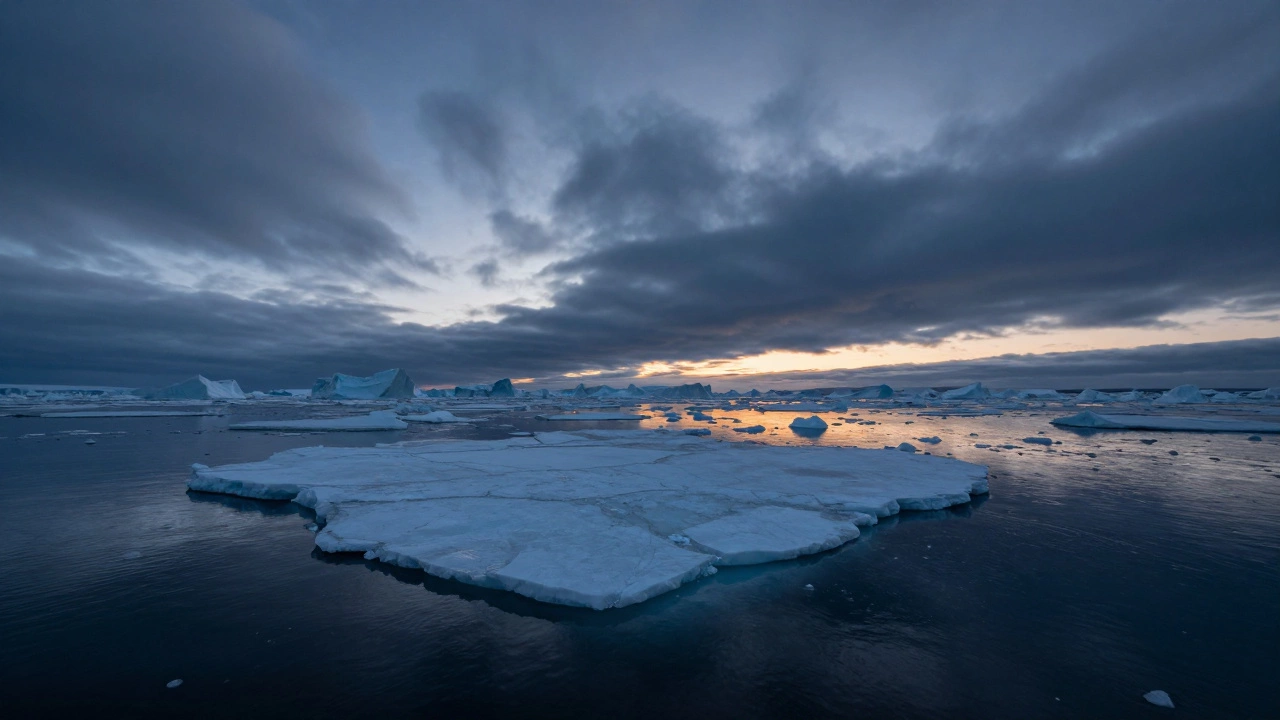
Let’s look at a concrete example to make this stick. Take the Arctic sea ice. As global temperatures rise (global warming), the ice melts. Ice reflects sunlight back into space. Dark ocean water absorbs heat. So, as ice melts, more heat is absorbed, causing more ice to melt. This is a feedback loop. The loss of ice contributes to further warming, which then alters wind patterns and jet streams. These altered winds can cause cold snaps in Europe or heat domes in North America. That extreme weather is climate change. The root cause? The initial heat gain.
Or consider agriculture. Farmers in sub-Saharan Africa rely on predictable rain patterns. As the planet warms, the hydrological cycle intensifies. Some areas get too much rain, washing away topsoil. Others get none, leading to crop failure. The food insecurity that results is a social impact of climate change, triggered by the physical reality of global warming.
What Does This Mean for Us?
Understanding the difference matters because it clarifies what we need to do. If we thought climate change was the cause, we might try to fix weather patterns directly (geoengineering), which is risky and unproven. But since we know global warming is the driver, the solution is clear: we need to stop adding heat-trapping gases to the atmosphere.
This means transitioning away from fossil fuels. It means investing in renewable energy sources like wind and solar. It means protecting forests that absorb CO2. Every fraction of a degree of warming we prevent reduces the severity of the climate change impacts we will face. It’s not about stopping the weather from changing-that’s inevitable now. It’s about limiting the damage by controlling the temperature rise.
Common Misconceptions Debunked
There are plenty of myths out there. Let’s clear up a few:
- "It’s just a natural cycle." False. Current warming is too fast and too closely linked to CO2 emissions to be natural.
- Global Warming is the long-term heating of Earth's climate system. While natural factors play a role, human activities are the primary driver since the industrial revolution. "Global warming means everywhere gets hotter." Not exactly. While the global average rises, local effects vary. Some places may experience colder winters due to disrupted jet streams, but the overall system is gaining heat.
- "Climate change stopped." False. Each of the last several years has been among the hottest on record. The trend is accelerating, not pausing.
The Bottom Line
So, does climate change cause global warming? No. Global warming causes climate change. One is the input (heat), and the other is the output (chaos). By understanding this relationship, we can better grasp the urgency of the situation. We are not just dealing with a slightly warmer day. We are dealing with a fundamental shift in the stability of our planet’s life-support systems. The science is clear, the data is robust, and the path forward requires addressing the root cause: the excess heat trapped in our atmosphere.
Is global warming the same as climate change?
No, they are related but distinct. Global warming refers specifically to the rise in Earth's average surface temperature. Climate change is a broader term that includes global warming plus all the resulting shifts in weather patterns, such as increased storms, droughts, and sea-level rise. Think of global warming as the cause and climate change as the effect.
Can climate change cause cooling?
Technically, yes. "Climate change" refers to any significant change in climate measures over time. However, in the current context driven by human greenhouse gas emissions, the dominant trend is warming. Natural events like large volcanic eruptions can cause temporary cooling, but the long-term trajectory is upward in temperature.
What is the main cause of global warming?
The primary cause is human activity, specifically the burning of fossil fuels (coal, oil, and gas) which releases carbon dioxide and other greenhouse gases into the atmosphere. Deforestation also contributes by reducing the number of trees available to absorb CO2.
How do we know global warming is happening?
Scientists measure global temperatures using thermometers on land, buoys in the ocean, and satellites. Data from NASA, NOAA, and the Met Office show a consistent upward trend in average global temperatures since the late 19th century, with the rate of warming accelerating in recent decades.
Does climate change affect everyone equally?
No. While the physical effects of warming are global, the impacts are uneven. Regions near the equator and low-lying island nations often face more severe consequences, such as extreme heat, sea-level rise, and crop failures, despite having contributed the least to global emissions.