Do You Have the Brains for Data Science? Truth About the Skillset
 Apr, 24 2026
Data Science Aptitude Checker
Forget your IQ or your math degree. This tool evaluates the three pillars of the data science mindset and your tolerance for the "grunt work" of the field. Select the statements that best describe you.
Which of these sound like you?
I enjoy puzzles and spotting trends in numbers or sports stats.
I instinctively question why a sudden spike in data occurred instead of taking it at face value.
I can explain a complex idea to someone who has no background in the subject.
I don't mind spending hours troubleshooting a problem (like a broken PC or IKEA furniture).
I am comfortable with "best guesses" and probabilities rather than absolute right/wrong answers.
I have the patience to hunt down a single error in a large dataset.
Calculating...
Select your traits to see if you have the data science mindset.
You've probably seen the headlines calling it the "sexiest job of the 21st century," but here is the cold truth: most people who ask if they are "smart enough" are actually overthinking the wrong thing. You don't need to be a mathematical prodigy or a child genius to succeed in this field. What you actually need is a specific blend of curiosity and the stomach for frustration. If you can handle a computer program crashing for three hours because of a misplaced comma, you're already halfway there.
Quick Reality Check
- Curiosity > Genius: The ability to ask "Why is this happening?" is more valuable than knowing a complex formula by heart.
- Iterative Learning: You don't learn data science by reading; you learn it by breaking things and fixing them.
- Math Baseline: You don't need a PhD in Math, but you do need to be comfortable with basic statistics and algebra.
- Tech Agnosticism: Tools change every year; the logic behind the tools is what stays.
The "Intelligence" Myth in Data Science
When people ask if they are smart enough, they usually mean "Am I good at math?" Let's clear that up. Data Science is a multidisciplinary field that uses scientific methods, processes, algorithms and systems to extract knowledge and insights from noisy, structured and unstructured data. Notice that it doesn't say "uses advanced calculus to intimidate people."
In the real world, a Data Scientist spends about 80% of their time cleaning messy data and only 20% building fancy models. You don't need an IQ of 160 to clean a spreadsheet or write a SQL query. You need persistence. If you've ever spent an entire afternoon trying to figure out why a piece of IKEA furniture didn't fit together, or why your gaming PC wouldn't boot, you have the exact type of "debugging brain" required for this career.
The Three Pillars of the Data Science Mindset
Instead of worrying about your general intelligence, look at these three specific cognitive traits. If you have these, you have the aptitude.
1. Pattern Recognition
Can you look at a set of numbers and notice that every time X happens, Y usually follows? This is the core of Machine Learning. You don't need to write the algorithm from scratch-libraries like Scikit-learn do the heavy lifting. Your job is to recognize if the pattern is real or just a coincidence. If you enjoy puzzles, spotting trends in your bank statement, or predicting sports outcomes based on stats, you're wired for this.
2. Logical Skepticism
A great data scientist is a professional doubter. When a chart shows a massive spike in sales, a "smart" person might say "Great, we're growing!" A data scientist says "Wait, did the tracking code break? Is this a bot attack? Or is there actually a trend?" This skepticism prevents companies from making million-dollar mistakes based on flawed data.
3. The Ability to Translate
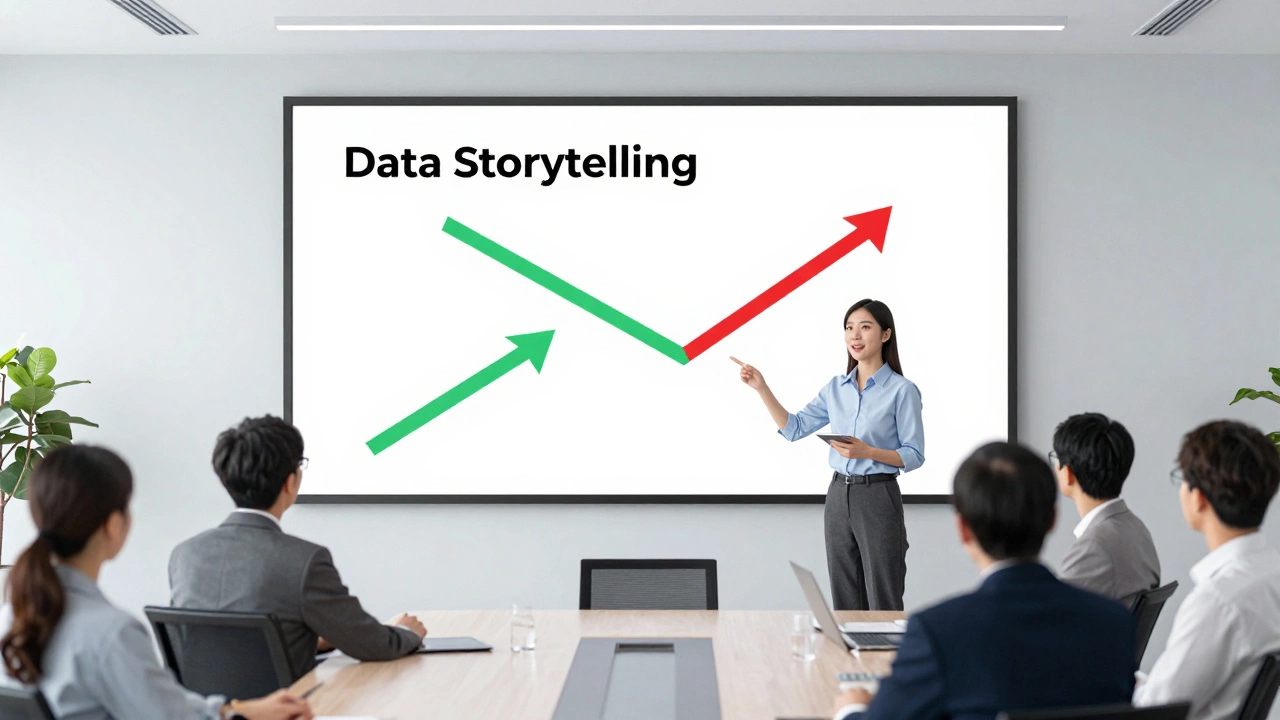
The most "intelligent" person in the room is useless if they can't explain their findings to a manager who hates math. This is called Data Storytelling. It's the art of turning a complex Random Forest model into a simple sentence: "If we change the price by 5%, we will lose 10% of our customers." If you can simplify complex ideas, you are more valuable than a mathematician who can't communicate.
Do You Need a Math Degree?
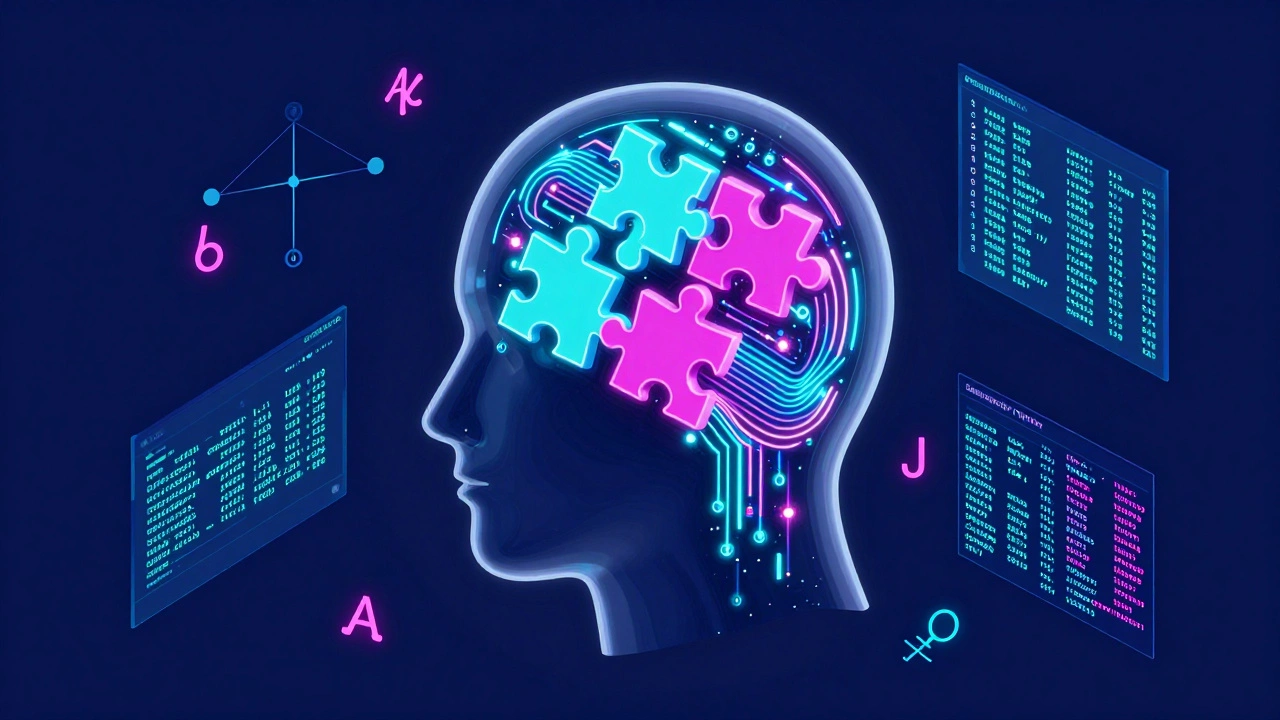
Let's get specific about the math. You don't need to solve differential equations in your head. However, you cannot ignore the fundamentals. Most professional data science work relies on three areas: Linear Algebra (for how data is stored in matrices), Calculus (to understand how models optimize), and Probability and Statistics (to know if your result is actually significant).
| Math Topic | Academic Requirement | Real-World Application |
|---|---|---|
| Calculus | High (Multivariable) | Low (Understanding Gradient Descent) |
| Linear Algebra | High (Matrix Theory) | Medium (Working with Arrays/Tensors) |
| Statistics | Medium (Theory) | Extreme (A/B Testing, Distributions) |
| Algebra | Basic | High (Formula manipulation) |
Notice the gap? You need to understand the concept of a derivative to know how a neural network learns, but you will almost never manually calculate one on a whiteboard in your daily job. The computer does the math; you provide the logic.
The Technical Hurdle: Coding
Many people confuse "coding ability" with "intelligence." Coding is a craft, not a gift. If you've never written a line of code, Python is the gold standard for starting. It's designed to be readable, almost like English. If you can follow a recipe to bake a cake, you can learn to write a Python script.
The hurdle isn't the language itself, but the transition to Algorithmic Thinking. This means breaking a big problem into tiny, logical steps. For example, instead of saying "Find the best customers," you learn to say "Filter the database for users with >5 purchases, group them by region, and calculate the average spend." This is a skill you build through practice, not something you're born with.
Warning Signs: Are You Actually a Bad Fit?
While almost anyone can learn the technical side, some people genuinely hate the day-to-day reality of data science. You might struggle if:
- You hate ambiguity: In data science, there is rarely a "correct" answer. You deal with probabilities and "best guesses." If you need a clear right/wrong binary, this will drive you crazy.
- You dislike repetitive failure: You will write a code block that doesn't work. Then you'll fix it, and it will break something else. If this feels like a waste of time rather than a puzzle, you'll burn out.
- You prefer the "Big Picture" over the details: If you can't stand spending two hours hunting for a duplicate row in a dataset of 10,000, you'll find the grunt work unbearable.
Your Roadmap to Testing Your Aptitude
Stop wondering if you're smart enough and start testing it. The only way to know is to do. Here is a low-risk way to see if your brain enjoys this work:
- The Excel Phase: Try to do a complex analysis in a spreadsheet. Use VLOOKUPs and Pivot Tables. If you enjoy the feeling of organizing data to find an answer, move to step two.
- The SQL Phase: Learn basic SQL. It's the language of databases. If writing a query to pull specific information feels satisfying, you have the logic for data science.
- The Python Phase: Spend two weeks on a basic Python course. Try to automate a small task-like renaming 100 files in a folder. If you get a rush of dopamine when the code finally runs, you're in.
By the time you reach the end of this list, you'll realize that data scientist career success isn't about a high IQ score. It's about the willingness to be wrong a thousand times until you're right once. The industry doesn't need more geniuses; it needs people who can bridge the gap between messy data and smart business decisions.
Do I need a degree in Computer Science or Math?
No, it is not mandatory, although it helps. Many successful data scientists come from physics, economics, social sciences, or even humanities. What matters is your portfolio-actual projects where you solved a problem using data-rather than the name of your degree.
How long does it take to become "smart enough" to get hired?
Depending on your starting point, it usually takes 6 to 18 months of consistent study to reach an entry-level proficiency. The key is focusing on a "T-shaped" skill set: broad knowledge of the pipeline and deep expertise in one area, like data visualization or machine learning.
Is data science too hard for someone who struggled in high school math?
Not necessarily. High school math is often taught as rote memorization. Data science math is applied. When you see how a statistical concept actually helps you predict a business trend, it often "clicks" in a way that a textbook never did. You just need to be willing to relearn the basics.
What is the most important tool for a beginner to learn first?
Start with SQL. It is the foundation of almost every data-driven company. Before you can apply machine learning, you have to be able to get the data out of the database. SQL is easier to learn than Python and provides immediate, tangible results.
Can I do data science if I'm not a "tech person"?
Yes. In fact, some of the best data scientists are "domain experts"-people who understand the business or the science deeply and use data as a tool to prove their theories. Technical skills can be taught; deep industry intuition is much harder to acquire.