Can You Burn Wood to Generate Electricity? Here's How It Works and Why It Matters
 Dec, 4 2025
Wood Energy Carbon Impact Calculator
Calculate Your Wood Energy Impact
Input your project details to see environmental impact and carbon neutrality status
Results
Yes, you can burn wood to generate electricity-and people have been doing it for over a century. It’s not new, but it’s still relevant today, especially as communities look for ways to use local, renewable resources instead of fossil fuels. Burning wood for power isn’t magic. It’s a straightforward process: heat water to make steam, use that steam to spin a turbine, and let the turbine generate electricity. But the real question isn’t whether it’s possible-it’s whether it’s smart, sustainable, and worth doing in 2025.
How Wood Becomes Electricity
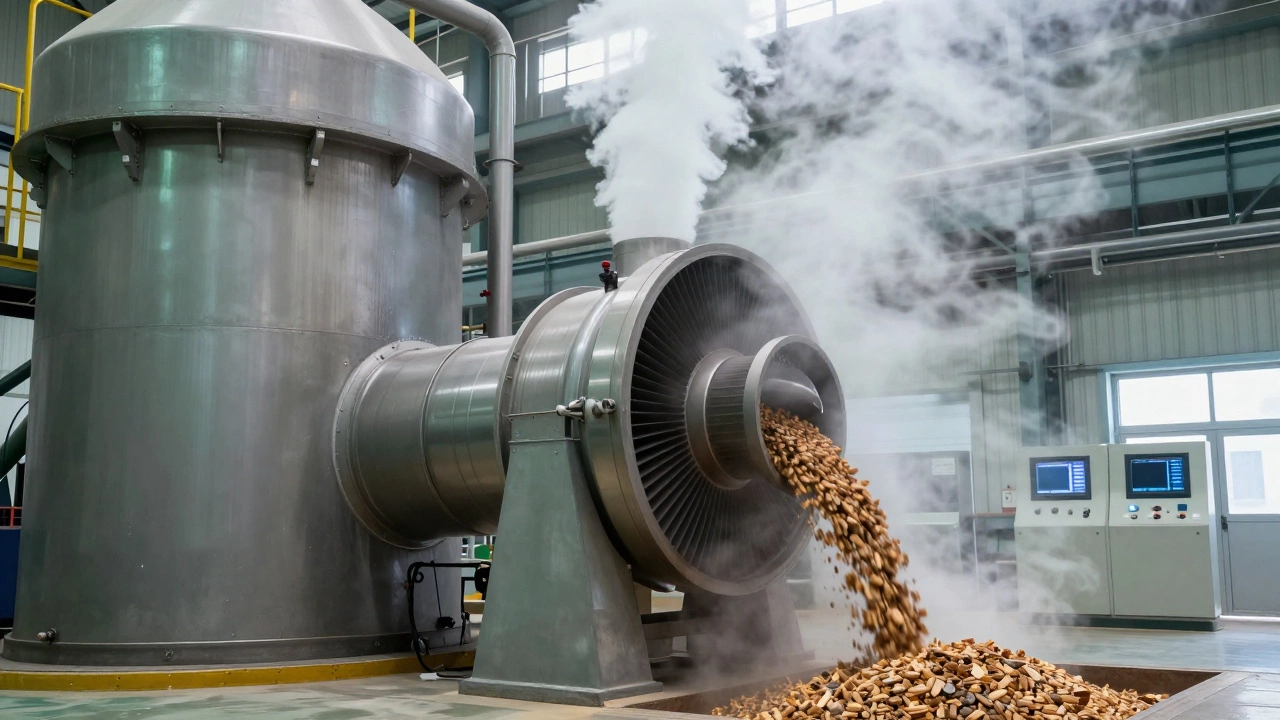
The process starts in a biomass power plant. Trees, wood chips, sawdust, or even forest debris are fed into a combustion chamber and burned at high temperatures. The heat turns water in a boiler into steam. That steam drives a turbine connected to a generator, just like in coal or natural gas plants. The generator spins and produces electricity.
Modern biomass plants don’t just burn logs in an open fire. They use controlled combustion systems with filters and scrubbers to reduce smoke and pollutants. Some even capture the carbon dioxide released and store it underground-a process called BECCS (Bioenergy with Carbon Capture and Storage). That’s not common yet, but pilot projects in Sweden and Finland are showing it can work.
One real-world example: the Drax Power Station in the UK used to burn coal. Now, over 80% of its fuel comes from compressed wood pellets made from forestry waste. It generates enough electricity for 4 million homes. That’s not a small detail-it’s proof that wood can replace fossil fuels at scale.
Why Wood Is Considered Renewable
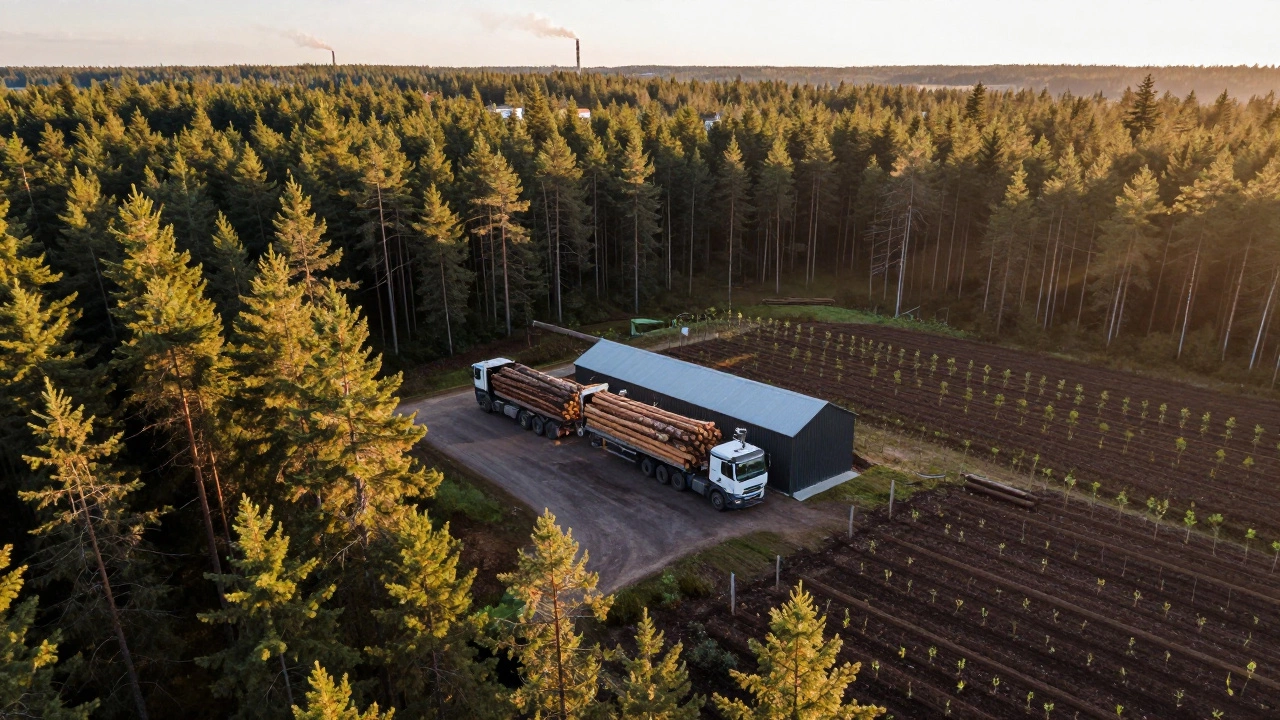
Wood is renewable because trees grow back. As long as forests are managed responsibly-planting more trees than you cut-you’re not depleting the resource. Unlike coal or oil, which took millions of years to form, a new tree can grow in 20 to 50 years. That’s why governments classify wood energy as renewable under most clean energy policies.
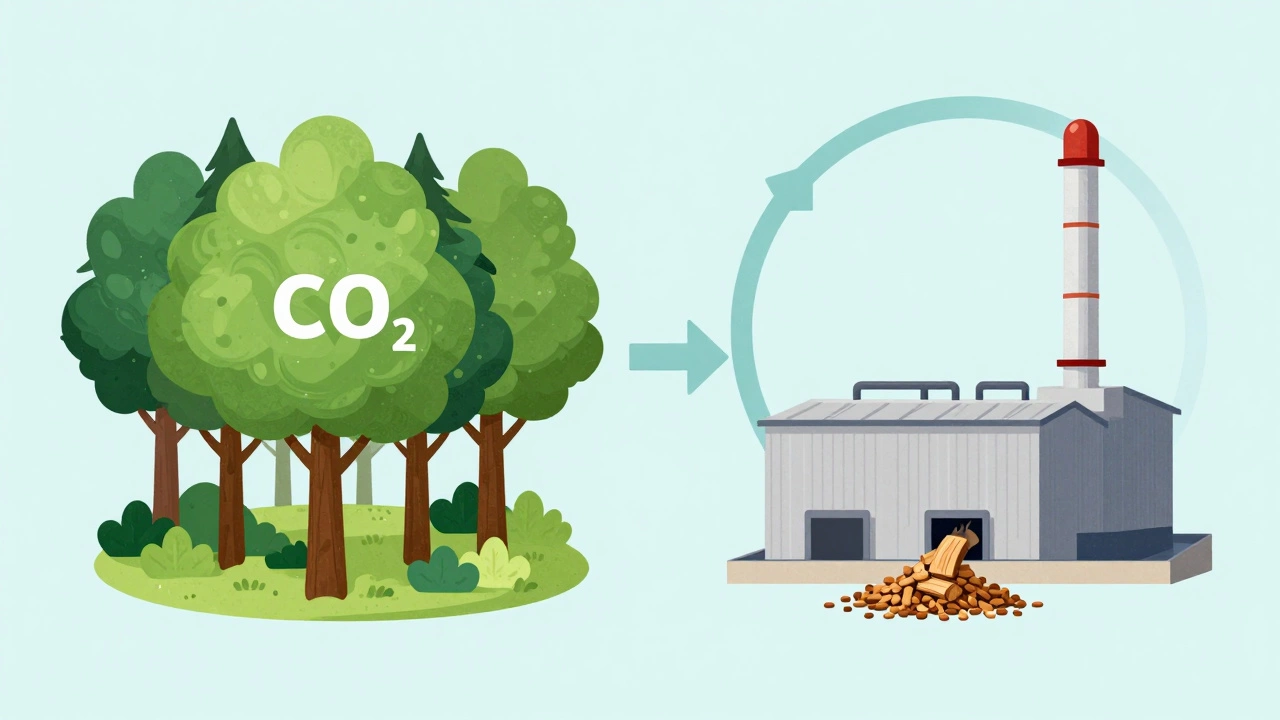
But here’s the catch: not all wood is created equal. Burning a tree you just cut down releases carbon dioxide. Trees absorb CO₂ as they grow, so if you replant, the new trees will eventually absorb that same carbon. That’s called a carbon cycle. It’s not zero-emission, but it’s close to carbon-neutral over time-if done right.
Compare that to coal. When you burn coal, you’re releasing carbon that’s been locked underground for 300 million years. That’s adding new carbon to the atmosphere. Wood doesn’t do that. It just moves carbon around.
Where Wood Power Works Best
Wood-based electricity isn’t ideal everywhere. It works best in places with:
- Abundant forests or wood waste from sawmills and construction
- Low population density, where large power lines aren’t cost-effective
- Strong forest management policies
In rural areas of the U.S. Pacific Northwest, Canada, and Scandinavia, small biomass plants power entire towns. In Finland, over 25% of the country’s energy comes from biomass-mostly wood. In parts of the U.S. South, paper mills use wood waste to power their operations and sell extra electricity to the grid.
It’s less practical in cities. Transporting wood over long distances burns fossil fuels and cancels out the environmental benefit. That’s why most successful wood power projects are local. They use waste that would otherwise be burned in open piles or left to rot.
The Downsides: Emissions, Efficiency, and Misuse
It’s not all green. Burning wood releases pollutants: fine particulates, nitrogen oxides, and volatile organic compounds. These can harm lung health, especially in children and the elderly. Modern plants have filters, but small, unregulated burners-like backyard boilers or old stoves-don’t. That’s why many cities ban open wood burning.
Efficiency is another issue. Wood has only about half the energy density of coal. That means you need to burn twice as much wood to get the same amount of electricity. It takes more land, more transport, more handling. A 2023 study from the European Environment Agency found that biomass plants using virgin wood (trees cut just for fuel) can have higher emissions than natural gas over a 20-year period.
The biggest risk? Misuse. If forests are clear-cut just to feed power plants, you’re not creating renewable energy-you’re creating deforestation. That’s why certification matters. Look for wood labeled by the Forest Stewardship Council (FSC) or similar programs. They ensure trees are replanted and ecosystems are protected.
Wood vs. Other Renewables: Solar, Wind, Hydro
Is wood better than solar panels or wind turbines? Not usually. Solar and wind are cheaper, cleaner, and faster to install. A single solar farm can produce more electricity than a wood plant using the same land area. Wind doesn’t emit anything during operation. Hydro is efficient but limited by geography.
But wood has one big advantage: it’s dispatchable. You can turn it on when you need power. Solar only works in daylight. Wind needs wind. Wood can run 24/7. That makes it useful for balancing the grid when the sun isn’t shining and the wind isn’t blowing.
Many experts see biomass as a backup, not a primary source. Think of it like a battery that runs on trees instead of lithium.
Who’s Using It Today?
Here are real examples from 2025:
- Sweden: Over 20% of its electricity comes from biomass, mostly wood pellets from sustainable forestry. The country aims to be fossil-free by 2045.
- Canada: British Columbia has over 30 small biomass plants that use logging residues. They supply power to remote First Nations communities.
- United States: The state of Maine has 17 biomass plants. They provide 12% of the state’s electricity and employ over 1,000 people in rural areas.
- Japan: After shutting down nuclear plants, Japan started importing wood pellets from the U.S. and Southeast Asia to replace coal in power stations.
These aren’t fringe experiments. They’re part of national energy strategies.
What You Can Do
If you’re a homeowner, don’t burn wood in your fireplace to generate electricity. That’s inefficient and polluting. But if you live near a forested area, you might support local biomass projects that use waste wood. Ask your utility if they source any power from certified biomass.
If you’re a policymaker or community leader, consider incentives for small-scale biomass plants that use only waste material-no cutting live trees. Pair it with reforestation programs. That’s how you make it truly sustainable.
Is It the Future?
Burning wood for electricity won’t replace solar or wind. But it won’t disappear either. In places where forests are abundant and fossil fuels are expensive, it’s a practical, existing solution. The key is using the right kind of wood-waste, not whole trees-and doing it with clean technology.
The future of wood power isn’t about burning more trees. It’s about burning less, smarter, and only what we don’t need for anything else.
Is burning wood for electricity really carbon neutral?
It can be, but only if the wood comes from sustainably managed forests where trees are replanted. The carbon released during burning is reabsorbed by new growth over time. But if trees are cut faster than they grow, or if the wood is transported long distances, the carbon savings disappear. Certification programs like FSC help ensure responsible sourcing.
Does burning wood pollute the air?
Yes, if done poorly. Old stoves and open fires release harmful smoke and fine particles. But modern biomass power plants use advanced filters and scrubbers that remove over 95% of pollutants. The issue is regulation-many small, unregulated burners still exist, especially in rural areas, and they contribute to local air quality problems.
Can I install a wood-burning generator at home?
Technically yes, but it’s rarely practical. Small wood-burning generators exist, but they’re expensive, require constant fueling, and need permits. Most homeowners are better off with solar panels and batteries. The efficiency is too low, and the emissions too high for personal use.
What’s the difference between wood pellets and firewood?
Wood pellets are made from compressed sawdust and wood waste, dried to under 10% moisture. They burn hotter, cleaner, and more efficiently than regular firewood. They’re designed for automated systems in power plants and stoves. Firewood is irregular, wetter, and harder to control-better for fireplaces than electricity generation.
Is wood power cheaper than solar or wind?
No, not anymore. In 2025, utility-scale solar and wind cost between $30 and $50 per megawatt-hour. Wood biomass costs $60 to $90 per megawatt-hour, depending on fuel transport and plant efficiency. The main reason to use wood isn’t cost-it’s reliability and use of local waste.
Does wood power help fight climate change?
Only if it replaces coal or gas and uses waste wood from sustainable sources. If it leads to deforestation or replaces natural forests with monoculture tree farms, it makes climate change worse. The best use of wood energy is in places where waste wood would otherwise be burned in open piles or left to decompose and release methane.