Can I Be a Data Analyst Without a Degree? Here’s What Actually Works
 Feb, 13 2026
Data Analyst Career Timeline Calculator
Calculate Your Path to Your First Role
Based on 2025 industry data: 68% of UK data analyst roles don't require degrees. Your timeline depends on consistent skill-building.
Your Estimated Timeline
You don’t need a degree to become a data analyst. Not anymore. Companies aren’t asking for diplomas anymore-they’re asking for skills. Real, measurable, hands-on skills. If you can clean messy data, spot trends in sales numbers, build a dashboard that tells a story, and explain it to someone who doesn’t know SQL-that’s all they care about.
What employers really look for
Think about it: if you walk into a meeting with a marketing team and show them why customer churn spiked last quarter using a simple chart, they’ll remember you. Not because you went to Oxford, but because you solved their problem. That’s the new standard.
A 2025 survey by LinkedIn of 1,200 hiring managers in the UK found that 68% of data analyst roles didn’t require a bachelor’s degree. Instead, they prioritized:
- Portfolio projects (real datasets, real analysis)
- Proof of problem-solving (like a case study you built from scratch)
- Tools proficiency (Excel, Power BI, SQL, Python)
- Communication skills (can you turn numbers into action?)
One hiring manager at a Liverpool-based fintech startup told me: "We hired a candidate with no degree last year. She had a GitHub repo with 12 analyses of UK retail data. She walked us through how she found a 17% inefficiency in their delivery routes. We gave her the job on the spot."
How to prove you can do the job
Without a degree, your resume won’t carry weight. But your portfolio will. Here’s how to build one that gets noticed:
- Start with public datasets. Use data.gov.uk, the Office for National Statistics, or even your local council’s open data portal. Find a dataset that matters to you-like public transport delays in Liverpool or grocery price changes over the last year.
- Ask a question. Not "What does this data look like?" but "Why did bus cancellations rise in December?" or "Which supermarkets had the biggest price hikes on milk?"
- Answer it. Clean the data. Use Excel or Google Sheets to start. Then move to SQL to pull specific records. Use Power BI or Tableau to make visuals. Write a one-page summary explaining what you found and why it matters.
- Repeat. Build three to five projects. Each one should tell a different story. One on healthcare wait times. One on energy use in homes. One on job postings in your region.
Don’t just upload files. Host them on GitHub. Write clear READMEs. Add screenshots. Make it easy for someone to open your work and say, "This person gets it."
Skills that matter more than a diploma
Here’s what you actually need to learn-no university required:
- SQL: You need to pull data from databases. Learn SELECT, WHERE, GROUP BY, JOIN. Practice on SQLZoo or LeetCode for free.
- Excel/Google Sheets: Still the most used tool in small businesses. Master pivot tables, VLOOKUP, and conditional formatting.
- Power BI or Tableau: Pick one. Build dashboards that update automatically. Show trends over time. Compare regions. Add filters.
- Python (optional but powerful): If you want to go further, learn pandas for data cleaning and matplotlib for charts. You don’t need to be a programmer. Just enough to automate repetitive tasks.
- Business context: Data doesn’t exist in a vacuum. Learn how KPIs work. Understand revenue, margins, customer retention. Read industry reports. Follow business news.
There are free courses for all of this. Google’s Data Analytics Certificate on Coursera (financial aid available). Kaggle’s free micro-courses. YouTube channels like "Ken Jee" and "Alex The Analyst" have project walkthroughs you can copy exactly.

Real people who made it without a degree
Meet Sarah. She worked in a retail store in Manchester. No college. She taught herself SQL using free resources. Built a project analyzing customer returns for local fashion brands. Posted it on LinkedIn. Got a DM from a startup looking for someone to clean their sales data. Now she’s a full-time data analyst at age 24.
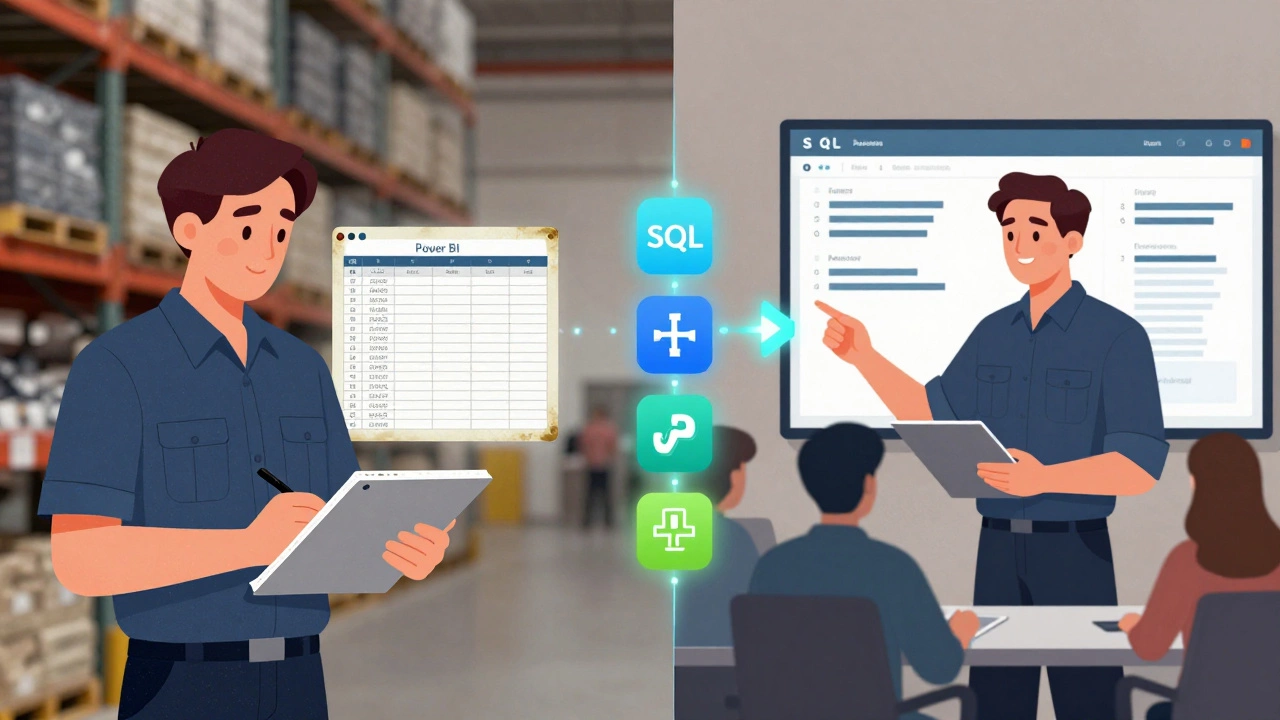
Or James. He was a warehouse supervisor in Birmingham. He noticed his team kept miscounting inventory. He started tracking it in Excel. After three months, he found a pattern: 70% of errors happened on Mondays. He showed his manager. They changed the shift schedule. Two months later, errors dropped by 89%. He was promoted to data coordinator. No degree. Just curiosity and persistence.
These aren’t outliers. They’re becoming the norm.
Where to apply (and where not to)
Not every company is open to non-degree hires. Here’s how to target the right ones:
- Go for startups and SMEs: They move fast. They need people who can do the work, not just talk about it.
- Look at public sector roles: Local councils, NHS trusts, and transport authorities are increasingly open to skills-based hiring. They’re under pressure to cut costs-and smart analysts save money.
- Avoid large corporations with rigid HR filters: If the job posting says "Bachelor’s required," don’t waste your time. They use software to auto-reject non-degree applicants.
Search job boards using terms like "data analyst no degree" or "entry level data analyst." Filter by "remote" or "hybrid"-those roles are more likely to value output over pedigree.
What to say in interviews
You’ll get asked: "Why should we hire you without a degree?"
Don’t apologize. Don’t say "I’m self-taught." Say this:
I’ve spent the last six months building real projects with real data. I’ve analyzed 15+ datasets, fixed data quality issues, and built dashboards that helped teams make decisions. I’ve learned SQL, Power BI, and how to communicate insights clearly. I’m not asking for a chance-I’ve already proven I can do the job. Let me show you.
Bring your portfolio. Show a live dashboard. Walk them through one analysis like you’re explaining it to a colleague. That’s how you win.
What’s next? Keep going.
Once you land your first role, don’t stop. Learn how to use Python to automate reports. Learn how to connect Power BI to live databases. Ask to sit in on strategy meetings. Volunteer to help other teams with data. In 18 months, you won’t be "the analyst without a degree." You’ll just be the analyst.
The door is open. You don’t need permission. You just need to start building.
Do I need to know programming to be a data analyst?
Not necessarily. Many entry-level roles only require Excel and SQL. But if you want to grow beyond junior positions, learning Python or R helps. You don’t need to be a software engineer-just enough to clean data faster and automate reports. Start with pandas in Python. It’s the most useful library for analysts.
How long does it take to get hired without a degree?
Most people take 6 to 12 months of consistent effort. That’s about 10-15 hours a week. If you build 3 solid projects, learn SQL and Power BI, and apply to 10-15 jobs a month, you’ll likely land something within 8 months. The key is consistency-not speed.
Can I get certified instead of a degree?
Yes. Certificates from Google, IBM, or Microsoft are respected, but they’re not magic. What matters more is what you can do with them. A certificate shows you’ve learned something. A portfolio shows you’ve applied it. Employers value the application more.
What’s the salary for a data analyst without a degree?
Entry-level salaries in the UK are typically £28,000-£35,000 per year, regardless of degree. After two years of experience, most analysts earn £40,000-£50,000. Pay is based on skills, location, and industry-not your diploma.
Is data analytics a good career if I’m not good at math?
You don’t need to be a math genius. You need to be curious and detail-oriented. Most of the job is cleaning data, spotting patterns, and asking questions-not solving equations. If you can spot that sales dropped on weekends, or that customers who bought Product A also bought Product B, you’ve got the right mindset. Tools do the heavy math. You do the thinking.