Are nanoparticles in Coke and Pepsi? The truth about nanotech in soft drinks
 Nov, 16 2025
Nanoparticle in Soda Quiz
Test Your Knowledge About Nanoparticles in Soda
How much do you know about nanoparticles in soft drinks? Take this quiz to learn what's real and what's misinformation.
What is a nanoparticle?
Are engineered nanoparticles intentionally added to Coca-Cola or Pepsi-Cola?
What is caramel color in soda made from?
What is the main health concern with soda?
Which regulatory body has reviewed caramel color for safety for over 50 years?
Ever opened a can of Coke or Pepsi and wondered if there’s something smaller than a grain of salt hiding inside? You’re not alone. A wave of online claims has suggested that Coca-Cola and PepsiCo use nanoparticles in their drinks - some even say these particles are dangerous. But what’s real, and what’s just fear dressed up as science?
What even is a nanoparticle?
A nanoparticle is any particle between 1 and 100 nanometers in size. That’s one-billionth of a meter. To put that in perspective: a human hair is about 80,000 nanometers wide. Nanoparticles aren’t new - they’ve existed in nature for millions of years. Volcanic ash, sea spray, and even smoke from wildfires contain them. What’s new is that scientists can now create them on purpose - and some food companies use them to improve texture, color, or shelf life.
But here’s the key: just because something is small doesn’t mean it’s artificial or harmful. Your body handles natural nanoparticles all day long. The real question isn’t whether nanoparticles exist in your soda - it’s whether any added ones are safe, and if they’re even there at all.
What do Coke and Pepsi actually contain?
Neither Coca-Cola nor PepsiCo lists nanoparticles as ingredients on their official websites or product labels. Their ingredient lists are simple: carbonated water, high-fructose corn syrup (or sugar), caramel color, phosphoric acid, natural flavors, caffeine. That’s it. No mention of titanium dioxide, silver nanoparticles, or any other engineered nanomaterials.
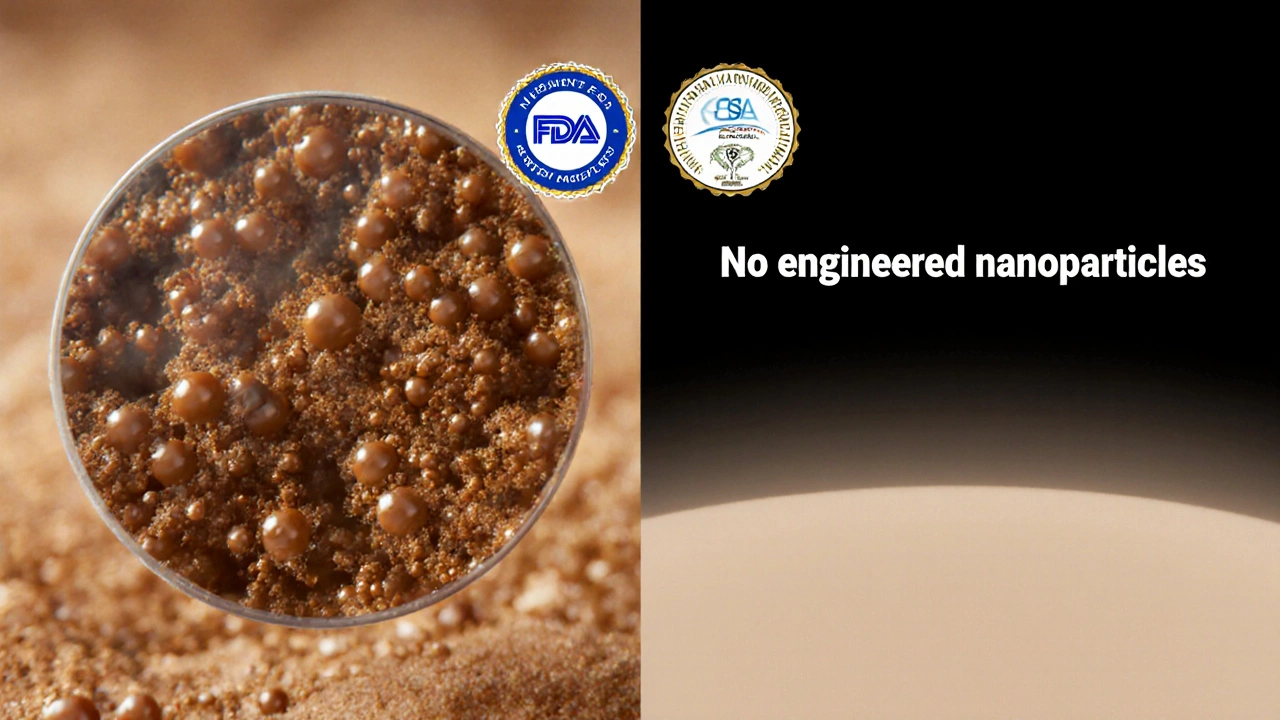
Some claims point to caramel color as the culprit. It’s the dark pigment that gives cola its signature look. And yes - caramel color is made by heating sugars, which can create tiny carbon-based particles. Some of these are in the nanoscale range. But these aren’t added nanoparticles. They’re natural byproducts of the cooking process, like the char on grilled meat. Regulators like the FDA and EFSA have reviewed caramel color for decades and consider it safe at current usage levels.
There’s also no evidence that either company uses engineered nanoparticles like titanium dioxide (TiO₂) in their flagship colas. Titanium dioxide has been used in some candies and chewing gums as a whitener, but it was banned in the EU in 2022 due to uncertainty about its long-term effects. Neither Coke nor Pepsi uses it in their main cola products in the UK or US.
Why do people think nanoparticles are in soda?
The confusion comes from a mix of bad science, viral videos, and mistrust in big food companies. One popular YouTube video from 2020 showed a scientist using a laser to detect "particles" in soda. He claimed they were "nanoparticles from the factory." But what he saw was likely light scattering off sugar crystals, air bubbles, or dust - not engineered nanomaterials. The video didn’t identify the particles, measure their size, or prove they were man-made.
Another source of misinformation is a 2012 study from the University of Toronto that looked at carbon nanoparticles in cola. The study found that the caramel color in cola contained carbon structures in the nanoscale range - but again, these were formed naturally during production, not added as a nanotech ingredient. The researchers didn’t claim they were harmful. Yet, headlines screamed: "Cola Contains Nanoparticles!"
That’s the problem. Science gets twisted into scare stories. The presence of naturally occurring nanoscale particles doesn’t equal danger. Your coffee, your toast, even your grilled chicken contain similar particles. We don’t call them dangerous unless there’s proof they cause harm - and there isn’t any for cola.
Are nanoparticles in food dangerous?
This is the real question behind the fear. The short answer: some engineered nanoparticles might be, but we don’t know yet - and we’re watching closely.
Engineered nanoparticles can behave differently than larger versions of the same material. For example, silver nanoparticles have strong antimicrobial properties, which is why they’re used in some wound dressings and food packaging. But if those particles break loose and get into your gut, could they affect your microbiome? Some animal studies suggest possible effects. Others show no impact. The science is still developing.
Regulators take this seriously. The FDA requires food manufacturers to prove safety for any new additive - including nanomaterials. In the US, if a company wants to add a new nanoparticle to food, they must submit a safety notification. The EU goes further: any engineered nanomaterial in food must be labeled as such. That’s why you’ll see "nano" on some food labels in Europe - but not in Coke or Pepsi.
So far, no regulatory body has found evidence that the ingredients in Coca-Cola or Pepsi pose a risk due to nanoparticles. The European Food Safety Authority (EFSA) and the US FDA both state that current levels of caramel color and other cola ingredients are safe for consumption.
What about other drinks?
Some energy drinks, sports drinks, and flavored waters do use additives like titanium dioxide or silicon dioxide for texture or stability. These can be engineered nanoparticles. But even then, the amounts are tiny - often less than 0.1% of the product. And many brands are phasing them out in response to consumer pressure.
For example, in 2023, several major US brands removed titanium dioxide from their products after the FDA flagged potential concerns. PepsiCo and Coca-Cola didn’t need to - because they never used it in their main cola formulas to begin with.
Should you be worried?
No - not because of nanoparticles in Coke or Pepsi.
If you’re concerned about your health, focus on the real issues: sugar content, acid erosion of teeth, and caffeine dependence. A 12-ounce can of Coke has 39 grams of sugar - that’s over 9 teaspoons. That’s what’s linked to obesity, type 2 diabetes, and fatty liver disease. Nanoparticles? Not even close.
There’s no credible evidence that the naturally occurring carbon structures in caramel color harm human health. And there’s no proof that either company adds engineered nanoparticles to their colas. The fear comes from misunderstanding what nanoparticles are - not from actual risk.
That doesn’t mean we should stop asking questions. Science moves fast. Nanotechnology in food is growing. We need transparency, better labeling, and ongoing research. But jumping to conclusions based on viral videos or vague terms like "nanoparticles" won’t help. We need facts, not fear.
What should you do?
- Check ingredient labels - if a product lists "nano" or "engineered nanoparticles," it’s required to say so in the EU and some US states.
- Don’t assume all small particles are dangerous - your body deals with them daily.
- Focus on sugar and acid if you want to improve your health - not nanoparticles.
- Support companies that are transparent about ingredients and testing.
- Follow updates from trusted sources like the FDA, EFSA, or WHO - not YouTube influencers.
Bottom line: your Coke or Pepsi isn’t full of hidden nanotech. It’s full of sugar and carbonation. Those are the things you should care about - not particles too small to see.
Are nanoparticles added to Coke or Pepsi intentionally?
No. Neither Coca-Cola nor PepsiCo adds engineered nanoparticles to their flagship cola products. Their ingredient lists are public and simple: carbonated water, sugar or high-fructose corn syrup, caramel color, phosphoric acid, natural flavors, and caffeine. The tiny carbon structures found in caramel color are natural byproducts of heating sugar, not added nanomaterials.
Is caramel color in soda dangerous because of nanoparticles?
No. Caramel color contains naturally formed carbon particles in the nanoscale range, but these are not harmful at the levels found in soda. The FDA and European Food Safety Authority have reviewed caramel color for over 50 years and continue to approve its use. The particles are not synthetic or added intentionally - they’re a normal result of the cooking process.
Do other soft drinks contain nanoparticles?
Some energy drinks, sports drinks, or flavored waters may use engineered nanoparticles like titanium dioxide or silicon dioxide for texture or color stability. But major brands like Coke and Pepsi do not use them in their core cola products. Many companies have removed titanium dioxide from their formulas since 2022 due to regulatory pressure and consumer concerns.
Can nanoparticles in food cause health problems?
Some engineered nanoparticles under study show possible biological effects in lab animals, but no proven harm exists in humans from food-grade nanoparticles at current exposure levels. Regulatory agencies require safety testing before any new nanomaterial can be added to food. The risk from naturally occurring nanoparticles - like those in caramel color - is considered negligible.
Should I avoid soda because of nanoparticles?
No. The real health concern with soda is its high sugar content - one can has over 9 teaspoons of sugar. That’s linked to obesity, diabetes, and tooth decay. Nanoparticles are not a proven risk in Coke or Pepsi. Avoiding soda for sugar reasons is wise. Avoiding it for unproven nanoparticle fears is not science-based.