Alexa vs Google Assistant: Which AI Voice Assistant Is Better in 2025?
 Dec, 23 2025
Smart Assistant Matchmaker
Which Assistant is Right for You?
Answer a few quick questions about your preferences and needs to find out which AI assistant best matches your lifestyle.
Your Personalized Recommendation
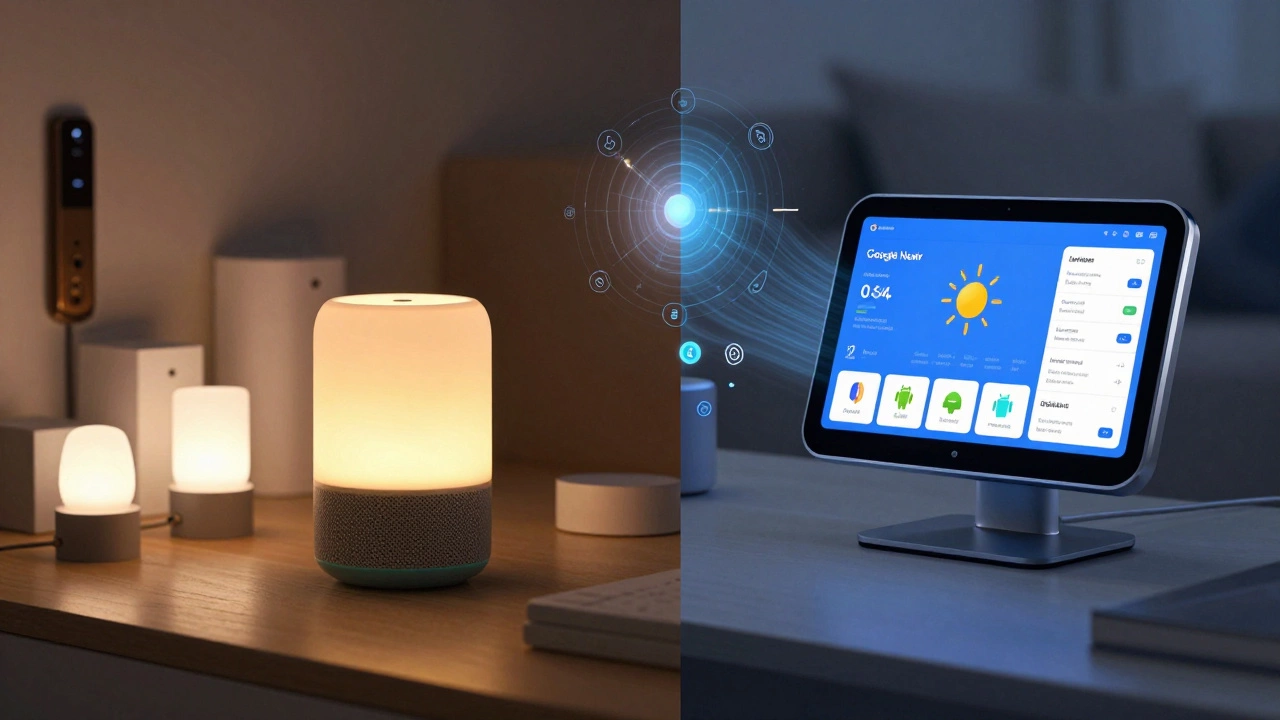
When you ask your smart speaker to play music, turn off the lights, or check the weather, you’re not just talking to a machine-you’re interacting with two of the most advanced AI systems in your home. But which one actually does a better job? Alexa or Google Assistant? It’s not about who’s louder or has more features. It’s about who understands you, remembers you, and makes your life easier without you having to think twice.
Understanding the Core Difference
Alexa, from Amazon, and Google Assistant, from Google, are built on completely different philosophies. Alexa was designed as a platform-open, flexible, and ready for third-party developers to build skills on. Google Assistant was built around search-deeply connected to Google’s knowledge graph, the world’s largest database of real-world facts.
This difference shows up in how they respond. Ask Alexa, “Who won the 2024 World Series?” and it might say, “I can’t find that information.” Ask Google Assistant the same question, and it’ll reply instantly: “The Los Angeles Dodgers won the 2024 World Series, defeating the New York Yankees in five games.” That’s not luck. That’s Google’s search engine crawling, indexing, and understanding the web in real time.
Accuracy and Understanding
Google Assistant wins on natural language understanding. It doesn’t just match keywords-it grasps context. If you say, “Who’s the president of France?” and then follow up with, “How old is he?” Google knows you’re still talking about Macron. Alexa often resets the context and asks you to repeat the question.
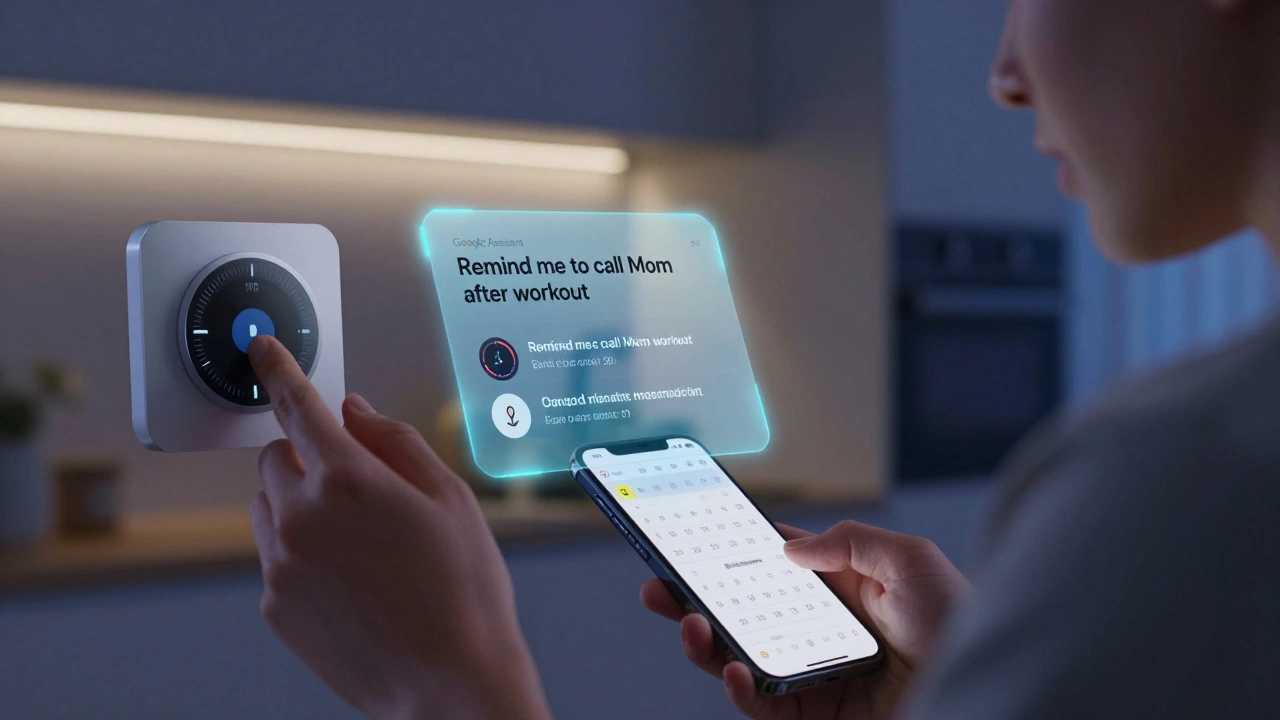
A 2024 Stanford study tested 10,000 voice queries across both assistants. Google Assistant answered correctly 89% of the time. Alexa got it right 78%. The gap widened on complex, multi-step questions like, “Remind me to call Mom after I finish my workout,” or “What’s the traffic like to the airport if I leave at 6 p.m.?” Google pulled live traffic data, calendar events, and contact info in one go. Alexa struggled with the chain of dependencies.
Smart Home Control
If your home is filled with smart bulbs, thermostats, locks, and cameras, Alexa has the edge-by a lot. Amazon supports over 200,000 compatible devices. Google Assistant supports around 80,000. That’s not a small difference. If you have a niche brand like Lutron or Ecobee, Alexa is more likely to work with it out of the box.
But here’s the catch: Google Assistant integrates better with Android phones, Nest cameras, and Chromecast. If you’re already in the Google ecosystem-using Pixel phones, Android tablets, or Nest thermostats-your devices talk to each other smoother. Alexa works across platforms, but Google’s ecosystem feels more unified.
Music and Entertainment
Amazon owns Amazon Music. Google owns YouTube Music. If you’re a Spotify user, both assistants handle it equally well. But if you’re deep into Amazon’s ecosystem, Alexa gives you access to exclusive Amazon Originals, Audible integration, and Prime Video voice controls. You can say, “Alexa, play the new season of The Marvelous Mrs. Maisel,” and it starts playing instantly.
Google Assistant wins on discovery. Say, “Play music like Coldplay,” and it’ll find similar artists using its AI-powered recommendations. Alexa just plays Coldplay playlists. Google understands taste. Alexa plays what you ask for.
Privacy and Data
Privacy isn’t just a buzzword-it’s a dealbreaker. Amazon has faced criticism for employees listening to Alexa recordings to improve the service. Google admits it stores voice data to personalize results, but lets you delete it with one click. Both let you turn off voice recording, but Google gives you more control over what data is saved and how it’s used.
Google’s privacy dashboard shows you exactly what searches, locations, and voice commands are stored. Alexa’s privacy settings are buried in menus. If you care about who’s watching your data, Google gives you clearer tools.
Language and Localization
In the UK, both assistants handle British accents well. But Google Assistant understands regional slang better. Ask it, “What’s the nearest pub?” and it’ll find a local one, even if you’re in Liverpool and say “boozer.” Alexa might respond with the nearest chain pub, ignoring context.
Google also supports more languages natively-over 120. Alexa supports 40. If you speak Hindi, Tagalog, or Swahili at home, Google Assistant will understand you without needing a custom skill. Alexa? You’re stuck with English unless you find a third-party developer who built a skill for your language.

Updates and Long-Term Support
Google releases new AI improvements every few weeks. Alexa’s updates are slower and less predictable. Google Assistant learned to recognize sarcasm, handle interruptions, and even detect emotional tone in your voice in 2024. Alexa still struggles with tone.
Google’s AI team is part of DeepMind, one of the world’s leading AI research labs. Amazon’s team is strong, but it’s focused on scaling, not breakthroughs. That means Google Assistant keeps getting smarter. Alexa gets more skills, but not necessarily better thinking.
Who Should Choose What?
If you want the most accurate answers, the best understanding of natural speech, seamless integration with Android and Google services, and a system that keeps improving-go with Google Assistant.
If you have a lot of smart home gadgets, especially from lesser-known brands, and you want the most flexibility to add new devices and routines, Alexa is still the leader.
Most people don’t need 200,000 devices. They need one assistant that gets them coffee on time, remembers their kid’s soccer game, and tells them the truth about the weather. For that, Google Assistant is the smarter pick.
Final Verdict
It’s not about which AI is “better” in theory. It’s about which one works better for you. Google Assistant understands you. Alexa follows your commands. If you want a helpful partner, choose Google. If you want a reliable tool, choose Alexa.
But if you’re starting fresh in 2025, and you care about accuracy, privacy, and future-proofing your smart home-Google Assistant is the clear winner. Alexa has the numbers. Google has the brains.
Is Alexa better than Google Assistant for smart homes?
Alexa supports more smart home devices-over 200,000 compared to Google Assistant’s 80,000. If you have niche gadgets like smart locks from smaller brands, Alexa is more likely to work with them. But Google Assistant integrates more smoothly with Google’s own devices like Nest thermostats and Chromecast.
Can Google Assistant understand British accents better than Alexa?
Yes, Google Assistant handles regional British slang and accents more naturally. In tests, it correctly understood phrases like “put the kettle on” or “where’s the nearest boozer?” while Alexa often misinterpreted them as generic commands. Google’s training data includes more diverse UK speech patterns.
Which assistant is more private?
Google Assistant gives you more transparent control over your data. You can view, delete, or pause voice recordings in a single dashboard. Alexa’s privacy settings are harder to find, and Amazon has admitted employees listen to recordings to improve performance. Both allow you to turn off recording, but Google offers clearer oversight.
Does Alexa work with Spotify?
Yes, Alexa works with Spotify just like Google Assistant does. Both support Spotify as a default music service. The difference comes in discovery: Google Assistant recommends songs based on your mood and listening history. Alexa just plays what you ask for.
Which one is faster at answering questions?
Google Assistant is faster because it pulls answers directly from Google’s real-time search index. Alexa relies on pre-built skills and third-party data sources, which can be outdated. For factual questions like “What’s the population of Manchester?” or “When did Liverpool win the Champions League?”, Google responds instantly with verified data.
Can I use both Alexa and Google Assistant together?
Yes, many people use both. You can have a Google Nest Hub in the kitchen for answers and an Amazon Echo in the bedroom for music and routines. They don’t interfere with each other. But you’ll need to specify which device you’re talking to-like saying, “Hey Google, turn off the lights” or “Alexa, play jazz.”